Free shipping in the U.S. for orders over $50

Lampworking vs Furnace Glass: Choosing the Right Process
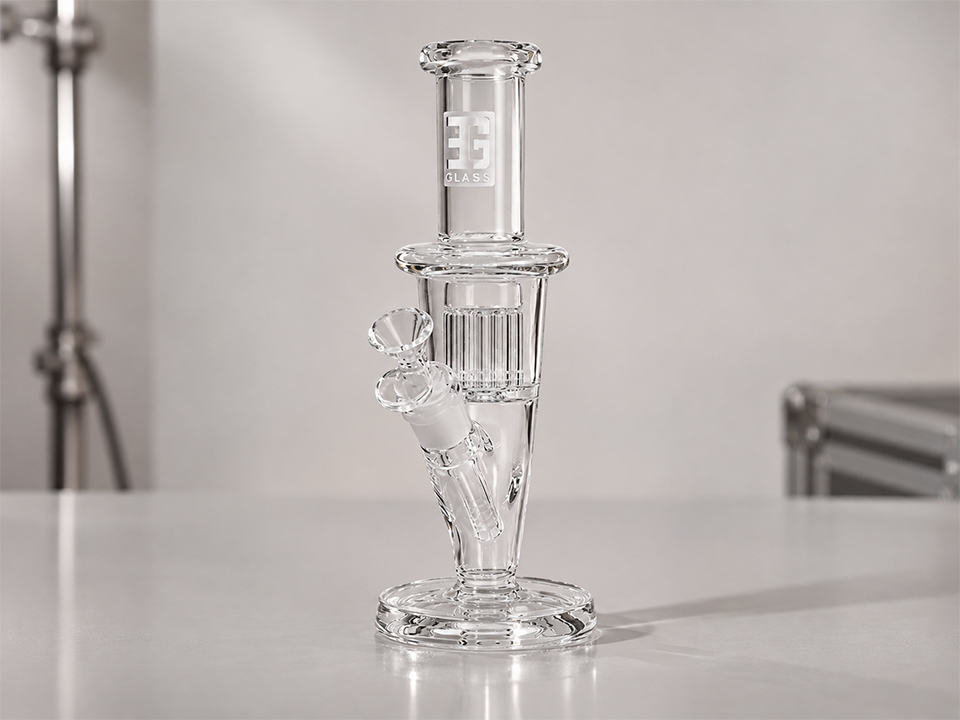
For borosilicate pipes, bongs and dab rigs, lampworking is the usual forming process. These products are built from pre-made tube and rod at a torch, with joints, percolators and decorative parts added one by one. Furnace glassblowing, where glass is gathered from a melt, suits a narrower set of forms and is more often associated with soft glass. The process label matters less than what it implies for glass type, wall thickness, joint quality, annealing, unit cost and repeatability. This guide explains the difference between lampworking and furnace glass, shows how each process appears in real product features, and lists what wholesale buyers, importers and private-label brand managers should specify and verify before approving a production run.
What Is the Difference Between Lampworking and Furnace Glass?
Lampworking, also called flameworking or torchwork, softens manufactured glass rod and tube in a bench torch and shapes it by hand. Only a local zone is hot at any moment, so the rest of the piece stays rigid. Furnace glassblowing works differently: the maker dips a blowpipe into a furnace, picks up a gather of molten glass and shapes the whole mass at once. Manufacturing Processes’ lampworking reference describes the first method, and its glassblowing reference describes the second.
One point often gets lost in this comparison. A furnace is still involved in lampworking, but upstream: the borosilicate tubing and rod are manufactured stock. “Lampwork versus furnace” is therefore a question about where the shaping happens, not whether a furnace touched the glass.
| Factor | Lampworking | Furnace glassblowing (hot shop) |
|---|---|---|
| Starting material | Pre-made tube and rod | Molten glass gathered from a furnace |
| Heat source | Bench torch, localized heat | Continuously held furnace plus reheating chamber |
| Glass typically used for smoking glass | Borosilicate, including colored borosilicate | More often soft glass such as soda-lime |
| Suited to | Multi-part assemblies: downstems, percolators, joints, small sculpted details | Rounder, thicker single-gather forms; mold-blown repetition |
| Tooling | None for hand work | Minimal for hand work; mold sets for repeat forms |
| Cost behavior | Skilled labor; each joint adds time | Standing furnace energy cost and team labor |
| Repeatability | Depends on operator skill, jigs and inspection | Molds help shape consistency; wall distribution is still a process outcome |
| Annealing | Required, kiln cycle sized to thickest section | Required, lehr cycle sized to thickest section |
This table is a qualitative comparison drawn from the process references above, not measured supplier data. Individual factories mix methods.
Why Glass Type Matters More Than the Process Label
The process and the glass are linked. SCHOTT’s DURAN borosilicate 3.3 tubing data lists a mean linear thermal expansion of 3.3 × 10⁻⁶ K⁻¹, an annealing point of 560 °C, a softening point of 825 °C and a working point of 1,260 °C. According to the lampworking reference above, that expansion is roughly a third of soda-lime glass, which is why borosilicate survives the localized heat of a torch and thermal shock in service.
Two consequences matter for buyers:
- Working temperature. Borosilicate’s 1,260 °C working point sits above the roughly 870–1,100 °C working window quoted for soda-lime hot work. The sources define these figures differently, so treat the comparison as directional. The two glass families sit in different temperature ranges, which is one reason shops tend to specialize in one or the other.
- Compatibility. Two glasses joined in one piece need matched expansion. Borosilicate and soft glass cannot be joined directly, and a mismatched joint cracks as it cools. A colored accent, a decorative marble or a replacement part in the wrong glass system is a failure risk, not a cosmetic issue.
Ask every supplier which glass system each SKU uses, and which color glass is used on borosilicate bodies.
How Each Process Shows Up in Real Product Features
Product pages can show which features are practical to make by torch. The specifications below come from the listings on Buy EG Glass; the process implications are inferences, because the pages do not state how each SKU is made. Where a page describes a hand-blown or handmade element, that is noted.
Compact one-piece rigs
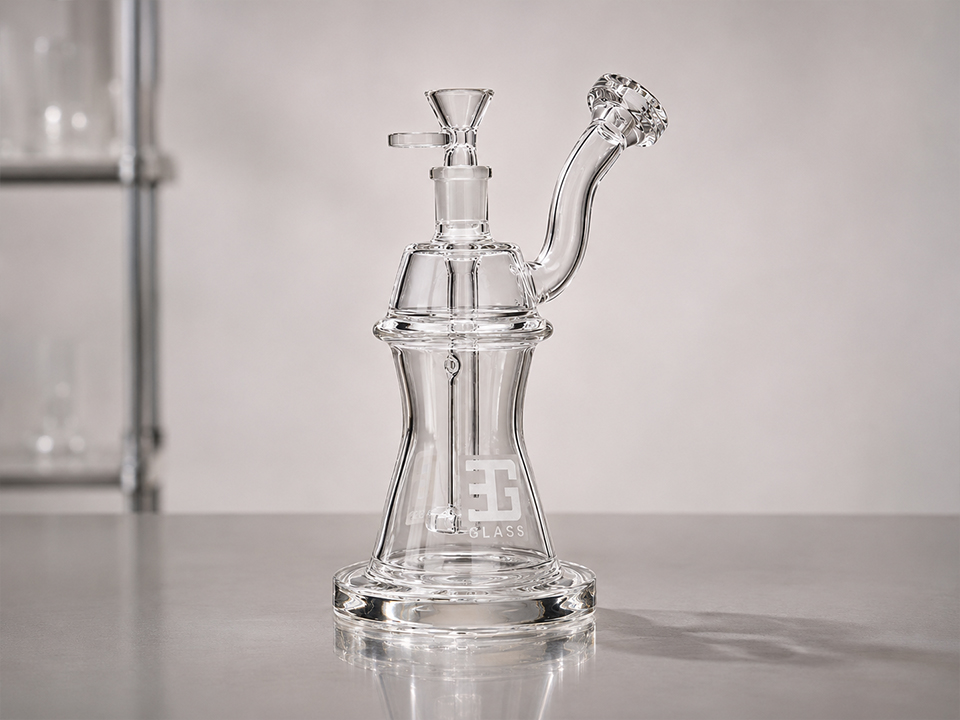
Small rigs concentrate labor into few joints. The 4.1-inch double-horned one-piece mini rig lists at 88 g, and the winged one-piece borosilicate rig lists at 3.9 inches and 76 g. Fewer joints means less cumulative labor, but horns and wings are applied features. Check how each attachment is fused and whether the junction is as thick as the surrounding wall.
Percolators and internal assemblies
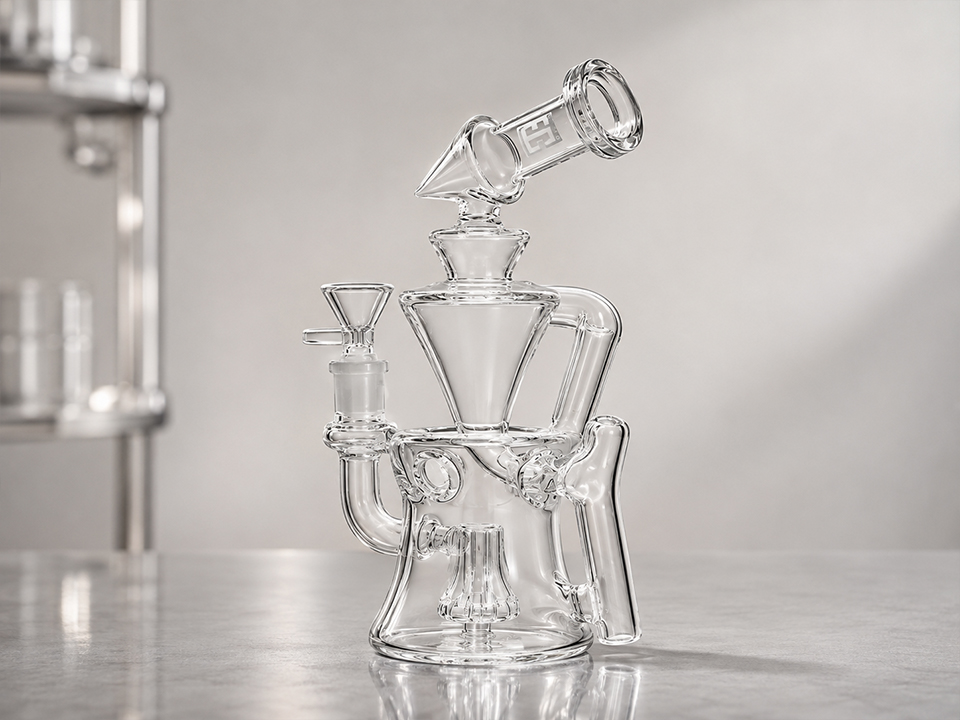
Internal diffusion is where lampwork skill is most visible. The 11-inch matrix perc bubbler lists at 825 g with a 14 mm joint, and the bent-neck tree perc rig lists at 8.5 inches and 457 g. Each perc is a set of sealed joints inside the body. Ask how slit or hole openings are inspected, and whether the perc is fused cleanly to the wall or leaves stress concentrations.
Sculpted interior and top elements
The cactus curve-body dab rig describes a handmade cactus centerpiece enclosed in the chamber. The 8.5-inch dab rig with an interior figurine uses a similar enclosed-figure concept. The mini octopus-head dab rig describes a hand-blown octopus top. Enclosed figures deserve the closest scrutiny in this group: a heavy solid element inside a thinner shell creates uneven thickness, and annealing has to be sized to the heaviest section.
Beaker and straight-tube bodies
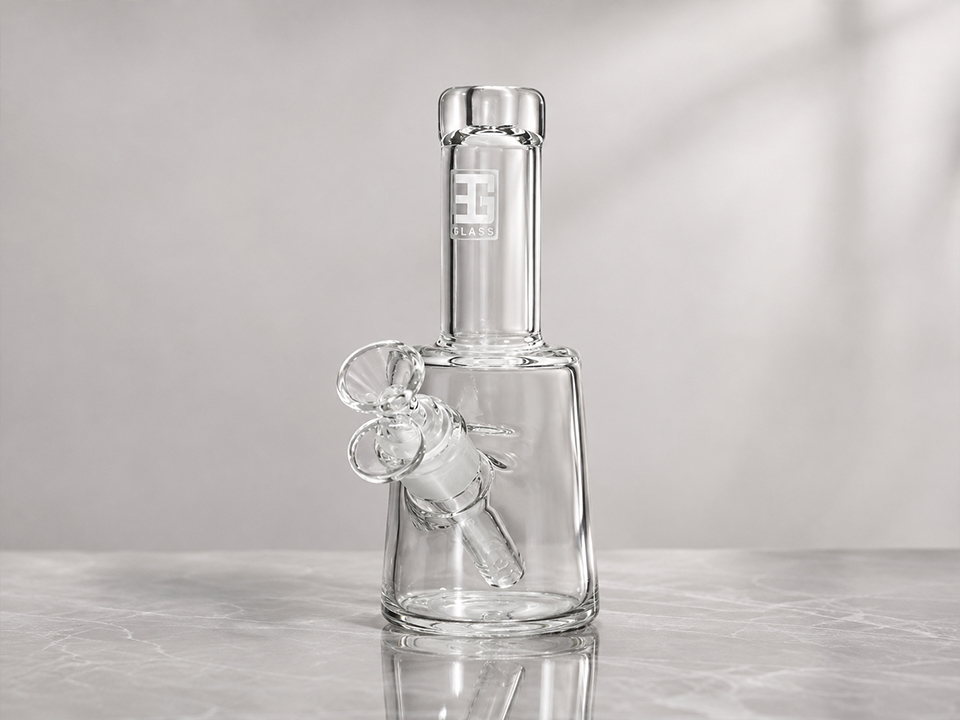
Plain bodies show process quality through wall thickness and symmetry. The 14-inch diamond beaker bong is one of the few listings that states a thickness, 7 mm, alongside 990 g and an 18 mm downstem with a 14 mm bowl. The 12-inch thick straight tube lists at 928 g with the same joint pairing. Both are the kind of simple, heavy-walled shape where a stated thickness gives an RFQ a measurable target.
Color and surface treatment
Color changes the decision. The fumed beaker bong lists a fumed finish at 7.5 inches and 300 g. Fuming and other color techniques can produce unique results from piece to piece, so a color reference needs an approved sample and an agreed tolerance range, not a single photograph.
Joints and accessories
Ground-joint fit is a quality dimension in its own right. The temple-handle bong bowl and slide lists a 14 mm joint. A slide that is slightly out of size will not seat in a 14 mm female joint regardless of how good the decoration is, so sample-fit accessories against the bodies they ship with.
What the listed specifications can and cannot tell you
| Listing | Listed height | Listed weight | Feature described on page | Verify with supplier |
|---|---|---|---|---|
| EG-09 beaker bong | 14 in | 990 g | 7 mm thickness stated | How thickness is measured and its allowed range |
| ES2260 straight tube | 12 in | 928 g | Thick walls, diffused downstem | Slit uniformity, joint alignment |
| ES2233 matrix perc bubbler | 11 in | 825 g | Matrix perc | Perc fusion quality, stress inspection |
| EG-65 cactus rig | 9.8 in | 742 g | Handmade cactus centerpiece | Annealing cycle for mixed thickness |
| EG-80 mini octopus rig | 5.3 in | 268 g | Hand-blown octopus top | Attachment strength, color variation |
| EG-76 fumed beaker | 7.5 in | 300 g | Fumed finish | Approved color sample and tolerance |
Listed weight is a finished-piece figure. It rises with tube diameter, base size and percs as well as wall thickness, so it cannot replace a stated thickness or an agreed weight range.
Annealing and Stress: The Check That Matters Most
Annealing matters for both processes. The glassblowing reference explains that freely cooled glass locks in stress and can shatter days or weeks later, and the lampworking reference says localized heating puts large stresses around every joint and bend. Lampworked borosilicate is typically held near its annealing point, about 560 °C per SCHOTT’s DURAN data, and cooled slowly.
Three variables decide whether a piece is safely annealed:
- Thickest section. Cycle length scales with the heaviest part. A thin-walled body with a solid decorative element commits the whole piece to the long cycle.
- Hold time and cooling rate. Thicker work needs longer holds and slower ramps, so shortened cycles are where residual stress comes from.
- Joint count. Each fused joint adds local stress that a proper cycle must relax.
Residual stress can make a piece fail without warning, long after it passes a visual check. Ask suppliers whether finished pieces are checked under polarized light, what proportion is inspected and what the rejection rule is. Request the answer in writing and test it at the sample stage.
What Drives Cost Under Each Process?
The cost logic differs enough to affect your quote structure. The lampworking reference describes lampworking as skilled labor with no tooling, so cost per piece is essentially flat as volume grows and each joint is paid for separately. The glassblowing reference describes hand glassblowing as skilled labor plus furnace energy, because a furnace runs continuously, and mold-based production as a tooling and volume business. It places hand blowing at roughly one to a few thousand pieces and machine forming at hundreds of thousands or more. These are general process figures, not pipe-specific ones.
For a pipe or rig buyer, the practical effects are:
- Complexity translates into bench hours. A rig with two percs and an applied sculpture costs more labor than a plain straight tube, and a defect late in the build wastes all prior labor.
- Repeat orders do not automatically get cheaper. Unlike molded goods, there is no tooling to amortize. Savings come from standardizing designs, fewer joints and batch annealing.
- Molds help consistency for simple forms. A molded or semi-automated route can suit a plain, high-volume shape but is a poor fit for an internal perc assembly.
Illustrative example, not a real case: a buyer ordering 500 plain 12-inch straight tubes and 500 heavily decorated rigs should not expect the same unit-price curve. The straight tubes may respond to standardized fixtures and larger runs, while the decorated rigs mostly scale with bench hours.
Does Handmade Always Mean Better?
Not necessarily. A handmade label says how a piece was shaped, not how well. Tako Glass notes that much functional glass, including inexpensive factory production, involves substantial handwork, and that the meaningful differences lie in construction quality, materials and finishing. Even careful lampworkers produce small variations in height, mouthpiece shape and joint position.
For buyers, this changes the question from “is it handmade?” to “what variation is acceptable, and how is it measured?” That matters most in volume orders, where retail customers expect matching products. For a few collector pieces, variation may be part of the appeal.
How to Choose the Right Process for Your Range
- Choose lampworked borosilicate for pieces with percolators, multiple joints, internal parts, fine details, or where thermal shock resistance is important for the user.
- Consider furnace or molded soft glass for simple, rounder forms with decorative focus, where lower heat tolerance is acceptable and the product is not intended for flame heating. Confirm the glass type is stated on the product and in packaging.
- Avoid mixed-glass designs unless the supplier can document matched expansion.
- Match the process to the order pattern. Frequent small mixed-SKU orders suit lampwork. Few designs in very high volume may justify mold tooling.
Commercial rules vary by market. Check local import and sales requirements for smoking accessories before finalizing a range.
What Should Buyers Specify Before Requesting a Quote?
A precise RFQ separates serious suppliers from vague ones and reduces dispute risk later. Include:
- Glass type and expansion class, such as borosilicate 3.3, with the color glass system stated.
- Dimensions with allowed ranges: height, tube outer diameter, base diameter and wall thickness.
- Joint sizes and fit, for example 14 mm or 18 mm, plus the accessories each body must accept.
- Weight range per SKU, as a secondary check.
- Feature list: percolator type, horns, wings, enclosed figures, fuming or color work.
- Annealing and inspection requirements: kiln annealing confirmation and polarized-light checks.
- Sample approval: approved color and finish references before production.
- Order data: quantity per SKU and color, MOQ, delivery schedule and target market.
- Packaging: inner protection, carton drop expectations and breakage-claim terms.
Prepare this list before asking for a price. Comparing quotes is much easier when every supplier prices identical specifications.
Frequently Asked Questions
Is lampworking the same as glassblowing?
Not quite. Lampworking shapes pre-made rod and tube in a torch, while furnace glassblowing gathers molten glass on a blowpipe. Both are hot glass methods and both require annealing, but the starting material, equipment and typical products differ.
Why are most borosilicate pipes lampworked?
Borosilicate tube and rod are available as manufactured stock, and the torch gives local control for joints, percolators and small features. Borosilicate’s low thermal expansion also lets it survive torch heat and thermal shock in service.
Can borosilicate and soft glass be combined in one piece?
Not directly. Their thermal expansion differs enough that a direct joint develops stress as it cools and cracks. Joining them requires a graded seal, so buyers should ask which glass each decorative element uses.
Does a thicker wall always mean a stronger glass piece?
No. Thickness generally adds impact resistance, but thick and thin sections cooling at different rates create stress, and heavy pieces need longer annealing. Uniform walls, sound joints and a proper annealing cycle matter as much as the thickness figure.
How can I check whether a glass piece was annealed properly?
Polarized-light inspection is a common method for revealing residual stress, though proper checking needs trained staff and a defined rejection standard. Ask suppliers about inspection method, sample rate and the rejection rule, and verify during sampling.
Is lampworking cheaper than furnace production?
It depends on volume and design. Lampworking has no tooling, so unit cost stays roughly flat and rises with complexity. Mold-based production can lower unit cost for simple, high-volume shapes but requires tooling investment and consistent demand.