Free shipping in the U.S. for orders over $50

Balance Branded Glass and Private Label in Retail Assortments
Margins seduce people.
And that’s usually where the trouble starts, because a retailer sees a fatter spread on private label, imagines instant relief for cash flow, buys too wide, over-faces the case, underestimates how much brand equity still does the heavy lifting on a glass wall, and then wonders why the shelf suddenly feels “off.” It happens. A lot.
I frankly believe most operators misread this category. Not because they’re dumb. Because the math lies first.
Table of Contents
Stop treating branded vs private label like a cage fight
But here’s the ugly truth: branded vs private label is a fake war when you’re running a real store. These two things don’t do the same job, they don’t rescue the same KPI, and they definitely don’t fail in the same way once the customer starts eyeballing thickness, finish, color pop, and whether the piece feels like gas-station filler or something that actually deserves counter space.
Branded glass products do one thing especially well—they calm the shopper down. They signal, fast, that somebody besides you has already put reputation on the line. Private label, though? That’s your margin lever, your price architecture tool, your reorder control, your “we own this story” play. Same shelf. Different mission.
And retailers still mash them together.
What the 2024 retail data actually says
Walmart didn’t launch its bettergoods line out of boredom; Reuters reported on April 30, 2024 that the retailer rolled it out across 50 categories with 300 products, and roughly 70% landed below $5, which tells you exactly how aggressive the value play had become. Kroger said in March 2024 it would add more than 800 items to its private-label lineup, which is the sort of number nobody tosses around unless private label has already moved from side hustle to operating model.
Then the buzz wore off. Fast.
Reuters also reported in June 2024 that Target’s renewed private-label push didn’t stop share losses, and its Good & Gather plus Up & Up lines lost household penetration in the first calendar quarter, which is the part private-label evangelists never like talking about when they’re preaching margin salvation.
So, no, private label isn’t magic. It’s leverage. If the offer is sloppy, the leverage works against you.
Why branded glass still matters more than some buyers want to admit
I’ve seen this movie before: a retailer gets tired of vendor MAP headaches, late POs, and skinny branded margins, then decides to “take back control” by stuffing the case with own-label borosilicate. Sounds smart. Usually.
Then the customer walks up, scans the lineup, doesn’t see a trusted benchmark, and suddenly every price tag feels arbitrary—$29.99 looks overpriced, $49.99 looks risky, and your staff ends up doing verbal gymnastics just to explain why one spoon costs more than another. That’s dead air at the counter. Bad dead air.
National brands vs store brands isn’t just a sourcing choice. It’s a signaling problem. The national brand says, “someone else already vouched for this.” Your store brand says, “trust me.” Sometimes that works beautifully. Sometimes it sounds like a guy trying to sell a mystery jar from under the counter.
And I’m not anti-private label. Not even close.
Where private label should punch hardest in glass retail
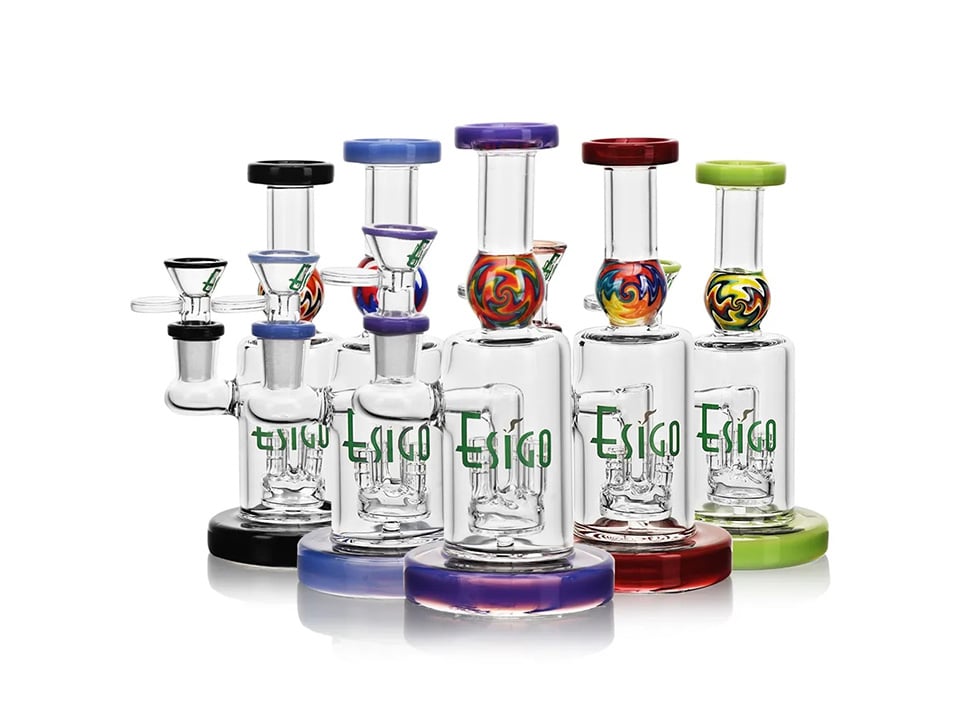
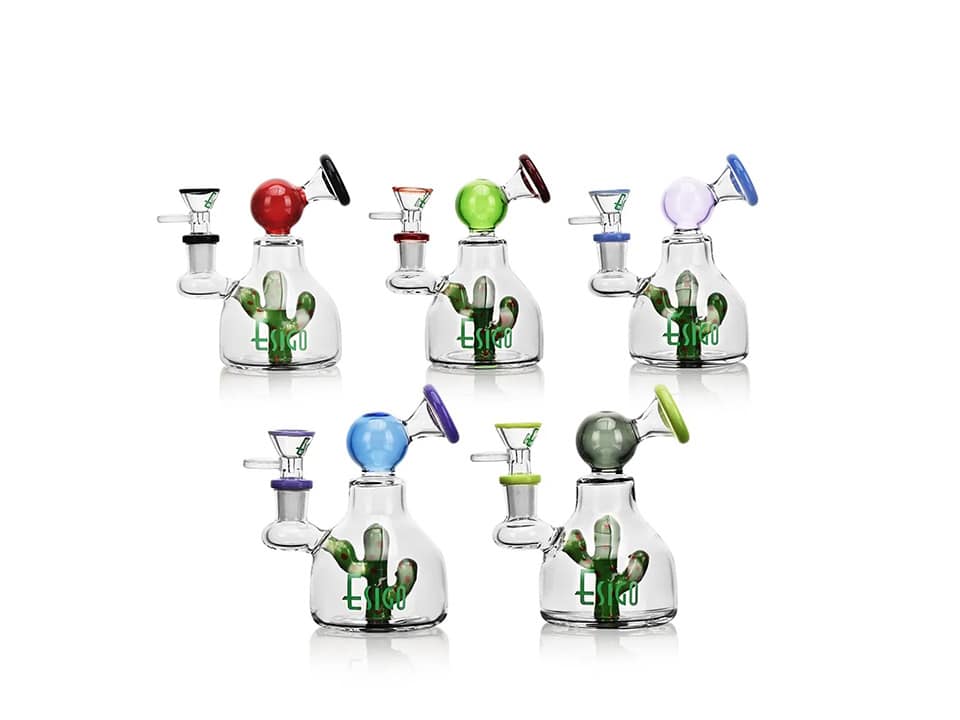
From my experience, private label wins where the shopper buys shape, vibe, colorway, and price logic before they buy pedigree. Everyday hand pipes. Novelty forms. Compact rigs. Counter-friendly pieces that are photogenic, repeatable, and don’t require a ten-minute origin story from the budtender.
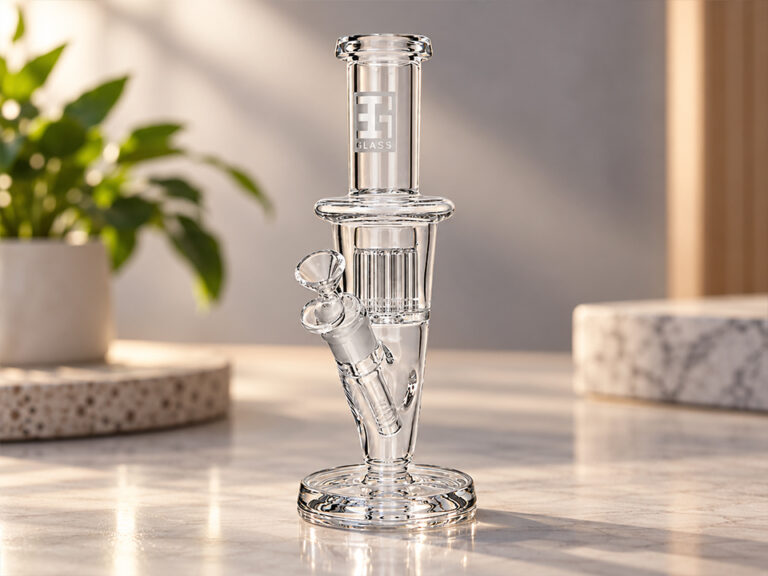
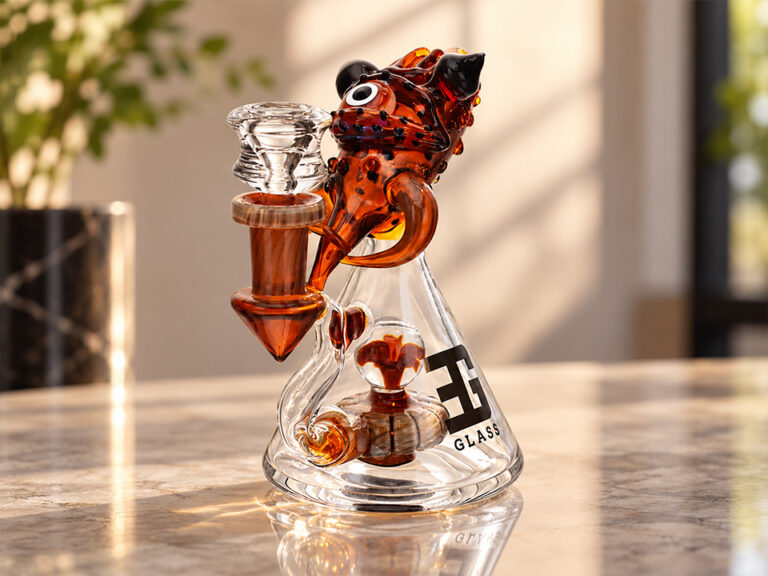
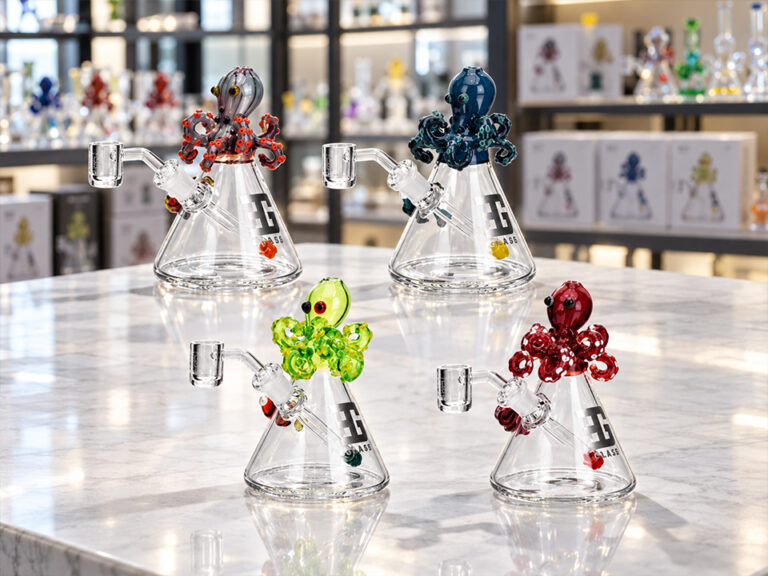
That’s exactly why pieces like the BSH15 wig wag cactus pot hand pipe, the BSH09 bonsai series borosilicate hand pipe, the opal whistle mini dab rig, the EGH37 ocean-color borosilicate weed pipe, and the EGH33 monster eyeballs hand pipe make sense as private-label-style workhorses: they’re form-led, color-led, and easy for a customer to “get” in seconds. The product pages also show the kind of specs that matter on the floor—BSH15 at 5.7 inches, BSH09 at 96g, the opal whistle mini rig at 3.3 inches and 70g, EGH37 at 130g, EGH33 at 5 inches—which is exactly the sort of nuts-and-bolts detail serious buyers actually use.
That’s the lane.
But when the category starts leaning on artist clout, collectible heat, or heavy-function prestige, I’d keep branded anchors. No hesitation. Otherwise the whole set starts reading like clone work.
The academic warning people skip right past
Here’s the other thing. Private label isn’t held back only by retailer courage or vendor resistance; sometimes it’s held back by quality parity not being there yet, consistently, in the eyes of shoppers who know how to read finish, weight, processing quality, and whether the piece feels dialed in or just churned out.
That’s why I keep coming back to Jan-Benedict E.M. Steenkamp’s March 2024 Journal of Retailing article, What is holding private label back in the United States and in emerging markets?. The paper points straight at the quality-equivalence problem. And if you’ve spent real time around smoke-shop counters, that rings true. People don’t just buy a pipe. They buy the feeling that it won’t disappoint them in the hand.
That feeling matters. More than spreadsheet people admit.
The supplier angle nobody likes talking about
Price discrimination wrecks assortments.
Not in theory—in practice, in ugly little ways that show up as worse cost, weaker deal terms, and a shelf that can’t compete even when your merchandising is solid. The FTC’s December 2024 case against Southern Glazer’s mattered for that reason: the agency alleged favored chains got better pricing and access to discounts while independents often weren’t even told about the same rebate structures or special deals.
Now, yes, that case was about wine and spirits—not glass. I know. But the pattern is familiar to any independent buyer who’s ever had that gut-level suspicion that the rep’s “best available cost” somehow gets much better when the account is national.
So when people ask me how to balance private label and branded products, I don’t start with branding philosophy. I start with deal sheets, freight drag, MOQ pain, turns, and whether the vendor actually earns the peg space.
The balance I’d actually run
Three bands. Tight edits.
I’d use branded items to establish the top-end reference and calm first-time shoppers, private label to dominate the mid-shelf velocity zone, and I’d keep the opening-price tier brutally narrow because too many retailers clutter the case with cheap dupes that cannibalize each other and make the whole wall look dusty even when it’s clean.
My own bias? I’d start around 55% private label by SKU count and maybe 45% branded, but I would not mirror that split in dollars. I’d keep more open-to-buy in branded hero pieces because that’s what props up the price ladder and stops your own-label line from looking like random China pack. Harsh phrase. Accurate phrase.
And if a SKU needs a long speech plus a markdown to move, it doesn’t belong on the shelf. Full stop.
| Assortment role | Branded glass | Private label |
|---|---|---|
| Traffic and trust | Use as hero SKUs, premium reference points, and staff-pick items | Use sparingly unless quality is already proven |
| Core velocity | Keep selective; avoid over-SKUing me-too branded pieces | Own the $25-$50 zone with tight color and shape control |
| Margin recovery | Good, but vendor rules and MAP can limit flexibility | Strongest margin lever if quality is consistent |
| Exclusivity | Usually weaker unless you secure a special drop | Strong if you control colorways, packaging, and reorder timing |
| Reorder risk | Higher if vendor lead times or allocations shift | Lower if production is stable and spec sheets are disciplined |
| Best use case | Credibility, trade-up, premium gifting, collector demand | Everyday carry, novelty forms, opening price points, bundle logic |
One more uncomfortable data point
Reuters reported in January 2024 that private label reached a record 31.5% of total revenues for Italian retailers in 2023, up from 30.4% a year earlier and 28.3% in 2019. That’s not a tiny swing. That’s structural change. But notice the detail: the cheaper end of private label was growing faster than the premium end, which is exactly why I don’t buy the fantasy that every store can upscale its own-label line overnight and call it brand building.
It works. Usually.
Until buyers forget that glass isn’t canned soup. The shopper can feel the difference instantly. They can spot corny execution. They can tell when a piece has shelf heat and when it’s just occupying oxygen.
FAQs
What is the difference between branded glass and private label glass?
Branded glass is sold under a manufacturer, studio, or artist-controlled name, while private label glass is produced for a retailer and sold under that retailer’s own branding, giving the store more control over pricing, packaging, margin, and exclusivity but less automatic consumer trust. After that definition, the real-world version is simpler: branded glass borrows credibility; private label has to earn it on the counter.
How should retailers balance private label and branded products in a glass assortment?
A balanced glass assortment uses branded products to establish trust, premium reference pricing, and trade-up behavior, while private label covers the everyday velocity bands where shoppers care more about shape, color, size, and value than outside brand recognition. In plain shop talk, let branded pieces set the tone, then let private label do the grind work in the middle of the case.
Why do some private label programs fail even when margins look better?
Private label programs fail when retailers confuse higher markup with better strategy, expand SKU count too fast, weaken branded benchmarks, and let finish quality slide, which makes shoppers question the whole wall and forces staff to oversell pieces that should have sold themselves. Here’s the ugly truth: bad private label doesn’t just underperform—it drags the perceived value of everything around it.
What is the best private label strategy for retailers selling borosilicate glass?
The best private label strategy for borosilicate glass retailers is to own repeatable, design-led, mid-price SKUs with tight specs, controlled colorways, sensible packaging, and fast reorder logic, while keeping branded anchor pieces in the assortment to support trust, price architecture, and premium conversion. I’d rather see 10 sharp own-label winners than 40 sleepy SKUs nobody remembers five minutes after they leave.
If I were fixing this tomorrow, I wouldn’t start with a giant PO or a mood-board presentation. I’d cut the zombie SKUs, keep the branded proof points, tighten the mid-shelf, and make every private-label piece answer one blunt question: does it move because it’s good, or only because it’s cheap? That answer tells you almost everything.