Free shipping in the U.S. for orders over $50

Build a Scalable Glass Range for Chain Smoke Shop Growth
Chains break fast.
I have watched smart operators open Store #4, then Store #7, then wake up one quarter later with a glass assortment that looks like seven different buyers had seven different moods, because that is exactly what happened, and nobody wants to admit that undisciplined “treasure hunting” is usually what kills margin before rent ever does. Want the hard truth?
If you want chain growth, your glass wall cannot be a personality test. It has to be a system.
Table of Contents
Most Buyers Overbuy Novelty and Underspend on Repeatable Core
I’ll say it plainly: most smoke shop buyers get seduced by the weird piece, the loud colorway, the trade-show applause line. Then they underorder the boring sellers that actually pay payroll. That is why I build around wholesale glass pipes first, not because they are glamorous, but because they are the most forgiving, most replenishable, and easiest category to standardize across multiple doors.
My rule is blunt. Core first. Novelty second. Ego last.
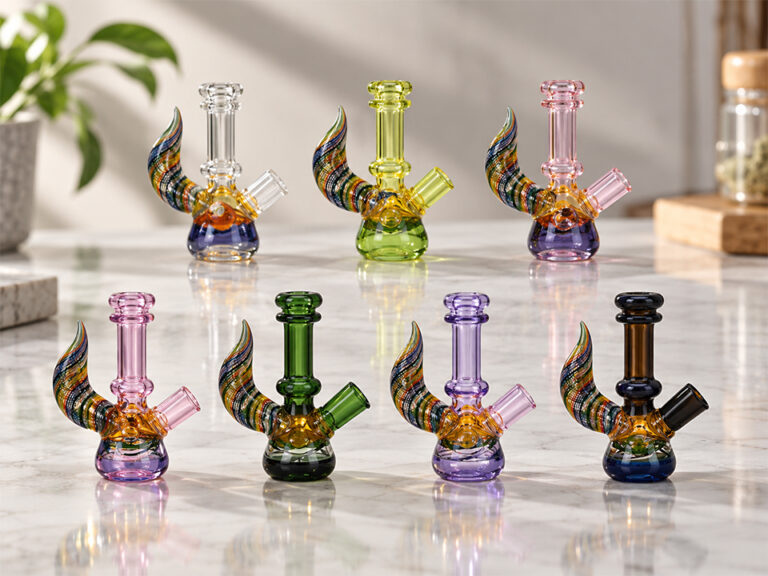
In practice, that means your opening move is not a wall full of one-off art glass. It is a disciplined spread of bulk glass pipes in dependable shapes, durable borosilicate builds, and price bands that can survive regional income differences without rewriting the assortment every month. A rainbow mushroom hand pipe works when it behaves like a controlled novelty layer, and a yellow duck borosilicate hand pipe works when it sits above a stable bed of plain, fast-turning hand pipes rather than pretending to be the business itself.
The Real Scalable Mix Is a Ladder, Not a Grab Bag
I use a ladder. Always.
A chain-ready smoke shop glass inventory should be structured by role, retail band, breakage tolerance, and reorder velocity, because that is how you make Store #2 look intelligent without forcing Store #11 to inherit the same weird dead stock that one manager thought was “different enough to pop.” Why do so many teams still buy like every location is a flea market booth?
Here is the framework I trust when I am answering the question buyers actually mean when they ask how to stock a smoke shop with glass.
| Range Layer | What It Does | Target Retail Band | Share of Glass SKUs | Share of Unit Sales I’d Expect | Reorder Logic |
|---|---|---|---|---|---|
| Core hand pipes | Everyday velocity | $12-$25 | 30%-35% | 35%-45% | Reorder weekly |
| Entry water pipes | Step-up purchase | $35-$70 | 20%-25% | 18%-25% | Reorder when top 2 sizes hit 40% sell-through |
| Core rigs | Concentrate demand | $50-$110 | 12%-18% | 10%-15% | Reorder by style, not by color |
| Feature bongs | Margin and visual authority | $80-$160 | 10%-15% | 8%-12% | Reorder monthly |
| Add-ons | Basket builder | $15-$45 | 8%-12% | 8%-10% | Never let hero attachments go out of stock |
| Novelty/seasonal | Traffic and gifting | 5%-10% of SKUs | 5%-10% | 3%-6% | Cap depth aggressively |
That table is not theory. It is survival math.
Borosilicate Utility Wins the Long Game
I have very little patience for fragile, overdecorated pieces that look expensive and behave cheap. In chain retail, durability is not some nice extra; it is margin protection.
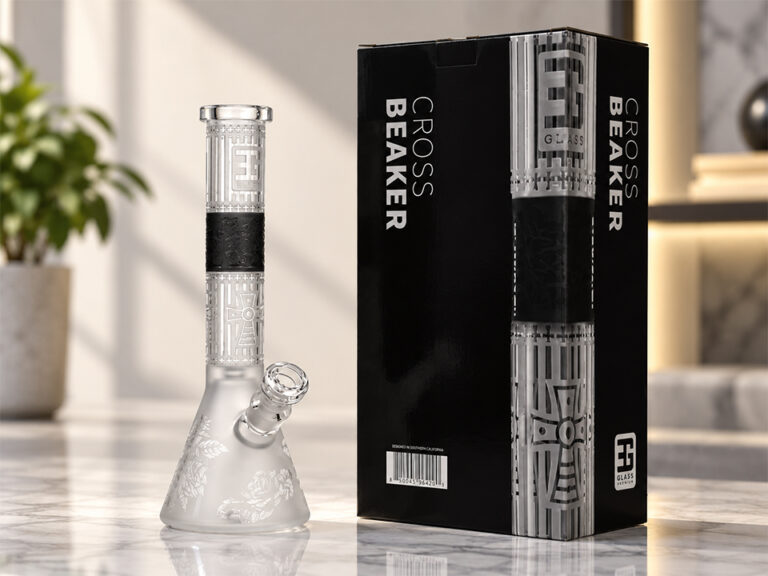
This is where buyers need to grow up. A clean, functional 11.5-inch straight tube bong or a wig wag straight tube water pipe gives you something better than visual noise: predictable price anchoring, easy staff recommendation, and a product story customers understand in five seconds. That matters more than another “conversation piece” nobody reorders.
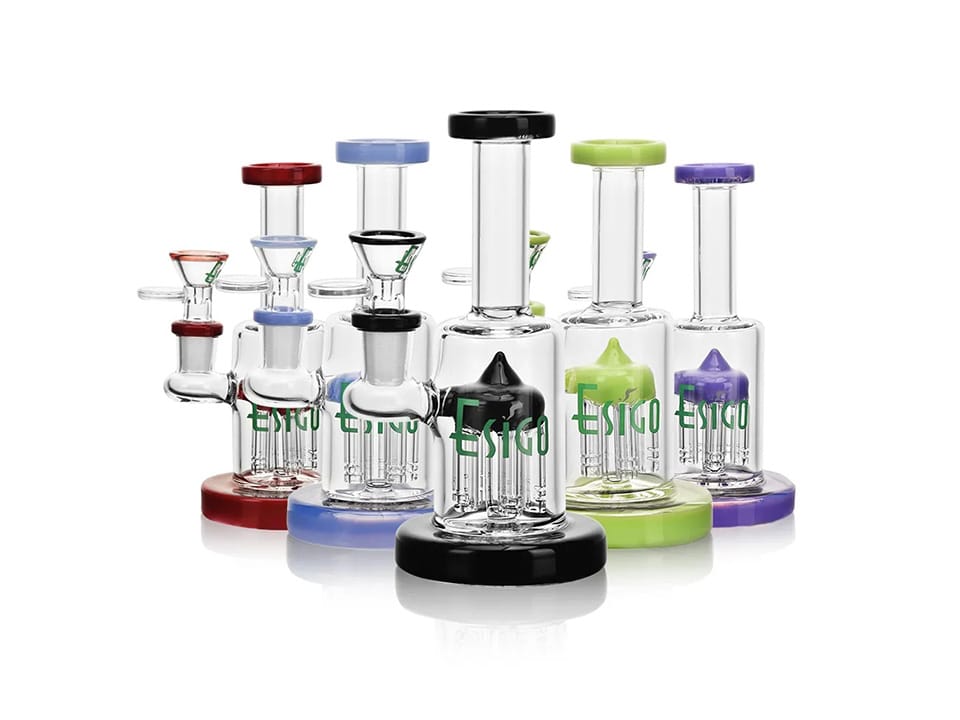
And when I say utility, I do not mean bland. I mean useful. A borosilicate ash catcher upsell is the kind of add-on that grows basket size without bloating your glass wall, while a straightforward borosilicate concentrate rig or a more design-led reef rig for concentrate buyers lets you serve the concentrate customer without turning the category into a museum.
Concentrates Change the Mix Faster Than Slow Buyers Expect
This part gets missed.
When concentrate demand rises in a trade area, chains that still buy glass as if flower-only traffic dominates end up with the wrong ratio of wholesale water pipes, rigs, attachments, and cleaning add-ons, and then management blames “the economy” when the real problem is that the shelf no longer matches how customers are consuming. Seen that movie before?
I bias the mature stores toward a slightly heavier rig-and-accessory mix than new stores. Why? Because concentrate buyers are usually better educated, less random, and more attachment-friendly. They buy with intent. And intent is where add-on margin lives.
There is also a quality argument that lazy operators ignore. Columbia Mailman School researchers reported in 2023 that exclusive marijuana users showed higher lead and cadmium biomarkers than non-users, including higher lead levels in blood and urine, which should make any serious operator more demanding about sourcing, materials discipline, and vendor consistency across smoking categories. I am not saying a glass piece causes that exposure by itself; I am saying careless category management and careless sourcing tend to travel together.
Compliance Is Not a Side Department Anymore
This matters now.
A lot of smoke shops still separate “glass strategy” from “regulated product risk,” but regulators do not care about your internal org chart, and customers do not neatly separate the glass case from the rest of the counter experience, so a sloppy nicotine set or youth-coded merchandising approach can stain the credibility of the whole store. Isn’t that obvious?
In June 2024, Reuters reported that the U.S. Justice Department and FDA launched a joint task force targeting illicit e-cigarette sales and distribution, after FDA had already issued more than 1,100 warning letters tied to unauthorized tobacco products; Reuters also noted that only 23 tobacco-flavored e-cigarette products had been authorized for sale at that time. That is not background noise. That is a direct warning to smoke shop chains that want to scale without getting dragged into enforcement theater.
Then the FDA tightened the screw again. On July 25, 2024, the agency said it sent warning letters to 80 brick-and-mortar retailers in 15 states for selling unauthorized Elf Bar and Lost Mary products, while also seeking civil money penalties against eight retailers that had already been warned. If your chain still thinks compliance is a back-office headache, you are running yesterday’s playbook.
And do not comfort yourself with the idea that public-health pressure is fading. CDC and FDA researchers reported that 1.63 million U.S. middle and high school students still used e-cigarettes in 2024, with disposables leading device type and flavored products dominating usage, which means enforcement pressure, merchandising scrutiny, and retailer optics are not disappearing just because the percentage dropped from 2023.
Marketing Access Matters More Than Buyers Admit
Distribution is one problem. Discovery is another.
A scalable glass range is not just about what sits in the case; it is about whether each store can present the assortment clearly across local channels, compliant digital touchpoints, and third-party discovery surfaces, because a chain that cannot communicate its range ends up discounting to compensate for weak visibility. Why keep pretending merchandising ends at the shelf edge?
That is why I paid attention to the April 2024 New York case over cannabis marketing rules. Reuters reported that a state judge narrowed an earlier sweeping ruling and ultimately voided only regulations tied to cannabis marketing, after a challenge to rules that barred dispensaries from advertising on third-party platforms. I read that as a business signal: access to compliant discovery channels is becoming part of the commercial fight, not an afterthought.
For glass specifically, that means your wholesale glass pipes strategy should support clean category naming, plain-English feature comparisons, and consistent product-group architecture across stores and digital pages. No more mystery bins. No more poetic nonsense in the SKU file. No more product names that only make sense to the buyer who wrote them at 11:47 p.m. after a trade show dinner.
What I Would Stock First in a 10-Store Chain
I would keep it tighter than most operators expect, because scale punishes vanity.
For a 10-store chain, I would rather run 120 dependable glass SKUs that I understand deeply than 260 pieces I cannot replenish cleanly. My starting bias would be simple: 40-45% hand pipes, 25-30% water pipes and bongs, 12-15% rigs, 8-10% add-ons like ash catchers, and a small 5-8% novelty layer. That is how I protect open-to-buy dollars while still giving each wall enough personality to sell.
And yes, I would absolutely standardize the first 70-80% of every store’s assortment. Local flair belongs in the top layer, not in the skeleton. Buyers hate hearing that because it sounds restrictive. I think it sounds profitable.
When someone asks me for the best wholesale glass pipes for smoke shops, I do not answer with a brand sermon. I answer with three questions: what survives handling, what sells twice a week, and what can be reordered without drama? If a glass pipe supplier cannot answer those with clean specs, steady pack logic, and consistent borosilicate quality, I move on.
FAQs
What is a scalable glass range for a chain smoke shop?
A scalable glass range for a chain smoke shop is a standardized assortment of hand pipes, water pipes, rigs, and add-ons organized by price band, function, margin, and replenishment rules so multiple stores can sell the same winning items without turning every reorder into a one-off buying decision.
In plain English, it means the assortment is designed to work across Store #1 and Store #14 with only limited local tweaks. The goal is not to make every location identical. The goal is to make the commercial engine identical.
How many glass SKUs should a growing smoke shop chain carry?
A growing smoke shop chain should usually carry enough glass SKUs to cover core use cases, price steps, and a small novelty layer, but not so many that buyers lose control of replenishment, duplicate styles, and dead stock; for many chains, disciplined breadth beats oversized choice every single time.
I would rather see a tight, well-replenished set of 100-150 glass SKUs than a chaotic wall of 300 pieces with no sell-through logic. More choice is not sophistication. Often, it is just expensive confusion.
Why do wholesale glass pipes matter more than showpiece glass for chain growth?
Wholesale glass pipes matter more than showpiece glass for chain growth because they usually offer faster turns, simpler staff selling, lower replacement friction, cleaner price ladders, and easier multi-store replenishment, which makes them the category backbone that funds experimentation in bongs, rigs, and novelty pieces.
That does not mean premium pieces are useless. It means premium pieces should sit on top of a working core, not pretend to be the core.
How should a chain balance novelty glass with utility glass?
A chain should balance novelty glass with utility glass by treating novelty as a controlled traffic driver and utility as the revenue base, keeping most dollars in durable, repeatable borosilicate sellers while limiting novelty depth so a few attention-grabbing pieces do not hijack the assortment.
That is the adult answer. Novelty gets people to look. Utility gets them to buy, rebuy, and recommend.
If you want chain growth without a glass wall full of expensive mistakes, build the boring foundation first, add selective theater second, and demand more from every supplier than a pretty sample and a fast pitch. That is how a smoke shop stops buying glass like a collector and starts buying it like an operator.