Free shipping in the U.S. for orders over $50

Best Categories to Bundle With Beaker Bongs in Wholesale
I’ve watched buyers stare at a case of beaker bongs like they were solving a tax problem.
They weren’t.
They were trying to figure out whether another dozen 12-inch clear-base pieces would actually move, or just sit in the back room wrapped in bubble sleeves until someone finally discounted them. That’s the part of wholesale bongs nobody likes saying out loud: the bong isn’t always the profit center. Sometimes it’s bait. Good bait, sure—but still bait.
The money is around it.
A beaker bong pulls the customer in because it’s familiar, stable, easy to explain, and not weird-looking enough to scare off a first-time buyer. But the reorder? The reorder usually comes from the bundle: hand pipes, ash catchers, cleaning SKUs, dab rigs, replacement bowls, and the odd little novelty piece that makes a clerk say, “Yeah, that duck one sells.”
Sounds basic. It isn’t.
Table of Contents
Beaker Bongs Are the Anchor, Not the Whole Order
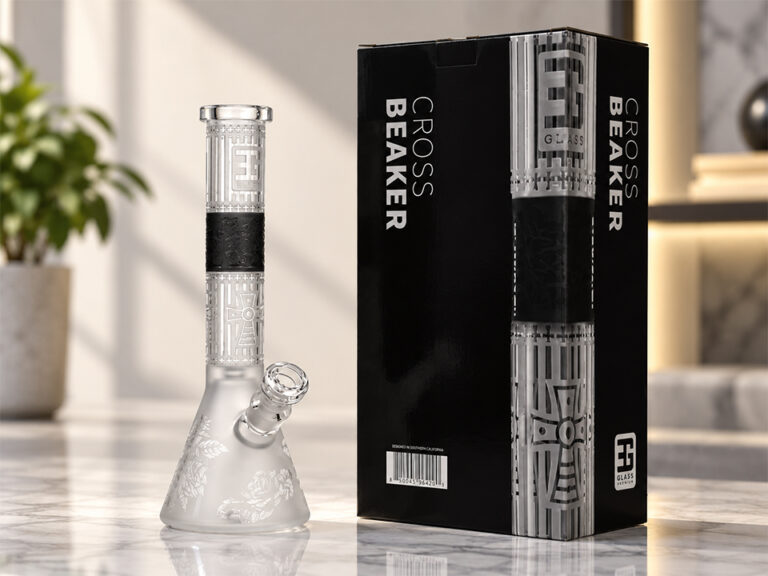
But here’s where wholesalers get lazy. They treat beaker bongs like a category by themselves, when in reality they’re more like the middle shelf in a smoke shop case—the thing everything else should orbit around.
A beaker has obvious retail advantages. Wide base. Familiar silhouette. Decent water volume. Easy counter pitch. No clerk needs a 90-second demo to explain why a beaker shape feels steadier than a skinny straight tube.
That’s useful.
Still, if a retailer buys glass water pipes wholesale and only receives the pipes, you’ve basically forced them to shop somewhere else for the supporting cast. And once another distributor owns the ash catcher, hand pipe, or parts reorder, don’t act shocked when they start quoting the next bong order too.
I frankly believe half the “price pressure” in this category is self-inflicted. Wholesalers sell isolated SKUs, then complain buyers aren’t loyal.
The Compliance Stuff Is Annoying. Ignore It Anyway and Pay Later.
Nobody wants legal language in a product strategy article. I get it.
But the adult-accessory business lives in a weird zone where glass, tobacco, hemp, state law, payment processors, customs paperwork, and platform policies all overlap in ways that can get ugly fast. Under U.S. federal law, drug paraphernalia analysis looks at things like product design, instructions, advertising, display style, supplier legitimacy, and legitimate tobacco-use context—not just what the item physically is. That’s spelled out in 21 U.S. Code § 863.
Tiny detail? Not really.
The FDA also tightened tobacco retail rules in 2024 by raising certain age-verification expectations from under 27 to under 30, which matters because smoke shops and tobacco accessory retailers already operate under more scrutiny than casual suppliers pretend. See the FDA final rule on tobacco sales restrictions.
So yes, bundle the glass. Push the ticket size. Build the category.
But don’t write sloppy product copy that makes lawful tobacco or hemp-accessory inventory look like evidence in a bad courtroom slideshow.
Hand Pipes: The Counter Tray Still Pays Rent
A buyer who won’t commit to a full beaker may still grab a spoon pipe. Happens constantly.
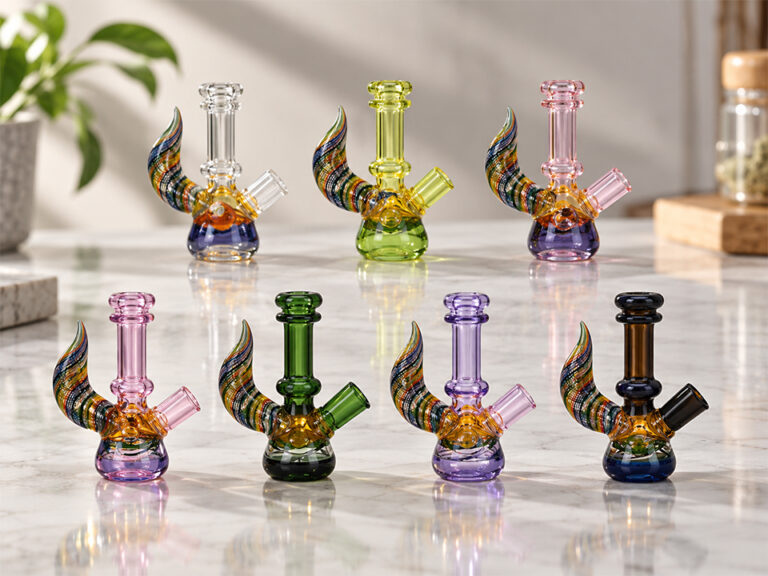
That’s why hand pipes are usually the first category I’d bundle with beaker bongs. They’re cheap enough to move, small enough to display, and visual enough to make customers linger. Plus, clerks don’t need a seminar to sell them.
The trick is mixing plain utility with little bits of personality.
The Bonsai Series Cactus Honeycomb Pot Hand Pipe works because it isn’t just another anonymous spoon in the tray. It has a hook. Same with the Bonsai Series Cherry Tree Pot Hand Pipe. It gives the shop a softer, giftable piece that doesn’t feel like generic import glass dumped into a velvet-lined case.
Here’s the ugly truth: boring hand pipes are fine for baseline stock, but memorable hand pipes get talked about.
And talked-about glass moves.
Ash Catchers: The Upsell That Doesn’t Feel Like a Hustle
Ash catchers are one of the cleanest add-ons in the whole bong bundle category.
No pun intended. Mostly.
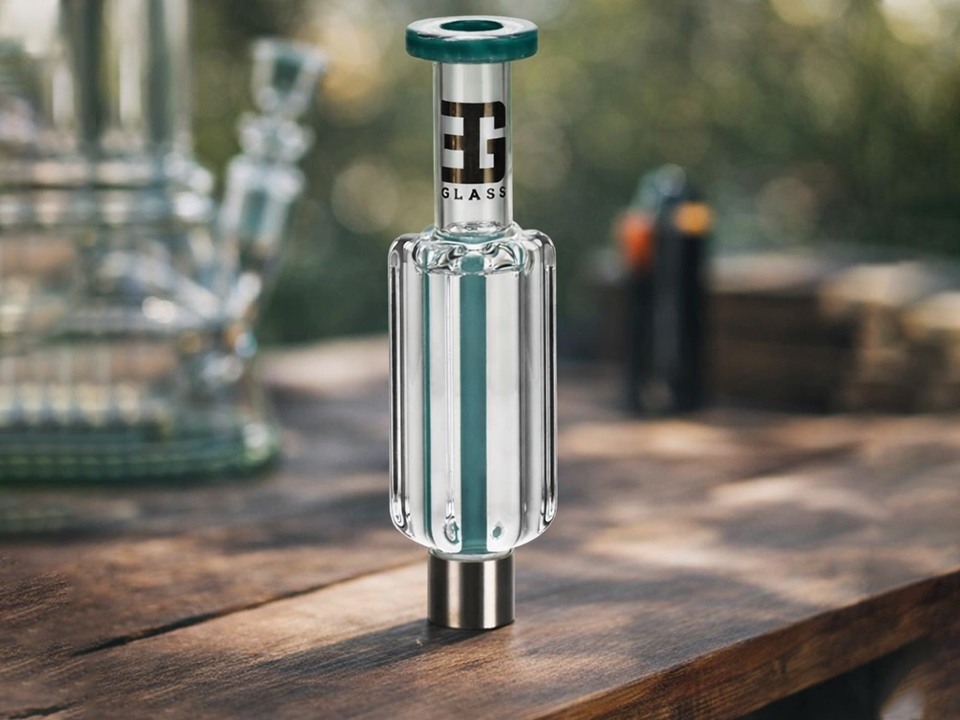
They solve a real problem: dirty water, resin buildup, and that customer complaint where someone acts surprised that glass requires maintenance. A compatible ash catcher gives the clerk an easy line: “This keeps the main chamber cleaner.” That’s it. Sale made.
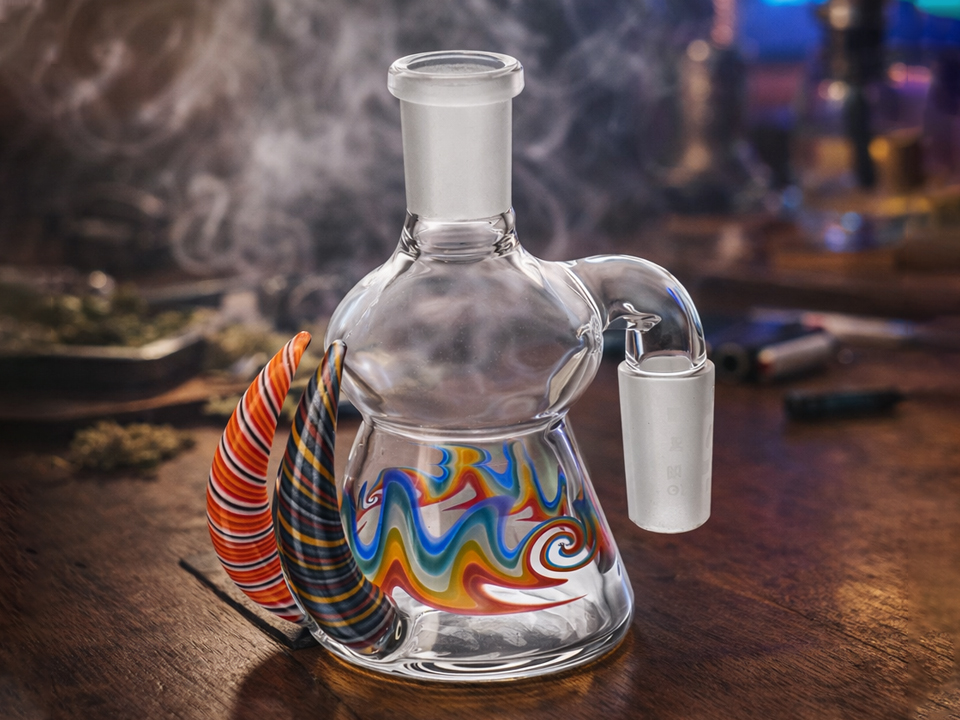
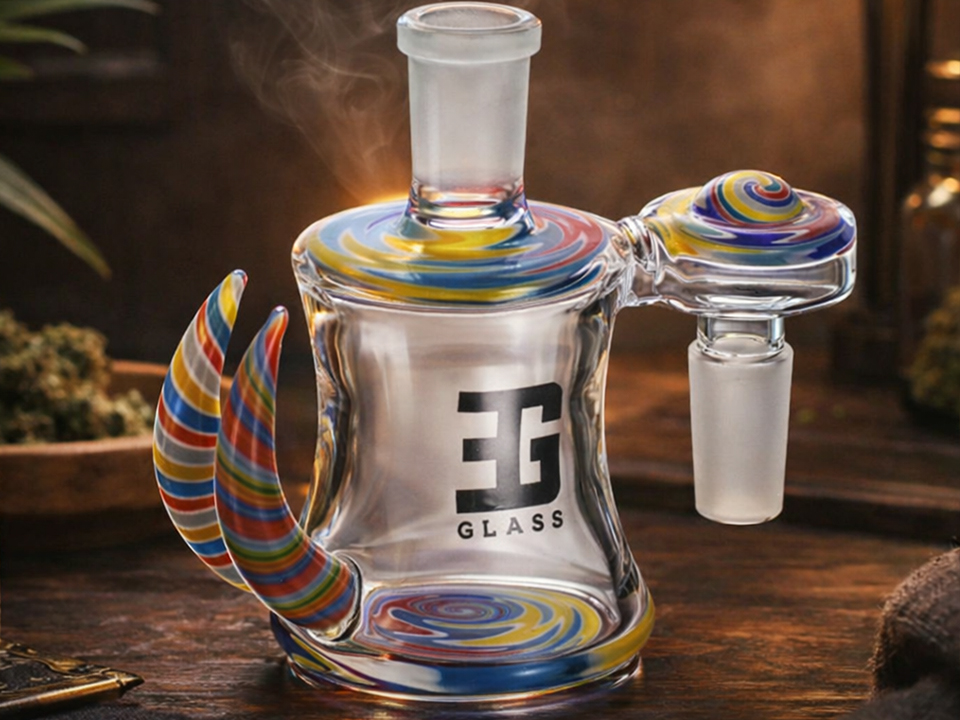
The Bright Horn Borosilicate Glass Ash Catcher fits this role because it’s functional, visual, and tied directly to the beaker purchase. But compatibility is where wholesalers either look professional or look like they packed the order blindfolded.
Joint size. Angle. Gender. Height clearance.
Don’t bury those details. A 14 mm 45-degree ash catcher and an 18 mm 90-degree setup are not “close enough,” and any buyer who’s had returns from mismatched attachments already knows that.
Dab Rigs Belong Nearby—But Don’t Confuse the Pitch
I hate when sales reps pitch dab rigs like they’re just small bongs.
They’re not.
A rig buyer is usually thinking about concentrate use, tighter airflow, smaller chambers, heat handling, and banger compatibility. A beaker buyer may be thinking “big piece, stable base, good water pull.” Different mental aisle, same store.
That’s why rigs should be bundled as adjacent demand, not replacement demand.
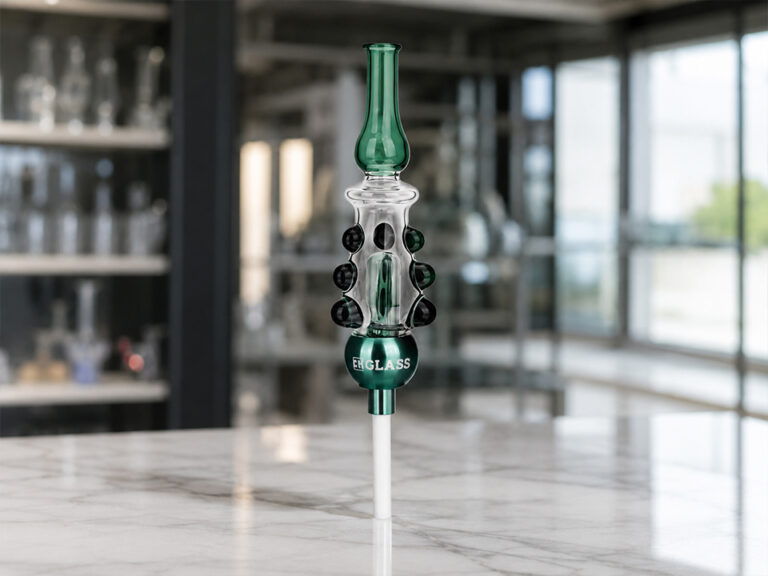
The ES24834 Borosilicate Glass Dab Oil Rig makes sense as a compact add-on for shops already buying beakers. The EG-60 Reef Rig Sea Life Dab Oil Rig is more display-driven—something that can catch the eye when the clear glass starts blending together.
And yes, the broader market gives this category some oxygen. Reuters reported in 2024 that U.S. cannabis sales estimates were approaching $40 billion, with retailers adapting to different adult-use product formats and shifting buyer behavior in real time. That context matters, even if your catalog language stays compliant and tobacco/hemp-accessory focused. Read the Reuters 2024 cannabis market review.
One warning: don’t overload a conservative shop with rigs just because they bought beakers. Ask how much concentrate traffic they actually see.
Radical idea, right?
Novelty Glass: Fun Until It Becomes Dead Stock
Novelty glass is where buyers get emotional. Dangerous territory.
A mushroom pipe looks cute. A duck pipe looks funny. A cactus pipe gets attention. Then someone buys six dozen because “the design is strong,” and three months later the slow movers are still sitting there like tiny glass regrets.
I like novelty glass. I don’t trust it in big ratios.
The Fancy Yellow Duck Borosilicate Glass Hand Pipe has the kind of counter appeal that can break a customer’s scrolling trance. The Rainbow Series Mushroom Hand Pipe hits that colorful, giftable, slightly festival-coded lane that some shops absolutely know how to sell.
But novelty should season the bundle, not become the meal.
Ten to twenty percent of the assortment? Fine. Fifty percent? Now you’re gambling with someone else’s shelf space.
Cleaning Gear and Replacement Parts: Boring SKUs, Real Money
This is where the amateurs yawn.
Cleaning plugs, brushes, downstems, replacement bowls, screens, and basic maintenance accessories don’t have the same “new drop” energy as a shaped rig or thick beaker. But they create repeat visits. They save clerks from annoying customer conversations. They make the original bong purchase feel less disposable.
A beaker bong without parts support is a short-term sale.
A beaker bong with matching bowls, downstems, cleaning tools, and a basic care pitch becomes a small ecosystem. That sounds corporate, I know. Sorry. It’s still true.
And from my experience, the supplier who owns the replacement-parts reorder quietly earns more trust than the supplier who only wins on a one-time cheap case price.
Build Bundles the Way a Smoke Shop Actually Sells
Ever watch a real customer shop a glass case?
They don’t move in neat category logic. They bounce. They point at a bong, laugh at a novelty pipe, ask what an ash catcher does, then suddenly want something “easy to clean” because their roommate broke the last one.
Retail is messy.
So a good wholesale beaker bong bundle should mirror that mess without becoming chaotic. Start with the anchor pieces. Add impulse pieces. Add functional upsells. Add parts. Add one or two visual oddballs. Keep the invoice readable.
That last part matters more than suppliers admit.
If a buyer can’t reorder the same bundle with one email—“same as last time, fewer ducks, more ash catchers”—your assortment planning is too cute.
Wholesale Bundle Strategy Table
| Bundle Category | Best Retail Role | Why It Works With Beaker Bongs | Suggested Bundle Ratio | Buyer Risk |
|---|---|---|---|---|
| Hand pipes | Counter impulse sales | Lower price point, giftable, easy to display | 2–4 hand pipes per beaker model | Overbuying novelty designs |
| Ash catchers | Functional upsell | Improves maintenance story and perceived value | 1 ash catcher per 2–3 beakers | Joint-size mismatch |
| Dab rigs | Adjacent adult-use category | Captures concentrate-focused customers without replacing beakers | 1 rig per 3–5 beakers | Confused positioning |
| Novelty glass | Visual traffic driver | Breaks up plain glass displays and supports gifting | 10–20% of bundle | Slow-moving designs |
| Replacement parts | Repeat-purchase support | Keeps customers returning after the original sale | 1 part kit per beaker case | Poor SKU labeling |
| Cleaning accessories | Maintenance ecosystem | Reduces buyer regret and supports reorders | 1 cleaning SKU per bong SKU | Low perceived excitement |
My Preferred Bundle Stack
If I were building a starter wholesale beaker bong bundle, I wouldn’t overthink it.
Beakers first. Obviously.
Then I’d add compact hand pipes, one compatible ash catcher family, replacement bowls or downstems, and a tight novelty selection. If the shop has concentrate traffic, I’d slide in a few dab rigs. If not, I’d wait.
The worst bundle is the one that tries to prove the catalog is big.
The best bundle proves the supplier understands the store.
That’s a very different thing.
FAQ
What are the best categories to bundle with beaker bongs in wholesale?
The best categories to bundle with beaker bongs in wholesale are hand pipes, ash catchers, dab rigs, novelty glass, cleaning accessories, and replacement parts because they cover impulse buying, functional upsells, maintenance needs, and adjacent adult-accessory demand around one anchor product.
In shop-floor terms, the beaker gets attention, but the surrounding accessories lift the order value. I’d start with hand pipes and ash catchers before expanding into rigs or novelty-heavy assortments.
Why are hand pipes good products to bundle with bongs?
Hand pipes are good products to bundle with bongs because they give retailers a lower-ticket item that fits counter trays, impulse purchases, gift shoppers, and customers who aren’t ready to spend on a full-size water pipe.
They’re the easy add-on. No long pitch. No complicated compatibility lecture. Just visual appeal, accessible pricing, and fast turnover when the designs aren’t painfully generic.
Should wholesalers bundle dab rigs with beaker bongs?
Wholesalers should bundle dab rigs with beaker bongs when the retailer serves customers interested in concentrate accessories and can clearly separate rig use cases from traditional water-pipe sales.
Don’t jam rigs into every order. That’s lazy. A shop with strong concentrate traffic may want compact borosilicate rigs; a conservative tobacco-accessory shop may prefer hand pipes, ash catchers, and replacement parts first.
How many novelty glass pieces should be included in a bong bundle?
Novelty glass should usually make up about 10% to 20% of a bong bundle because it adds visual energy and gift appeal without creating too much slow-moving inventory risk for the retailer.
That’s my bias, anyway. Novelty works best as rotation stock: cactus, mushroom, duck, seasonal color, then refresh. Don’t drown the case in cute glass and pretend it’s strategy.
What is the safest wholesale strategy for head shop glass bundles?
The safest wholesale strategy for head shop glass bundles is to combine compliant product positioning, clear compatibility details, conservative novelty ratios, practical accessories, and easy reorder logic so retailers can sell through inventory without confusion or avoidable returns.
The boring stuff protects the money. Label the joint sizes. Keep adult-use language responsible. Build bundles that clerks can actually explain while half-distracted on a busy Friday night.
Final Word: Sell the System, Not Just the Beaker
A case of beaker bongs can open the door.
It won’t hold the account by itself.
The stronger play is to build a bundle around how real smoke shops sell: a stable anchor piece, small impulse glass, functional ash catchers, cleaning and replacement support, controlled novelty, and dab rigs only where the shop can move them.
That’s the difference between shipping wholesale bongs and building a category the buyer actually reorders.
If you’re putting together a smarter glass assortment, start with the beaker—but don’t stop there. Add the hand pipes, ash catchers, rigs, and maintenance SKUs that make the whole shelf work harder.