Free shipping in the U.S. for orders over $50

Open-to-Buy Planning for Smoke Shop Glass Inventory
And in smoke shop retail, that cash often sits inside slow-moving 14 mm bowls, novelty hand pipes, oversized water tubes, seasonal dab rigs, and “limited” colors that looked brilliant on a vendor sheet but somehow became dead weight by week six.
I have watched buyers make the same mistake for years: they confuse a cool case with a commercial case. That is how a shop ends up with $12,000 in glass that photographs well, sells badly, and quietly suffocates the reorder budget. Who wants to admit the shelf is the problem?
Table of Contents
Why Open-to-Buy Planning Hits Different in Smoke Shop Glass
Open-to-Buy Planning is a retail buying control system that tells a store how much inventory it can purchase during a period without overstocking, starving cash flow, or breaking its planned sales and margin targets.
That sounds dry. It is not.
In smoke shop glass inventory, OTB planning is the difference between buying like an operator and buying like a collector. The category has weird physics: fragile units, uneven demand, high visual merchandising value, unpredictable color preference, local legal pressure, and wildly different velocity by price tier.
A $19 hand pipe can turn four times before a $119 recycler moves once. A clean straight tube may outsell a highly worked “art” piece because customers want simple, functional, easy-to-clean glass. I know that offends some glassheads. Good. The register does not care.
Reuters reported that the U.S. cannabis market was estimated to reach about $40 billion in sales by year-end 2024, while also noting that mature markets still wrestle with oversupply, low prices, and grey-market competition. That matters because smoke shop accessory buying rides the same consumer temperature, even when the store does not touch regulated cannabis products.
The Hard Truth: Your Glass Case Is Probably Over-Assorted
Most smoke shops do not have an inventory problem. They have an ego problem.
They buy too wide, too early, too emotionally. Ten similar spoon pipes. Eight near-identical mini rigs. Five novelty pieces nobody asked for. Then they blame “slow season.”
But slow season is not always the villain. Sometimes the villain is duplicate demand.
If three shelf facings serve the same customer mission, two of them are probably wasting open-to-buy dollars. The customer walking in for a daily-use water pipe does not need seven philosophical choices. They need the right height, clean welds, thick borosilicate glass, a stable base, and a price that does not make them check Amazon in the aisle.
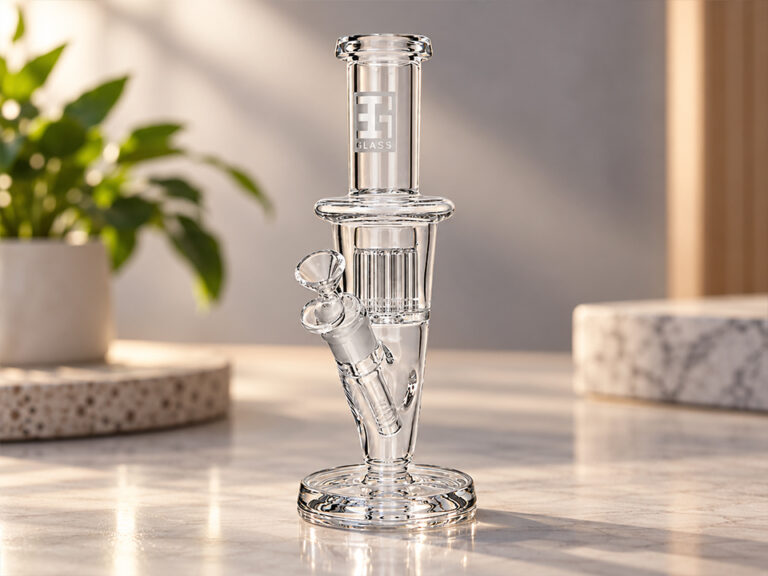
That is why core utility pieces deserve protected OTB. A basic water pipe like this 11.5-inch dual bullet straight tube bong belongs in a different buying bucket than a novelty seasonal hand pipe. Same material family, different job.
The OTB Formula Smoke Shops Should Actually Use
The classic retail merchandise planning formula is simple:
Open-to-Buy = Planned Sales + Planned Ending Inventory + Planned Markdowns – Beginning Inventory – On-Order Inventory
For smoke shop glass, I would add one more line in the buyer’s notebook:
Breakage reserve.
Not because accountants love it. Because gravity exists.
If you plan $18,000 in monthly glass sales, want $24,000 ending inventory, expect $1,500 in markdowns, start with $21,000 on hand, and already have $6,000 on order, your OTB is:
$18,000 + $24,000 + $1,500 – $21,000 – $6,000 = $16,500
That does not mean “spend $16,500 on whatever looks hot.” It means allocate $16,500 by role, velocity, and risk.
Build Glass Inventory Around Roles, Not Vibes
Here is the category structure I like for smoke shop inventory management:
| Glass Role | Typical Price Band | Target Turn Behavior | OTB Priority | Buyer Notes |
|---|---|---|---|---|
| Core water pipes | $35–$95 | Fast, steady | High | Protect availability; avoid too many duplicate silhouettes |
| Entry hand pipes | $8–$25 | Fast | High | Best impulse tier; keep colors broad but shapes tight |
| Designed hand pipes | $25–$55 | Medium | Medium | Buy shallow; reorder winners only |
| Dab rigs | $45–$140 | Uneven | Medium | Demand depends heavily on local concentrate culture |
| Premium/art glass | $150+ | Slow | Low | Treat like showroom inventory, not daily cash flow |
| Replacement parts | $3–$20 | Fast but fragmented | High | Boring category, real margin, high customer urgency |
The mistake is giving every category the same emotional weight. They do not deserve it.
A wig-wag bullet tube glass bong may justify a deeper buy if your straight tubes already move. A themed pipe like the Bonsai Series prickly pear hand pipe should be bought more carefully because novelty demand can spike fast and disappear faster.
Use 30/60/90-Day Sales Reality, Not Vendor Optimism
Vendors sell possibility. Buyers need probability.
Pull the last 90 days of glass sales. Then split by:
- Unit type: bong, hand pipe, rig, bubbler, bowl, downstem
- Price band: under $20, $20–$50, $50–$100, $100+
- Color/style: clear, worked, character, themed, solid color
- Material: borosilicate glass, silicone, ceramic, quartz accessory
- Breakage or defect rate
- Markdown history
- Reorder lead time
Then look at 30 days separately. Why? Because smoke shop glass trends move faster than quarterly planning language admits.
New York’s Office of Cannabis Management says its 2024 Market Report covers the first two years of adult-use sales, including progress, challenges, and recommendations; the same agency’s reports page also lists its 2024 annual and enforcement reports, which tells operators something obvious but often ignored: regulated cannabis-adjacent retail is still young, messy, and data-hungry.
A Better Open-to-Buy Planning Model for Glass
Use buckets. Not guesses.
I would split monthly glass OTB this way for a typical independent shop:
| OTB Bucket | Share of Monthly Glass OTB | What Goes Here | Rule |
|---|---|---|---|
| Core replenishment | 45% | Proven straight tubes, best-selling pipes, replacement pieces | Reorder based on sell-through, not gut feel |
| Trend testing | 20% | New colors, themed pipes, new silhouettes | Buy shallow: 2–4 units per style |
| Margin boosters | 15% | Accessories, bowls, downstems, quartz, small glass | Protect because attachment rate pays rent |
| Premium/showcase | 10% | Higher-ticket rigs, art pieces | Never let this bucket steal core cash |
| Breakage/markdown reserve | 10% | Damaged goods, clearance, price corrections | Use monthly, review brutally |
This is where open-to-buy inventory planning gets uncomfortable. You have to say no while holding inventory you personally like.
That solid-color cactus borosilicate dab rig might be a strong test item in a concentrate-heavy market. But if your store sells mostly flower accessories, do not let rigs eat the straight-tube budget. The customer base votes with dollars, not compliments.
The Glass Inventory Planning Metrics I Trust
I do not trust “it seems popular.” I barely trust staff anecdotes unless they are tied to POS data.
I trust these:
| Metric | Formula | Healthy Signal | Danger Signal |
|---|---|---|---|
| Sell-through rate | Units sold ÷ units received | 60%+ in 30–60 days for core SKUs | Under 25% after 60 days |
| Inventory turn | Annual COGS ÷ average inventory | Higher in entry/core glass | Premium glass dragging total turn down |
| GMROI | Gross margin dollars ÷ average inventory cost | Shows cash productivity | Pretty shelves, weak profit |
| Weeks of supply | On-hand units ÷ average weekly sales | 3–8 weeks for core items | 12+ weeks on duplicated styles |
| Markdown rate | Markdown dollars ÷ gross sales | Planned and contained | Clearance becomes routine |
| Breakage rate | Damaged units ÷ received units | Tracked by vendor/style | Hidden margin leak |
Retail inventory distortion is not a theory. Blue Yonder’s summary of IHL’s 2023 report put the global cost of inventory distortion at $1.77 trillion, including $1.2 trillion in out-of-stocks and $562 billion in overstocks. That is the giant-version of the same disease: buying the wrong amount of the wrong product at the wrong time.
The Case for Fewer SKUs and Deeper Reorders
Here is my unpopular opinion: most smoke shops should cut 15–30% of their glass SKUs.
Not revenue. SKUs.
Fewer choices often make the case easier to shop, easier to clean, easier to count, and easier to reorder. It also gives staff a cleaner sales script. A customer does not need a museum tour; they need confidence.
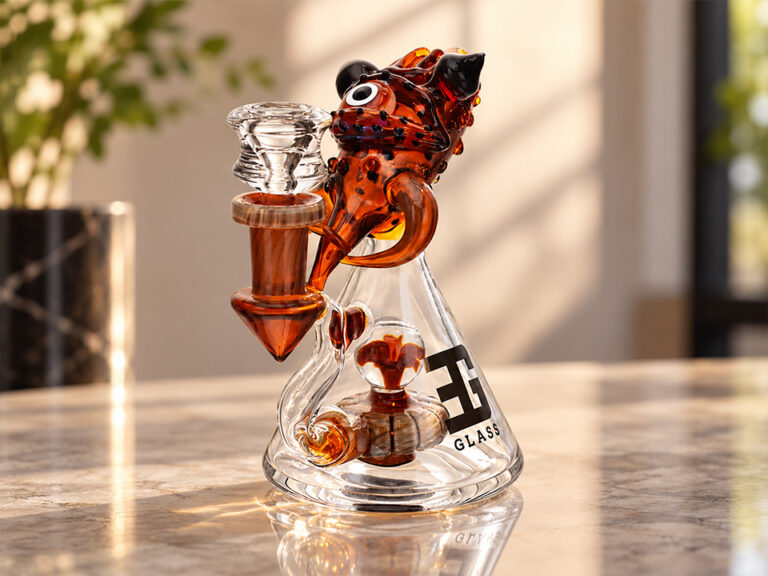
For example, if bonsai-themed pipes sell well in your store, test the family with two or three controlled variants, not a whole botanical fantasy wall. Pair a safer novelty piece like the Bonsai Series cactus pot hand pipe with a lower-risk standard borosilicate hand pipe, then watch sell-through by week two.
If neither moves, do not “give it more time.” Give it better pricing, better placement, or a clearance tag.
Legal and Compliance Pressure Changes the Buying Math
Smoke shop glass may be legal merchandise, but context matters. Jurisdiction matters. Local enforcement mood matters.
California’s Department of Cannabis Control says its economic reports summarize current market conditions, supply, consumer demand, and changing trends in California and other markets. Its dashboard notes also show ongoing data updates through 2024 and beyond, including sales, price-per-unit, and monthly sales reporting. That should make every smoke shop operator more humble: even regulators keep revising the data.
The lesson is simple. Do not build a buying plan around stale assumptions.
If a city tightens accessory enforcement, if local dispensary traffic drops, if concentrates lose share, if a new competitor opens with aggressive glass pricing, your OTB must flex. Static buying calendars punish small stores.
How to Create an Open-to-Buy Plan for Smoke Shop Glass
Start with the monthly sales plan.
Then make it physical. By that I mean: stand in front of the case with your POS report open. Count the shelves. Count the facings. Count what is dusty.
Here is the working process I recommend:
| Step | Action | Smoke Shop Glass Example |
|---|---|---|
| 1 | Set planned monthly glass sales | $18,000 target for all glass categories |
| 2 | Set planned ending inventory | $24,000 at retail value |
| 3 | Subtract beginning inventory | Current glass inventory: $21,000 |
| 4 | Subtract on-order inventory | Pending vendor orders: $6,000 |
| 5 | Add planned markdowns | $1,500 clearance reserve |
| 6 | Calculate OTB | $16,500 available to buy |
| 7 | Allocate by bucket | 45% core, 20% tests, 15% accessories, 10% premium, 10% reserve |
| 8 | Review weekly | Freeze slow buckets before they damage cash flow |
This is not complicated. It is disciplined.
And discipline is rare in glass buying because the product is visual, tactile, and easy to rationalize.
Vendor Negotiation: Where Real Margin Gets Made
If you buy glass wholesale, stop negotiating only on unit cost.
Ask for:
- Lower minimum order quantity on trend-test SKUs
- Damage credit terms in writing
- Faster reorder access on proven designs
- Mixed-case ordering by style family
- Net terms only after sell-through history exists
- Replacement support on high-breakage items
- Photos and dimensions before committing to new shapes
A small rig like the opal whistle one-piece mini borosilicate glass rig might be a good controlled test because it carries design value without demanding a huge showcase footprint. But I would still buy it against a rig-specific OTB bucket, not because the vendor says “these are moving everywhere.”
Every vendor says that.
Markdown Timing: Cut Early or Bleed Quietly
Markdowns are not failure. Late markdowns are failure.
If a product misses expected sell-through by day 30, inspect the cause. Bad placement? Wrong price? Staff does not understand it? Too many similar items nearby?
If it misses again by day 60, act.
By day 90, I want it discounted, bundled, relocated, or removed from the prime case. Keeping dead glass at full price because “someone will buy it eventually” is just emotional accounting.
FAQ
What is Open-to-Buy Planning for smoke shop glass inventory?
Open-to-Buy Planning for smoke shop glass inventory is a buying budget method that calculates how much money a retailer can spend on glass products during a set period while still meeting planned sales, margin, inventory, markdown, and cash-flow targets. It keeps bongs, pipes, rigs, and accessories from becoming uncontrolled shelf debt.
In practice, it turns buying from “what looks good?” into “what can the business afford, sell, and reorder?” That is the shift. A smoke shop using OTB planning can protect core sellers, test new designs carefully, and avoid letting slow premium glass consume working capital.
How often should a smoke shop update its open-to-buy plan?
A smoke shop should update its open-to-buy plan weekly for fast-moving glass categories and monthly for broader merchandise planning because glass sales can change quickly by trend, season, price tier, and local customer behavior. Weekly review prevents slow SKUs from hiding inside attractive displays until cash is already trapped.
I would review unit velocity every Monday and do a deeper category reset every month. Straight tubes, hand pipes, bowls, and downstems deserve tighter monitoring than premium art glass because they usually move faster and influence repeat customer satisfaction.
What is the best OTB formula for smoke shop inventory management?
The best OTB formula for smoke shop inventory management is Planned Sales plus Planned Ending Inventory plus Planned Markdowns, minus Beginning Inventory and On-Order Inventory. For glass, stores should also track breakage reserve, because damaged borosilicate products, shipping issues, and display accidents can quietly reduce gross margin.
The formula gives you the ceiling. Your category allocation gives you the strategy. A store that calculates OTB but spends too much on novelty rigs and too little on core pipes still has a planning problem, just with better paperwork.
How much glass inventory should a smoke shop carry?
A smoke shop should carry enough glass inventory to support 3–8 weeks of expected sales for core products, while keeping slower premium or novelty pieces shallow until sell-through data proves demand. The right amount depends on sales volume, shelf space, reorder speed, vendor minimums, and local customer preferences.
I prefer deeper stock on proven utility items and shallow buys on visual trend pieces. If a product has not earned reorder status through sales, it should not receive the same open-to-buy protection as your best daily-use sellers.
Why do smoke shops overstock glass?
Smoke shops overstock glass because buyers often purchase based on appearance, vendor pressure, perceived uniqueness, or personal taste instead of sell-through data, weeks of supply, and gross margin return. Glass is especially dangerous because it looks valuable on display even when it is not producing cash.
The fix is boring and effective: fewer duplicate SKUs, stricter test quantities, weekly sell-through review, and an OTB budget that separates core replenishment from trend experiments. Pretty inventory still has to work.
Build the Glass Case Like a CFO, Not a Fan
The smoke shop operators who win will not be the ones with the biggest glass wall. They will be the ones with the cleanest buying logic.
Open-to-Buy Planning gives you that logic. It tells you when to buy, when to pause, when to reorder, when to markdown, and when to stop pretending a slow piece is “brand building.”
Use the math. Watch the shelf. Protect the cash.
And when you do buy, buy with intent: core pieces for velocity, novelty pieces for controlled testing, rigs for proven demand, and hand pipes for repeatable margin. Your glass case should not be a museum. It should be a machine.