Free shipping in the U.S. for orders over $50

Write Care Instructions for Private-Label Glass Packaging
I’ve seen this movie too many times: nice box, polished logo, supplier-fed beauty shots, and then a limp little line about “handle with care,” which sounds responsible until the CS queue fills with chipped joints, cloudy chambers, stress marks near the weld, and buyers who were never told what your glass packaging care instructions were actually supposed to prevent.
Same mess.
And I frankly believe this is where a lot of private-label operators kid themselves. They think care copy is “support content.” It isn’t. It’s risk control, SEO fuel, post-purchase expectation-setting, and—when your SKU mix includes borosilicate with odd geometry—a quiet little insurance policy against dumb returns you could’ve avoided with twelve better words.
Why pretend otherwise?
The proof is ugly. In February 2024, the U.S. Consumer Product Safety Commission said MoMA’s glass Little Wanderer snow globes could crack or fracture, recorded 39 reports, and recalled about 1,915 units; that’s what happens when a glass failure mode sits in the background until the public sees it all at once.
Yet the bigger problem, from my experience, is that most brands still write as if the carton, the insert, the PDP, and the wholesale sheet are separate planets, when in reality they’re one chain of evidence, one chain of promises, one chain of potential contradiction if the spec sheet says one thing and the retail page says another.
That gap gets expensive.
FDA’s July 2024 guidance on glass vials and stoppers is obviously pharma-specific, but the principle travels well: it discusses reporting and implementation for changes to glass container-closure components and explicitly notes “risk-based tools” for handling those changes. I read that and think: if a regulated industry treats glass-system changes like a structured risk issue, private-label sellers should stop treating care language like filler copy.
Table of Contents
Most care instructions fail because nobody really owns them
That’s the rot.
Marketing wants the copy pretty. Ops wants it short. Legal wants it vague. The factory rep wants it off their desk. So the final insert ends up sounding like it was written by a committee that feared verbs.
Bad sign.
But when nobody owns the instruction set, the language turns mushy fast—no defined first wash, no storage rules, no temperature-shock warning, no handling note for protrusions, no retirement trigger for chips or cracks, no distinction between plain-wall pieces and fragile geometry with pinch points, horns, sculpted details, or percs that don’t forgive sloppy washing.
I don’t love soft copy. Never have.
What I want is one accountable owner who builds a master care standard for private label glass packaging, then forces the carton, insert, product page, and reseller sheet to say the same thing in the same order. Not similar. Same. If they drift, you haven’t built guidance—you’ve built future screenshots for angry buyers.

The compliance side is nastier than most brands admit
Here’s the ugly truth.
California doesn’t care about your internal confusion, and neither does a plaintiff’s lawyer, which is why I pay attention when a Proposition 65 notice lands on decorated glassware instead of waving it off as somebody else’s problem. In April 2024, a 60-day notice targeted Anheuser-Busch and Ross Stores over lead and “Glassware With Exterior Designs,” which should tell every private-label team with printed, painted, or embellished surfaces that surface chemistry and warning language are not side quests.
And the web-page issue? Not optional.
The 2024 Evriholder settlement is the sort of document people ignore until they suddenly wish they hadn’t, because it says the warning can’t just live on the item or packaging; for California buyers, it also requires a clear internet web page warning on the same page as the product, the price, or somewhere before checkout. That matters. A lot.
And if you think buyers don’t punish vague materials language, Reuters reported on February 2, 2024 that plaintiffs suing Stanley’s owner said they wouldn’t have purchased the cups had they known lead was present in the vacuum-seal area. That is the market telling you, in plain English, that disclosure gaps now travel faster than your brand team does.

What real glass packaging care instructions actually need to say
Start simple.
A real glass container care guide is not a mini legal brief, and it’s definitely not one of those fake-friendly blurbs that says a lot while saying nothing; it’s a short operating note that tells the buyer how to wash the item, how to handle it, where not to grip it, how to store it, what temperature swings to avoid, and when to retire it.
That’s it. Mostly.
I’d write every baseline instruction set around six points: rinse before first use, wash by hand with mild soap and lukewarm water, avoid abrupt hot-cold shifts, don’t lift by fragile geometry, dry fully before storage, and stop using the piece the moment you see a chip, crack, loosened fit, or sharp scratch at a stress point.
Boring copy wins.
And, yes, this is where brands get lazy and paste generic glass bottle care instructions or glass jar handling instructions onto products that clearly don’t behave like a straight-sided bottle or a basic storage jar. Search intent might overlap. Use conditions don’t. Google may forgive vague category language for a week. Customers won’t.
Shape changes the rules, and your copy has to catch up
Geometry matters more than marketers think.
An 11-inch Matrix Perc bubbler doesn’t deserve the same handling line as a 12-inch thick clear straight tube, because internal diffusion structures, leverage points, drainage behavior, and resting stability aren’t the same—even before you factor in how buyers actually wash these things in a cramped sink with lousy grip and worse patience.
That’s where breakage lives.
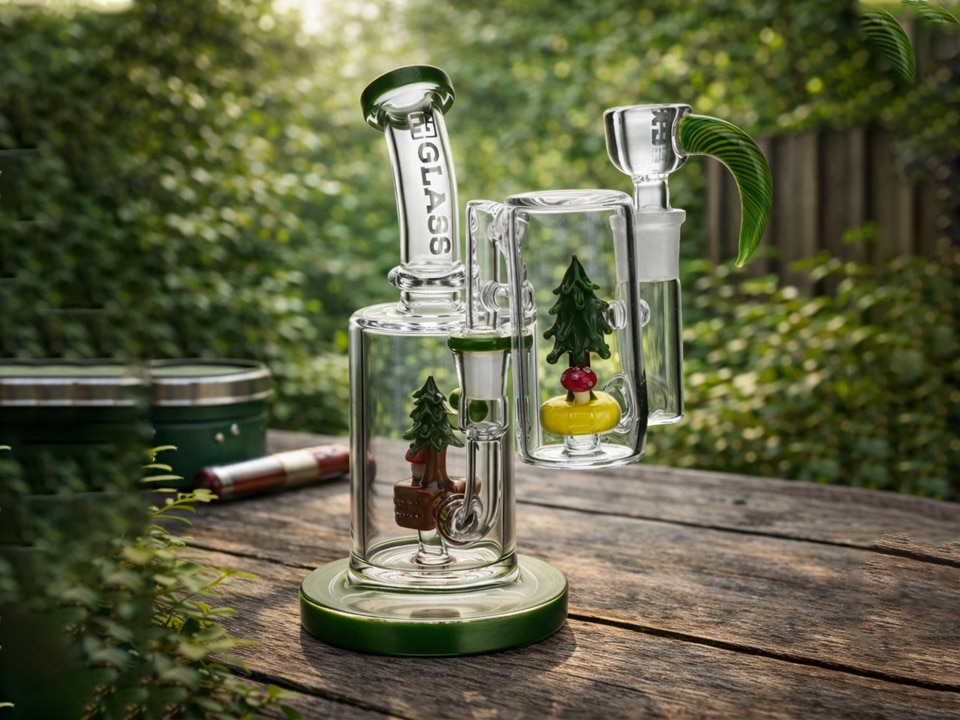
A solid cactus curve-body borosilicate rig or a double-horned mini borosilicate piece should say, plainly, don’t lift by sculpted extensions or side protrusions. A mini octopus head borosilicate glass top should get an extra padded-storage line. And accessory SKUs like temple-handle borosilicate glass bowls and slides need a fit-and-inspect note because tiny hairlines and sloppy seating are exactly the kind of “minor” issues that later become warranty drama.
This is SKU-family work.
From my experience, the smartest brands don’t write one universal block and call it a day. They build a core instruction spine, then add one risk line by geometry class—straight tube, multi-perc, sculpted exterior, decorated surface, accessory fitment. That’s how you make private label glass packaging sound like it came from a company that knows its own catalog.
The phrases I’d kill on sight
I hate “durable glass.”
I hate it because it’s salesy fog. It implies toughness without naming impact resistance, temperature behavior, scratch sensitivity, or safe cleaning method, and that kind of chest-thumping copy is usually written by someone who never had to sort the RMA bucket after a holiday sales spike.
And “dishwasher safe”? Careful.
If you haven’t validated decoration stability, weld integrity, repeated wash-cycle wear, and the way the piece sits under spray force—especially on weird silhouettes—don’t print it. If you don’t have an actual temperature spec, don’t say “heat resistant.” If your material claim came from a casual supplier message instead of traceable testing or documentation, don’t spray “lead-free” or “food safe” all over the page like confetti.
That’s not caution. That’s professionalism.
A working template that survives customer service, SEO, and compliance review
Here is the version I would actually ship.
| Care area | What I would write | Why it matters |
|---|---|---|
| Before first use | Rinse with lukewarm water before first use to remove packaging dust and handling residue. | Sets a clean start and reduces first-use complaints. |
| Cleaning | Hand wash only with mild soap, lukewarm water, and non-abrasive cloths or brushes. | Protects surface finish, decorations, and tight geometry. |
| Temperature | Avoid sudden temperature changes; do not move the item from very hot to very cold conditions or the reverse. | Cuts stress-related cracking risk. |
| Handling | Hold by the base or main body, never by joints, necks, handles, horns, or decorative extensions. | Prevents leverage-point breakage. |
| Drying | Air dry fully before reboxing or storing. | Reduces trapped moisture, odor, and finish damage. |
| Storage | Store upright in padded packaging away from impact, crowding, and unstable shelving. | Prevents chips during transport and daily storage. |
| Damage check | Stop using immediately if chipped, cracked, loose, or visibly scratched at a stress point. | Reduces injury risk and return disputes. |
And, honestly, that table does most of the heavy lifting.
Then I’d add one SKU-specific line. For a simple borosilicate dab rig, the extra note might be about upright storage and padded transit. For more eccentric shapes, it’s about where not to grip. For decorated surfaces, it’s about avoiding abrasive scrubbing on artwork or printed areas. Short copy. Specific copy. Copy that doesn’t waffle.
If you sell online, the PDP is part of the care system
This part gets missed constantly.
The product page isn’t just there to move units; it’s part of the warning chain, the instruction chain, and the trust chain, which means if the buyer searches “how to write care instructions for glass packaging,” lands on your PDP, and sees dimensions, color, and stock status but no real cleaning, handling, storage, or damage language, they’ve already learned something about your brand—and it’s usually not flattering.
So, yes, I want the insert tight. But I want the PDP to mirror it.
That isn’t just my preference, either. The Evriholder settlement made room for warning language on the product page, the price page, or pre-checkout flow for California buyers, which is exactly why I keep saying packaging, labeling, and web copy should be written as one system, not three disconnected chores.
FAQs
What are glass packaging care instructions?
Glass packaging care instructions are the product-specific directions that tell buyers how to clean, handle, dry, store, inspect, and retire a glass item so it stays safe, readable, and functional across shipping, display, first use, and repeat cleaning cycles without needless support claims.
In regular human terms, they’re the rules that stop vague branding from turning into cracked glass, ugly emails, and preventable disputes.
How do you write care instructions for private-label glass packaging?
Writing care instructions for private-label glass packaging means turning supplier specs, decoration limits, geometry risks, and use conditions into plain language that a buyer can follow in seconds, with separate lines for cleaning, temperature change, handling, storage, inspection, and replacement after damage.
I’d draft one master version first, then tune the last line by SKU family so the carton, insert, and PDP never start freelancing.
What should borosilicate glass care instructions include?
Borosilicate glass care instructions are a tighter subset of general glass guidance, because they must explain thermal-change limits, non-abrasive cleaning, careful handling around joints and protrusions, complete drying, and immediate retirement after chips or cracks, especially when the design includes percs, horns, or sculpted exterior details.
That’s why a generic “handle with care” line feels amateurish on shaped borosilicate products—it leaves all the risky parts unnamed.
Do private-label brands need online warnings as well as package inserts?
Online warnings for private-label glass products are pre-purchase disclosures that appear on the product page, price page, or checkout path so buyers see material or chemical warnings before ordering, not after opening the box, which matters when a jurisdiction or settlement treats web notice as part of compliant labeling.
The 2024 Evriholder settlement is the cleanest example in this piece, because it explicitly addressed internet warning placement alongside product labeling and packaging.
So here’s my closing bias: if you sell private-label borosilicate pieces and your current care copy still sounds like a sleepy afterthought, fix it now. Build one instruction standard, tailor the risk line by geometry, mirror it across the package and the PDP, and make the copy do real work for once.