Free shipping in the U.S. for orders over $50

Test New Glass SKUs Without Taking Major Inventory Risk
I have watched buyers talk themselves into wide assortment depth because a supplier showed them six fresh borosilicate concepts, three loud colorways, and a story about “market buzz,” when what they were really buying was delay, markdown pressure, and a slow-moving cash problem that would not become obvious until the second reorder cycle.
Who enjoys funding unsold ego?
This is the hard truth.
In March 2024, the U.S. Census Bureau put merchant wholesalers at a 1.35 inventories-to-sales ratio on a seasonally adjusted basis, versus 1.40 a year earlier, which is another way of saying disciplined operators were still trying to keep stock tighter than the market wanted, because excess inventory is not just shelf clutter; it is trapped cash with packaging, storage, and discounting attached.
Table of Contents
Most factories are happy to sell you a mistake
Factories love conviction.
I do not mean craftsmanship; I mean the kind of conviction that turns a neat new recycler, a novelty character rig, or a double-perc concept into a 300-unit buy before anybody has real sell-through data, real breakage data, or even a clean read on whether customers want function, display appeal, or simply a lower ticket.
Why pretend those are the same thing?
Look at the broader retail pain.
Reuters reported in March 2024 that Adidas cut inventories by €1.5 billion in 2023, a 24% drop, after high inventories and discounting weighed on North America, where fourth-quarter sales fell 21%; that is a global brand with analysts, systems, and leverage, and it still had to clean up its stock position the expensive way.
And the cannabis-adjacent economy is not gentler.
Reuters reported in August 2024 that California wholesale flower prices had fallen from above $2,000 per pound during the pandemic to about $1,200, while active cannabis business licenses were down more than 20% year over year in Q1 2024; when the core category is dealing with that kind of compression, accessory buyers do not get to play fantasy assortment with unlimited patience.

Small batch production is cash defense
Small batches win.
For this niche, small batch production is not some cute startup ritual; it is a decision system that lets us test shape, filtration complexity, colorway appetite, and price tolerance without locking cash into cartons that only move after the margin gets cut.
I would never buy a compact novelty piece the way I buy a baseline workhorse.
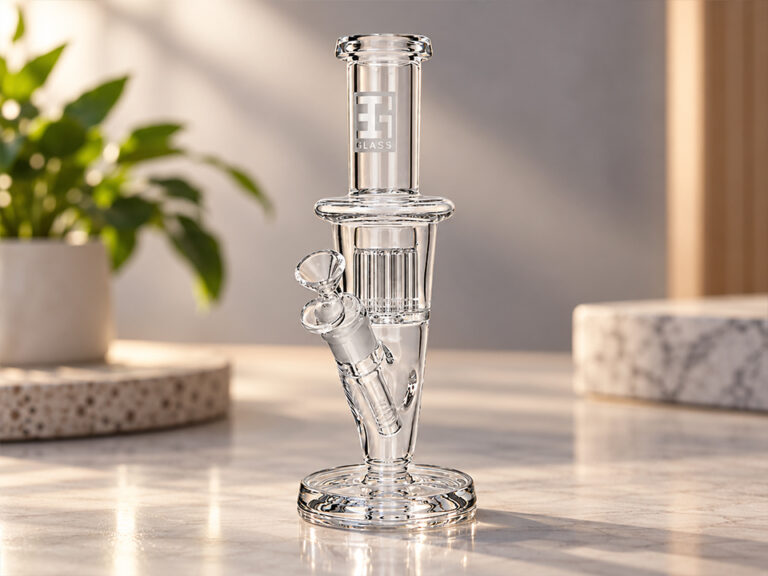
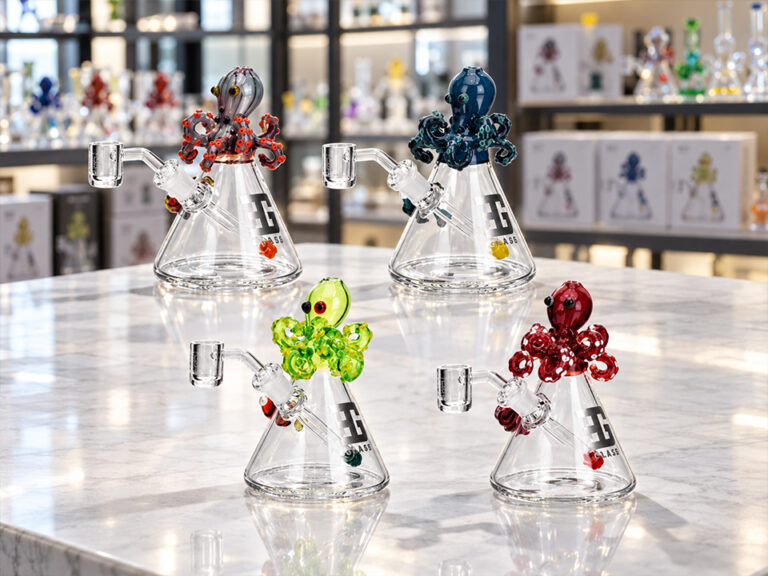
A 12-inch clear beaker bong is a different commercial bet from an 18-inch inline perc straight tube bong, and both are different again from a Big Eye Octopus Head dab rig that lives or dies on novelty, display appeal, and impulse conversion rather than steady replacement demand. Those three categories should not share one MOQ logic just because they all happen to be borosilicate.
That is where low MOQ manufacturing earns its keep.
If I am testing a 9-inch bent neck splash perc rig or a double UFO perc dab rig, I want a small, ugly, honest pilot first, because extra perc complexity changes not just price perception but cleaning friction, packaging requirements, shipping risk, and the odds that a customer loves the photo but never reorders the form.
What I would test first, and what I would delay
Core shapes matter.
I start with the boring winner, because the boring winner pays for the experiment, and only then do I let novelty pieces try to earn their space.
Based on the current site listings, here is the sort of pilot stack I would use for SKU assortment testing before any wider reorder decision.
| SKU | Category | Height / spec | Listed price | My read |
|---|---|---|---|---|
| ES23358A | Beaker bong | 12 inch, 9mm, 18mm downstem / 14mm bowl | $58.99 | Best baseline read; clear shape, clear use case, lower concept risk |
| ES81438 | Straight tube bong | 18 inch, 18mm joint | $69.99 | Good control SKU for committed straight-tube buyers; larger size means a tighter audience |
| ES2239 | Dab rig | 9 inch bent neck, 14mm joint | $50.99 | Strong compact daily-driver test; function-led and price-accessible |
| ES2236 | Dab rig | 9.5 inch double UFO perc, 14mm joint | $56.99 | Mid-risk; more feature explanation required, narrower buyer pool |
| ES24833 | Dab rig | 8.6 inch, 14mm joint, 430g | $73.99 | Style-led pilot only; test color response before wider scale |
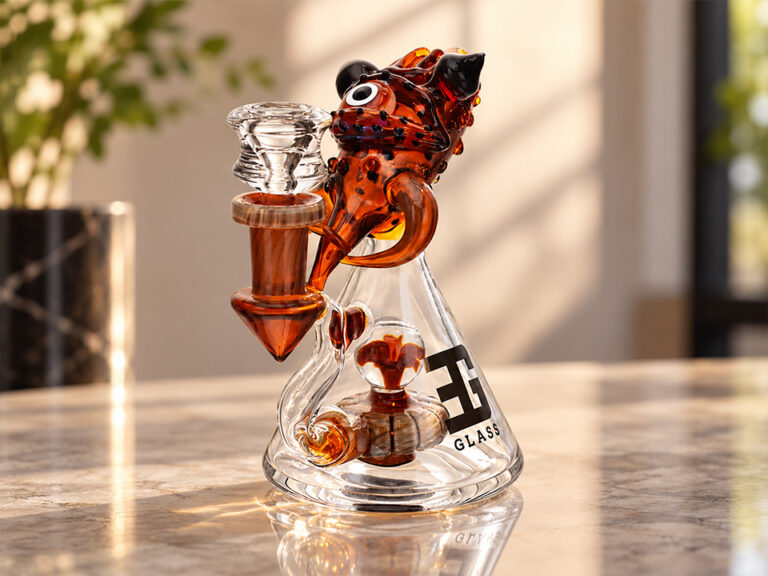
| EG-64 | Dab rig | 5.7 inch, 14mm joint | $76.99 | Novelty gamble; great for attention, poor candidate for blind bulk buying |
My rule is blunt.
If a SKU depends on character art, unusual geometry, or multi-perc storytelling, I treat it as a marketing bet first and a volume SKU second, which means smaller opening orders, tighter reorder triggers, and zero emotional attachment when the numbers come back flat.
How to test new product SKUs before you buy yourself a problem
Three numbers decide.
Sell-through rate, reorder speed, and damage-adjusted margin tell me more in 21 to 30 days than a supplier’s entire pitch deck ever will.
Why keep guessing after the first month?
I want every new product line testing cycle to follow a discipline most buyers skip because it feels less fun than choosing colors. First, run the pilot by family, not by pure aesthetics: one beaker, one straight tube, one compact rig, one novelty piece, one filtration-heavy wildcard. Second, cap opening depth so each SKU has to earn month two. Third, set kill rules before launch: if conversion is weak, returns show cleaning complaints, or shipping damage eats the margin, the SKU dies. No committee grief. No pity reorder.
And yes, on-demand manufacturing sounds seductive.
But if the supplier cannot hold shape consistency, packaging standards, joint tolerance, or replenishment speed, then “on-demand” is just a slower way to disappoint customers. The best low MOQ manufacturer is not the one saying yes to every custom sketch; it is the one forcing you to narrow the range and prove demand in stages.
I have seen buyers get this backwards.
They test six colors of one weak silhouette, then call the result market research, while ignoring the fact that category structure usually matters more than decoration: a reliable core beaker often tells you more than a gorgeous one-off ever will.

FAQ
What is small batch production for glass SKUs?
Small batch production for glass SKUs is a controlled launch model in which a seller buys limited quantities of new rigs, bongs, or accessories so real sell-through, margin, breakage, and reorder data can be measured before larger inventory commitments are made across the line. I use it to separate curiosity from repeat demand, which is the only separation that matters when cash is tight and shelf space is finite.
What does low MOQ manufacturing actually mean in this niche?
Low MOQ manufacturing is a sourcing arrangement where a supplier accepts smaller minimum order quantities for each design, colorway, or variation, allowing a buyer to test market appetite, protect working capital, and cut the odds of sitting on dead stock after the first launch window. In plain English, it buys you learning speed, not immunity from bad forecasting.
How is on-demand manufacturing different from a small pilot order?
On-demand manufacturing is a fulfillment model where production is triggered by confirmed demand or very short replenishment cycles, while a small pilot order is still a pre-built test batch that exists to measure demand, packaging performance, and reorder logic before scale decisions are made. I like on-demand for proven shapes with repeatable specs; I do not trust it blindly for intricate novelty glass.
How do I know a new glass SKU deserves a reorder?
A reorder-worthy glass SKU is one that clears a pre-set sell-through threshold, holds margin after damage and discounting, generates few cleaning or function complaints, and moves fast enough that replenishment improves revenue more than it increases carrying risk. My bias is simple: reorder winners fast, and kill weak maybes even faster.
If you want to test smarter, not louder, start with one core shape, one compact functional rig, and one novelty swing, then force each SKU to earn the next PO with numbers, not vibes. I would begin with the baseline discipline of the 12-inch clear beaker bong, compare it against the control value of the 18-inch inline perc straight tube bong, and only then let a style-led test like the 8.6-inch borosilicate dab rig fight for scale.