Free shipping in the U.S. for orders over $50

Retail Pricing Mistakes That Kill Glass Category Margins
I’ve watched too many specialty retailers blame “the economy,” “cheap competitors,” or “customers who don’t get quality,” when the real problem was sitting right on the shelf: a lazy retail pricing strategy, built on copycat markups and panic discounts, trying to survive in a market where shoppers are more selective and price-led margin recovery is getting harder, not easier. What did they think would happen?
Here’s my hard truth. Most glass stores are not losing margin because they stock bad products. They are losing margin because they price good, better, and premium glass like it all belongs to one bland middle tier. That is amateur glass category pricing, and it poisons the whole wall: entry pieces feel overpriced, feature-rich pieces feel under-monetized, and promotions start doing the work architecture should have handled from day one.
Table of Contents
Most glass stores do not have a pricing strategy. They have a markup reflex
One formula. Big mistake.
When I hear a retailer say, “We just keystone it,” I already know the category margin analysis is going to be ugly, because the cost side and the demand side are moving at different speeds; the U.S. Bureau of Labor Statistics series for pressed and blown glassware made from purchased glass moved from an index value of 100.000 in December 2022 to 107.624 in December 2024, while Reuters reported in January 2024 that consumer goods companies were running into more cautious spending even as the price-hike era lost steam. Why would a blunt markup fix both problems at once?
That mismatch is where gross margin pricing goes wrong. If your input pressure rises, but your shopper becomes less willing to absorb price jumps, you cannot keep slapping the same percentage on every SKU and call it discipline. You need price optimization for retailers at the category level: opening-price traffic builders, protected hero SKUs, premium anchors, and markdown rules that punish dead inventory instead of your best movers.
The first leak is a broken price ladder
Three bucks matter.
If the gap between a basic 10-inch borosilicate concentrate rig and a more feature-led Swiss perc bent neck dab rig is too narrow, you are telling the shopper that added function, filtration, and perceived craftsmanship barely deserve a premium; if that gap is absurdly wide, you shove the customer back into the cheapest tier and train them to ignore your better-margin assortment. Isn’t that the definition of self-sabotage?
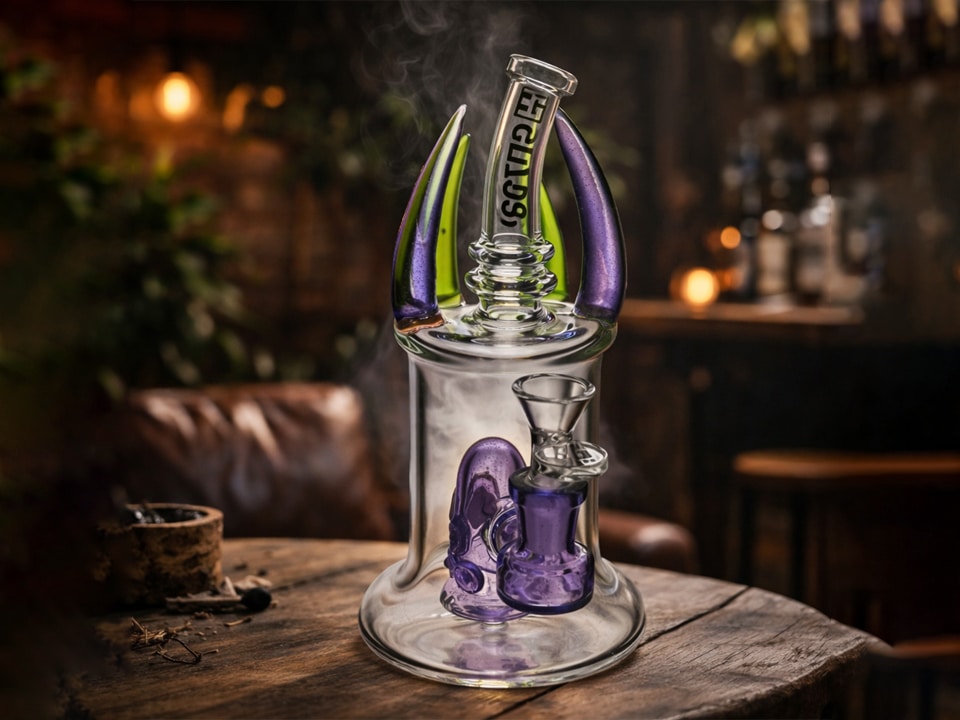
I see the same thing with themed or novelty-forward pieces. A spinning poker face dab rig glass store model, a spinning spaceship borosilicate glass rig, and a spicy chili borosilicate glass rig should not all live in a random promo fog where pricing depends more on who uploaded the product last than on design distinctiveness, conversion role, and replacement difficulty. That is not merchandising. That is drift.
Discounting your hero SKUs is the fastest way to cheapen the whole category
Promos feel smart.
But when promotions become your default sales engine, the shopper stops learning your value and starts learning your timing; in August 2024, Target said price cuts on more than 5,000 items helped drive a 2% comparable-sales gain, a 3% rise in store visits, and a quarterly gross margin rate of 28.9%, but that worked because the retailer paired price cuts with traffic strategy, private label, inventory control, and category management at scale. Can a specialty glass retailer really copy only the discount and skip the system behind it?
This is where retail pricing mistakes turn expensive. If you mark down the pieces customers already want, you burn gross margin dollars on proven demand. I’d rather protect the price on core winners and use selective markdowns on stale variants, duplicate silhouettes, and weird middle-tier inventory that never earned its shelf space in the first place.
And yes, shrink and breakage belong in this conversation. Reuters reported in March 2024 that Dollar General warned of pressure from inventory lost or damaged due to theft and breakage while chasing more price-sensitive shoppers; glass retailers face an even meaner version of that equation because a damaged unit is not a paper loss on a spreadsheet, it is a dead SKU with freight, handling, and cash tied up in it. Why are so many owners pretending breakage has nothing to do with price floors?

Hidden fees, fake compare-at prices, and checkout surprises are margin killers in disguise
Trust breaks first.
The legal mood is not subtle here. In its 2024 final rule on unfair or deceptive fees, the FTC said hidden-fee bait-and-switch pricing and fee misrepresentation are unfair and deceptive, while also making clear that dynamic pricing itself is not banned; the message is blunt: tell customers the real price, disclose the total clearly, and stop getting cute with the math. That principle may have been drafted for tickets and lodging, but any retailer using drip-style pricing should read the room.
I’m opinionated on this one. If your product page screams “deal” and then pads the order with surprise handling charges, inflated compare-at framing, or checkout-only friction, you may grab a few short-term conversions, but you also compress repeat business, poison conversion quality, and make retail margin optimization harder because you end up spending more on reacquisition just to replace the trust you burned.
Treating specialty glass like a commodity is how premium margin disappears
This one stings.
Specialty glass is not a pure commodity category, even when customers comparison-shop aggressively, because perceived value in this aisle comes from a stack of signals: form factor, weld quality, function, visual identity, giftability, and whether the SKU is a cheap substitute or a destination piece. Yet I still see stores price premium-looking pieces with bargain-store logic, then wonder why the category gets stuck in endless promo churn. Why price a conversation piece like it’s a disposable add-on?
That is why the best retail pricing strategy for specialty glass products starts with role clarity. Some SKUs are traffic drivers. Some are margin drivers. Some are there to make the premium tier look rational. And some should be cleared, fast, because every extra week they sit there makes the whole assortment feel older and less intentional.

Here is the margin leak map I use when a glass category looks healthy on the surface but performs badly underneath
| Pricing mistake | What it looks like on the shelf | What it does to margin | What a sharper operator does |
|---|---|---|---|
| Flat markup across all rigs | Entry, functional, and premium pieces all use the same markup logic | Overprices opening SKUs, underprices premium SKUs | Builds a clear good-better-best ladder |
| Blanket discounting | Bestsellers and dead stock get the same promo treatment | Burns profit on proven demand | Discounts stale inventory first |
| Ignoring breakage and handling | Fragile SKUs priced as if loss rates are zero | Margin looks fine on paper, weak in reality | Bakes damage risk into floor pricing |
| Fake urgency or checkout add-ons | “Deals” depend on surprise charges or fuzzy compare-at claims | Hurts trust, repeat rate, and conversion quality | Uses clean, all-in price communication |
| No category role by SKU | Novelty pieces, functional pieces, and premium anchors compete in one band | Customers trade down, premium story dies | Assigns each SKU a traffic, margin, or halo role |
That table is not theory. It is the operating view I use for category margin analysis when a retailer tells me sales are “fine” but cash feels thin, because revenue can hide sloppy pricing for a while, yet margin structure always tells on you in the end.
What smart glass retailers do instead
They get specific.
A serious retail pricing strategy for this category usually has five parts: a defined opening-price threshold that keeps the wall shoppable, controlled price gaps between functional tiers, promo protection on hero SKUs, markdown triggers based on age and sell-through, and a real floor that includes freight, breakage exposure, and payment friction. And before anyone says that sounds rigid, remember the FTC’s stance: dynamic pricing is allowed, deception is not. Flexible is fine. Sloppy is not.
I would also stop copying marketplace price points without context. Reuters’ 2024 reporting on Target and broader consumer-goods pricing made the bigger point obvious: today’s shopper is selective, not blind; they will pay when the value story is clean, but they punish random price inflation and lazy assortment logic fast. In other words, how to improve retail margins is not a mystery. You raise your pricing IQ before you raise another shelf tag.
FAQs
What is a retail pricing strategy for a glass store? A retail pricing strategy is the structured system a store uses to set opening prices, premium gaps, promo depth, markdown timing, and margin floors across comparable SKUs so demand, conversion, and gross profit improve together instead of fighting each other on every shelf. That matters more in specialty glass because the category mixes traffic builders, collectible-looking designs, and fragile, higher-risk items that should never be priced by one lazy formula.
How do you improve retail margins without overpricing customers? Improving retail margins without overpricing means protecting price on high-demand items, widening price gaps only where feature or perceived-value differences are obvious, clearing slow stock faster, and eliminating hidden-fee tactics that lower trust and repeat purchase quality over time. I’d add one more thing: stop confusing higher sticker prices with better margin management, because a cleaner mix and tighter promo discipline usually do more work than another knee-jerk increase.
What are the most common retail pricing mistakes in specialty glass products? The most common retail pricing mistakes are flat markups, weak good-better-best ladders, discounting hero SKUs, ignoring breakage costs, copying competitor prices without context, and using fuzzy checkout math that makes advertised value look better than the final transaction actually feels. In my experience, the worst offender is still the first one: retailers who think one markup percentage is “simple” when it is really just unexamined risk wearing a neat shirt.
What is the best retail pricing strategy for specialty glass products? The best retail pricing strategy for specialty glass products is a role-based model in which entry SKUs drive traffic, mid-tier pieces convert shoppers who need function and style together, premium pieces anchor perceived value, and markdowns target age and redundancy instead of demand leaders. Once you do that, the category stops behaving like a clearance rack and starts acting like a controlled profit engine.
If your store is still pricing rigs by habit, not by architecture, fix that before you buy another case. Start with twenty SKUs, map the price ladder, flag the fake middle, protect the winners, clear the drags, and build a retail pricing strategy that finally lets your glass category margins breathe.