Free shipping in the U.S. for orders over $50

Recommend Smaller vs Larger Pieces by User Experience Level
I’m talking about glass pieces here—pipes, tubes, rigs, the stuff people love to pretend is all aesthetics when it is really about airflow, chamber volume, heat, maintenance, and how badly you want to punish your own lungs on a Tuesday night. Why do so many buyers still shop by height first?
I’ve watched this mistake for years. Newer users get seduced by tall glass because big pieces photograph well, feel expensive in the hand, and give off that “I know what I’m doing” energy, but most of the time they would be better off with something smaller, steadier, cheaper to maintain, and harder to misuse. That is the hard truth.
Table of Contents
Most beginners buy too big
Beginners need control.
That means lower chamber volume, simpler draw mechanics, less stale smoke hanging around between inhale and clear, and fewer moving parts to scrub when residue starts building after week one, because yes, people always underestimate how quickly a piece turns from “clean enough” to foul. Isn’t that how bad habits get locked in?
If I were steering a first-time buyer, I would start small and boring before I started big and theatrical. A compact piece like the transparent cactus pot hand pipe or a restrained straight tube like the Honey Bee straight tube bong teaches pacing, draw discipline, and dose awareness without forcing the user to wrestle a huge chamber.
And here is the part the industry likes to glide past: modern cannabis is not weak, and the old “just get a bigger piece because it’s smoother” line lands differently when potency is materially higher than it used to be. NIDA says average THC concentration in seized cannabis rose from under 4% in 1995 to more than 16% in 2022, while Reuters reported in 2024 that daily or near-daily cannabis use in the United States had overtaken daily alcohol use by 2022. Bigger glass does not cancel stronger material; it mostly gives you more room to overdo it.
Small pieces teach better habits
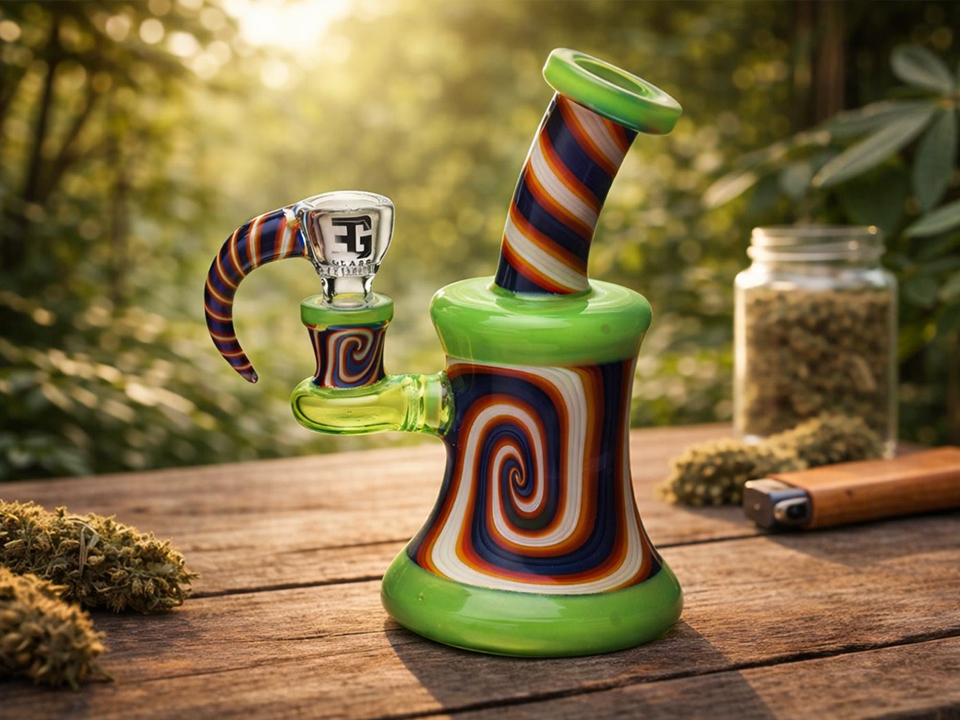
Small pieces punish sloppiness fast.
That is not a flaw; it is feedback, and feedback matters because a new user who learns to corner a bowl, manage inhale speed, and respect heat on a compact setup usually transitions upward with fewer ugly sessions, fewer coughing fits, and far less wasted flower or concentrate. Isn’t fast feedback better than expensive confusion?
I’m opinionated on this. I think the smartest beginner setup is often a small hand pipe or a short, stable tube, then a move into a compact rig only after the user understands draw resistance and cleaning cadence. Something like the cactus drop solid color rig sits in that middle ground nicely: enough structure to feel like a real setup, not so much volume that the user disappears inside it.
There is also a health angle that people love to reduce to folklore. The CDC says cannabis smoke contains many of the same toxic and cancer-causing chemicals found in tobacco smoke, and some are present in higher amounts; that should make any serious buyer skeptical of the lazy assumption that a larger water piece somehow turns inhalation into a wellness ritual. It does not. Water can change temperature and feel, but it does not magically rewrite smoke chemistry.
When larger pieces finally make sense
Bigger can work.
But only after the user has enough experience to know why they want more chamber volume, more water, a longer path, and a different rhythm of inhale, hold, and clear, because larger pieces ask more from the user even while they may feel cooler and more forgiving on the throat. So who are they actually for?
They are for the person who already knows their tolerance, already cleans on schedule, already understands that diffusion and cooling come with drag and residue, and already wants a session that lasts longer than a quick rip. That is when I’d look at a statement piece like the yellow-red lollipop tube or a more assertive shape like the cactus wig wag ball rig.
My blunt take? Large pieces are often mis-sold as “premium” when they are really “higher maintenance.” They can deliver cooler, denser, more ceremonious sessions, sure, but they also demand better technique, more frequent cleaning, more storage care, and more honesty about tolerance than newer users usually bring to the table.
The data behind my bias
The numbers are ugly.
Higher THC concentrations, more frequent use, and the basic toxicology of smoke all point in the same direction: users should stop pretending that glass size is a vanity choice and start treating it like a risk-and-control choice, especially when recommending a piece by experience level. Why would I tell a beginner to start with the setup that makes excess easier to hide?
That is why my bias is simple. New users should usually buy smaller than they think, regular users should buy mid-sized unless they hate cleaning, and only experienced users with a stable routine should chase larger volume for comfort, cooling, or showpiece value. If that sounds less romantic than the usual sales pitch, good.
The shortcut table I’d use in a shop
| User experience level | Best size band | Best fit | Why it works | What usually goes wrong |
|---|---|---|---|---|
| First-time or cautious user | Small, roughly 4–8 inches | Hand pipe or compact straight tube | Easier dose control, faster feedback, less stale smoke, lower cleaning burden | They assume “small” means “cheap” and skip the learning phase |
| Early regular | Mid-size, roughly 8–12 inches | Straight tube or compact rig | Better cooling without too much dead air, still manageable to clean | They upgrade too fast and start chasing looks |
| Experienced daily user | Large, roughly 12 inches and up | Full-size tube or larger rig | Cooler pulls, more water volume, longer session feel, more ritual | They neglect cleaning and mistake smoother feel for lower impact |
The part nobody says out loud
Looks sell pieces.
Usability keeps them in rotation, and that gap explains why so many oversized pieces become shelf furniture while the compact, less glamorous setups keep getting used week after week, resin stains and all. Doesn’t the repeat-use test matter more than the unboxing moment?
If you want a piece that actually gets used, match the size to the user’s discipline, not their ego. For beginners, that often means a compact option such as the transparent cactus pot hand pipe or the Honey Bee straight tube bong. For users who already know their pace and want more cooling with more visual personality, the yellow-red lollipop tube and the cactus wig wag ball rig make more sense than they do for novices.
FAQs
What size piece is best for beginners?
A beginner-friendly glass piece is usually a small to mid-size pipe, bong, or rig—roughly 4 to 8 inches for pipes and compact tubes—because lower chamber volume makes draw speed, dose control, storage, and cleaning easier while reducing the chance that a new user turns one hit into an accidental marathon. I would rather see a beginner master consistency on a modest setup than imitate veteran habits on oversized glass.
Are larger pieces always smoother?
A larger glass piece is not automatically smoother in any absolute sense; it usually offers more chamber space and often more water, which can cool the inhale, but that same design can also add drag, hold stale smoke longer, and encourage bigger hits than the user meant to take. “Smoother” is real, but it is not free, and it is not always better.
When should someone move from a small piece to a larger one?
A user should move from a small piece to a larger one only after they can control inhale speed, understand their tolerance, clean consistently, and explain exactly what they want more of—cooling, session length, diffusion, or ritual—because a size upgrade should solve a known problem, not flatter the buyer’s self-image. I would call that the dividing line between experimenting and shopping intelligently.
If I were buying for real, not for show, I’d start lean, learn the user’s habits, and only then scale up. For a smaller first move, I’d look at the transparent cactus pot hand pipe or the Honey Bee straight tube bong; for a user who already knows they want more volume and more ritual, I’d step toward the cactus drop solid color rig or the yellow-red lollipop tube.