Free shipping in the U.S. for orders over $50

Package Care Cards for Retail and Ecommerce Glass Orders
Tiny card. Real money.
I’ve seen brands spend stupid amounts on custom mailers, satin-touch boxes, die-cut foam, and “premium” tissue—then toss in a limp insert that says almost nothing, as if the customer is supposed to psychically understand borosilicate handling, heat limits, inspection steps, and claim timing after a box just got punted through a parcel network. That’s not premium. That’s lazy. And expensive.
Table of Contents
Most product care cards are too soft to do the job
But here’s the ugly truth: most product care cards aren’t written by the people who eat the losses. They’re written by whoever wants the insert to “feel on-brand.” I frankly believe that’s backwards.
The economics are brutal. According to nrf.com, merchandise returns hit $743 billion in 2023, with online return rates at 17.6%. And Reuters reported the typical return costs about $33 to process. That’s why I don’t see care instruction cards as filler or “brand touchpoints.” I see them as a cheap control layer sitting right between fulfillment and customer service. Miss that, and you pay for it later—in RMAs, in reships, in awkward claim emails with blurry photos taken three days too late.
Three words matter.
Use them well.
Glass orders don’t fail the same way apparel orders do
Yet people still write glass inserts like they’re shipping T-shirts.
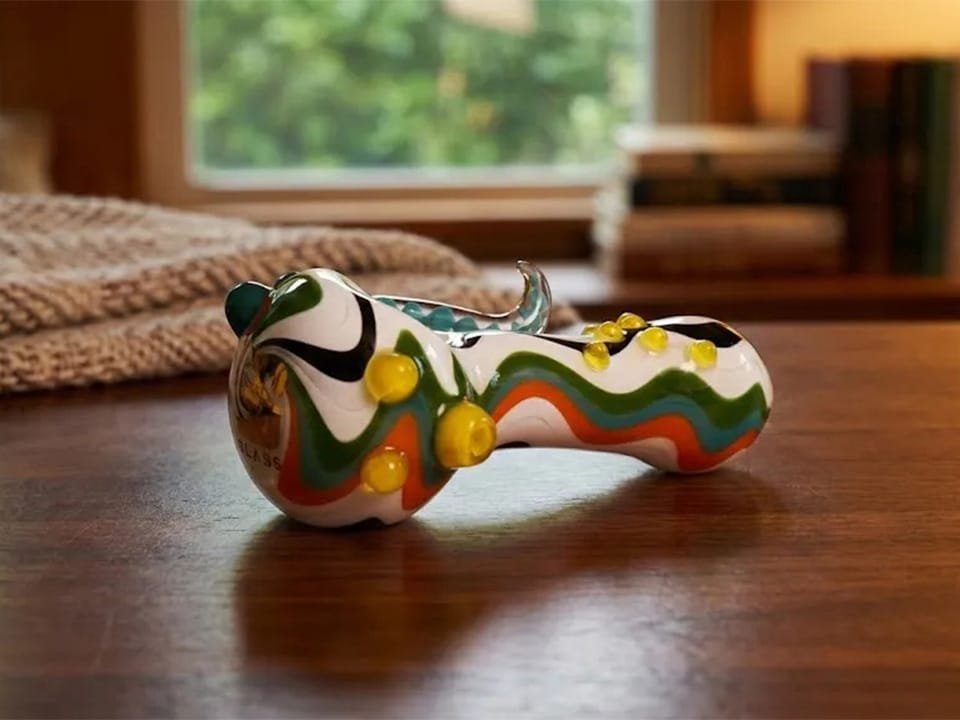
A wig wag cactus pot glass hand pipe isn’t the same operational animal as an Opal Whistle mini borosilicate rig. Different footprint. Different grip points. Different break-risk during first handling. Different customer expectations, too. One piece invites display and novelty handling; the other gets treated like a compact daily-use piece. Same insert? Bad call.
And that’s before we even get into misuse. The March 21, 2024 recall at cpsc. involved about 440,500 Starbucks-branded metallic mugs, with 12 incidents and 10 injuries tied to overheating or breakage when microwaved or filled with extremely hot liquid. So, no, I don’t buy the argument that “common sense” covers glass handling. It doesn’t. Warnings still matter, and they matter most when the customer is tired, distracted, or already using the item wrong.
That’s the part a lot of sellers hate admitting.
Retail packaging inserts and ecommerce packaging inserts should not match
So let me say it plainly: retail packaging inserts and ecommerce packaging inserts should not be twins. Cousins, maybe. Not twins.
In retail, the buyer often sees the piece before they leave. They can spot obvious chips, hold the weight, ask a question, compare it against shelf expectation. The insert’s job is lighter there—confirm care basics, reinforce first-use inspection, and point to a QR code if they want more detail. Quick. Clean. Shelf-speed copy.
Ecommerce is different, and everybody in ops knows it. The customer opens the box after a shipping event, after compression, drops, conveyor impacts, and whatever last-mile nonsense happened on the route; now the card has to do several jobs at once—teach inspection, set expectations, warn against dumb handling, and tell the buyer exactly how to report damage before the claim window gets messy. Reuters’ product liability guidance at reuters.com points directly to failure-to-warn exposure based on foreseeable uses and misuses. From my experience, that’s the legal version of saying: if you knew customers might do it, and you said almost nothing, don’t act shocked later.
Same brand voice? Sure.
Same card? No chance.
What glass care cards should actually say
I’m not interested in poetic packaging copy. I want copy that stops tickets.
For borosilicate products, I’d put the essentials right up front: product family or SKU, material callout, inspect-on-arrival instruction, cleaning method, temperature-shock warning, storage guidance, and a damage-report window. Not because it sounds “robust,” but because these are the bits customers actually need when the box is open and they’re deciding whether what they got is normal.
And yes, material language should be specific. Borosilicate glass includes boron oxide (B2O3), and borosilicate formulations are associated with low expansion behavior—that’s one reason sellers lean on the material in fragile-product categories. But the thing I see brands mess up is using “borosilicate” like it’s a magic shield. It isn’t. It still needs handling guidance, especially around sudden temperature swings and careless cleaning. digitalcommons.library.uab.edu is dry reading, but it makes the point: chemistry and thermal behavior aren’t marketing fluff. (UAB Digital Commons)
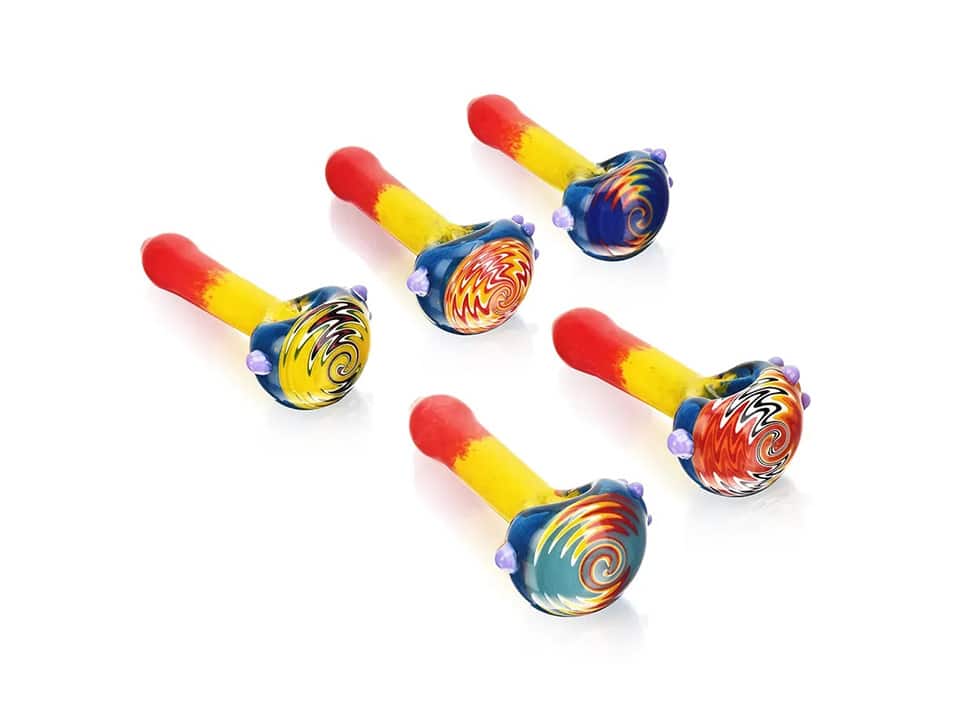
I’d also stop pretending every decorative piece can share the same care phrasing. A more sculptural item like the EGH33 Multi Monster Eyeballs borosilicate weed pipe needs grip-and-storage language that accounts for raised visual elements, while a cleaner shape like the Ocean USA color borosilicate glass weed pipe can use tighter, simpler handling copy. That’s not overkill. That’s just respecting how the piece will actually be touched.
The version I’d ship tomorrow
Here’s my bias: the front of the card should calm the buyer down. The back should keep your support team sane.
Front side: product name, borosilicate callout, “inspect before first use,” and one plain warning about heat or impact. Back side: wash, dry, store, avoid sudden temperature changes, and how to report transit damage fast (with photos). I’d add a QR code, but only if it lands on a product-family care page that doesn’t waste the customer’s time.
No fluff. No founder letter. No “thanks for supporting our small business” paragraph elbowing out the instructions that might stop a reship.
And I’d absolutely tune the wording by product family. The Bonsai Series borosilicate hand pipe doesn’t have to sound like the Opal Whistle mini borosilicate rig. Different piece. Different handling pattern. Different failure mode. That’s where package care cards stop being generic inserts and start doing actual work.
| Card Element | Retail version | Ecommerce version | Why it matters |
|---|---|---|---|
| First line | “Inspect before first use.” | “Inspect immediately after delivery and before use.” | Retail buyers often inspect in-store; ecommerce buyers need a timed prompt. |
| Material note | “Borosilicate glass.” | “Borosilicate glass. Avoid sudden temperature swings.” | Material ID builds confidence; temperature warning reduces avoidable misuse. |
| Cleaning copy | “Hand wash only with mild soap.” | “Hand wash only. Do not use abrasive tools.” | This reduces scratches, haze, and support complaints tied to cleaning damage. |
| Damage protocol | “Contact store support if defective on arrival.” | “Photograph the box and item within 24 hours if damaged.” | Ecommerce claims live or die on documentation speed. |
| QR destination | Product family care page | SKU-specific care + damage claim page | Generic QR codes waste support traffic. |
| Tone | Short, shelf-friendly | Slightly more procedural | Channel context changes how much instruction the buyer will tolerate. |

FAQs
What are product care cards?
Product care cards are compact printed inserts that tell buyers how to inspect, handle, clean, store, and report issues with a product after purchase, so the card acts as a post-purchase instruction sheet, a warning layer, and a returns-reduction tool all at once. In plain English: they’re the tiny document most brands underwrite, underthink, and then regret ignoring when tickets pile up.
What should glass care cards include?
Glass care cards should include material identification, first-use inspection steps, cleaning guidance, temperature warnings, storage instructions, and a clear damage-report process so a customer can safely use the item and quickly flag transit issues before the claim turns into a he-said-she-said mess. I’d also include a short photo-report window. Not because it’s pretty—because it saves arguments.
How are retail packaging inserts different from ecommerce packaging inserts?
Retail packaging inserts are shorter, shelf-speed instructions meant to support confident in-store purchase and first use, while ecommerce packaging inserts must also cover delivery inspection, damage documentation, misuse prevention, and claim timing because the buyer is opening the item after a shipping event, not at a staffed counter. That’s the whole split, really. Same category. Different pressure points.
How do you create care cards for glass orders?
To create care cards for glass orders, start with the actual failure points in your catalog—breakage, thermal shock, cleaning damage, confusion at unboxing, late claims—and turn those into short, plain-language instructions tailored by channel, product family, and material so each card solves a real support problem. I’d write from ticket history first, brand voice second. That order matters.
If I were cleaning this up tomorrow, I’d stop treating care instruction cards like a throw-in and start treating them like an ops asset. That means separate versions for retail and ecommerce, tighter language for fragile borosilicate pieces, and smarter SKU-family copy for pieces like the wig wag cactus pot glass hand pipe or the Ocean USA color borosilicate glass weed pipe. Small card. Big difference.