Free shipping in the U.S. for orders over $50

Build a Profitable Dab Rig Expansion From a Bong Product Base
Most merchants misread dab rigs as decorative cousins of the bong. They are not. This piece shows how to build a tighter, more profitable expansion using buyer behavior, regulatory context, and a basket-first merchandising model.


I’ve seen wholesalers, headshops, and glass sellers do the same weird dance over and over: they move a few beakers, maybe a stack of slides, maybe an ash catcher or two, then somebody decides concentrates are “hot,” so four random rigs get dumped into the catalog with mushy copy and zero fit logic—and then everyone acts shocked when the sell-through limps. It works. Usually not.
Why does that happen?
Because a dab rig isn’t just a bong wearing different clothes. I frankly believe that’s the single dumbest assumption in this corner of the trade, and it keeps getting repeated because it sounds convenient, not because it’s true. Reuters reported the U.S. cannabis market was projected to hit $40 billion in 2024, which tells me the money is there; Illinois alone logged $141.7 million in adult-use sales in June 2024, which tells me the demand isn’t some fringe hobby living in comment threads. The wallet is already open.
And the usage pattern? It’s not subtle.
NIDA said in August 2024 that cannabis vaping hit 22% past-year use and 14% past-month use among adults ages 19 to 30; California public-health guidance also says concentrates used for dabbing can reach THC levels as high as 80%. That matters because higher-potency formats pull buyers into different hardware, different questions, and a much fatter “what else do I need?” moment at checkout. That’s where the basket shifts.
Table of Contents
The merchants who win stop calling this “diversification”
Here’s the ugly truth.
A lot of stores aren’t expanding. They’re SKU-sprawling. They add a couple of concentrate rigs, tuck them beside the flower glass, and call it a category build. Nope. That’s not a build. That’s dead-stock waiting for a discount banner.
From my experience, the real signal sits inside the bong business you already have. If customers are already buying a beaker bong with an evil skull eyes design, clicking into borosilicate bong bowls and slides, or adding a solid horn ash catcher, they’ve already shown you three things at once: they accept glass maintenance, they understand component upgrades, and they don’t need their hand held through every accessory decision.
But—and this is the part people skip—that still doesn’t mean they’re ready for concentrates.
A dry-herb customer will tolerate water filtration and replacement parts. A concentrate customer cares about joint fit, banger geometry, airflow restriction, heat retention, reclaim, flavor, and whether the chamber is going to mute the hit into warm nothing. Different beast. Different copy. Different staff script. If your page can’t explain that in plain language, the shopper bails and the rig gets blamed for a merchandising problem.
Dab rig vs bong is not a beginner question. It’s margin math.
Three words. Basket physics matters.
A bong sale often ends where it started: piece, bowl, maybe cleaner if you’re lucky. A dab rig sale almost never ends there, because the rig itself is only the opening ticket; the real ticket is the chain behind it—quartz, cap, tool, cleaner, swabs, maybe pearls, maybe a reclaim setup later when the buyer stops improvising with junk from a drawer.
So when people write dab rig vs bong content like it’s schoolbook filler, I wince. That page should be doing sales work. It should be explaining why a purpose-built rig like the classic Swiss perc dab rig or the spinning poker face dab rig produces a cleaner path to purchase than some hacked-together conversion idea built on wishful thinking.
Yet I’m not naive. Buyers still ask it.
Can you use a bong as a dab rig? Sure—sometimes. If the joint size lines up, if the angle works, if the glass can handle the setup, if the user knows what they’re doing, if the banger isn’t a mismatch. That’s a lot of ifs. Good SEO keyword? Yes. Good flagship category strategy? Not really.
And the legal backdrop makes the whole thing even more twitchy. Reuters reported on May 16, 2024 that the U.S. government proposed shifting marijuana from Schedule I to Schedule III, which sounds like a big federal thaw, but it doesn’t erase operational mess overnight. I wouldn’t build assortments on vibes. I’d build them on compatibility and repeat purchase behavior.
The smart expansion starts where friction is lowest
Not everywhere.
I wouldn’t launch a “concentrate rig collection” with twelve unrelated pieces and a prayer. I’d start with a ladder. One easy-entry rig. One mid-tier piece with actual visual pull. One louder unit for the buyer who wants glass with some personality. Then I’d pin the whole thing to the accessory stack that makes the first session possible without a Reddit search spiral.
That last part gets neglected because, honestly, it’s less sexy than hero glass.
But the boring stuff is where the money sits. CDC says 61.9 million people used cannabis in 2022, which is huge on its own, but the better signal for merchants is what that volume does to product literacy: more users, more format experimentation, more crossover from flower into concentrates, more demand for pages that explain fit and function without sounding like a lab manual. Bigger audience. Messier intent. Better opportunity—if your catalog stops talking in mush.
So I’d map the expansion this way.
Existing bong shoppers get conversion content first. Curious buyers get education pages that explain why a concentrate rig isn’t just a bowl swap. Serious buyers get performance language—short vapor path, stable draw, correct joint spec, less nonsense. That’s how bong to dab rig conversion content becomes useful instead of decorative.

Where the margin actually sits
It’s not mysterious.
| Expansion layer | What the shopper is really buying | Margin logic | Operational risk | Best use inside a bong-based catalog |
|---|---|---|---|---|
| Entry dab rig | A first serious concentrate setup | Higher ticket than a bowl replacement; opens accessory chain | Breakage and education burden | Use one purpose-built rig as the anchor SKU |
| Mid-tier visual rig | Identity, style, and shareable appeal | Stronger AOV when paired with add-ons | Style may outrun utility if copy is weak | Use for shoppers graduating from basic bongs |
| Quartz banger for bong | A low-commitment test of concentrates | Fast path into conversion behavior | Fit errors on joint size and angle | Use as crossover content, not core category strategy |
| Carb caps, tools, cleaners | Functional completion | Repeat-purchase and replenishment logic | Low, if merchandised clearly | Treat as mandatory companions, not afterthoughts |
| Cleaning and reclaim workflow | Maintenance confidence | Protects repeat use and lowers buyer regret | Copy has to be precise | Bundle into education-heavy product blocks |
That table looks simple. It isn’t.
What it’s really saying is this: the money doesn’t live only in the glass body. It lives in the system around the glass body. Merchants who obsess over heady shapes and ignore the accessory path end up with pretty pages, low attachment, and a staff team forced to explain why the shopper still can’t use the product after clicking “buy.”
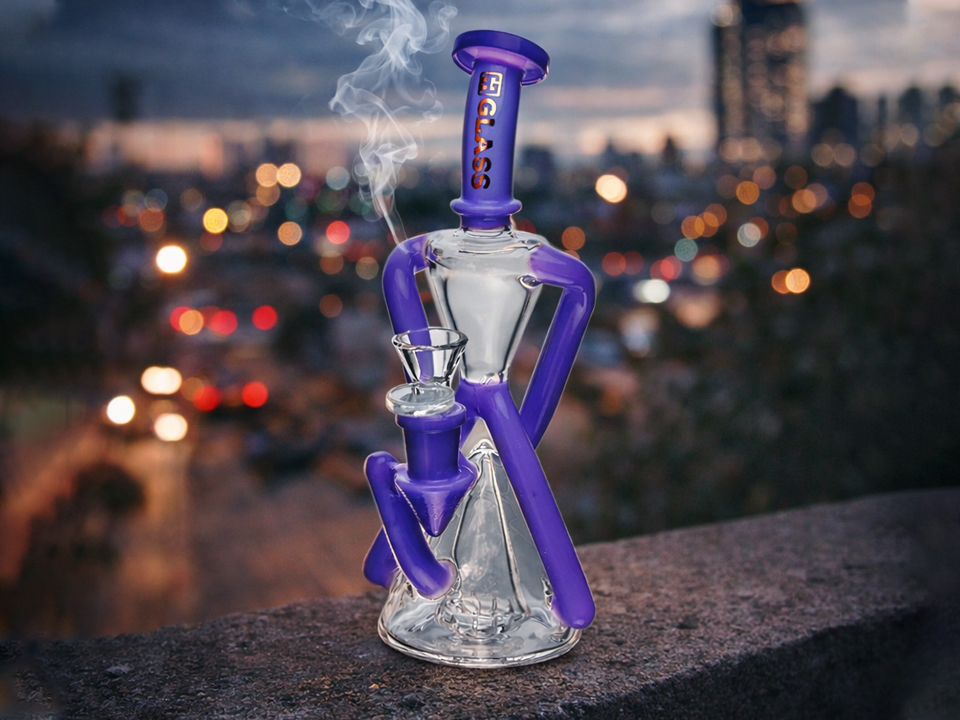
Your internal-link structure should act like a sales rep, not a sitemap
This part gets butchered all the time.
If every page just points to “glass” and “accessories,” you’re flattening intent. The buyer came in from a specific question. Treat them like they had one. Use your existing bong-supporting pages to prove you already understand component selling, then bridge them forward. Mention pure mushroom handle bong bowls and slides when the conversation is about dry-herb replacement habits. Bring in the classic Swiss perc dab rig when you explain why a real concentrate rig beats a patchwork conversion. Use the spinning poker face dab rig when the shopper wants function but still cares whether the piece has some swagger.
That gives you a clean path: bong base -> conversion question -> purpose-built dab rig -> accessory replenishment.
That path sells.
And, yeah, I’ll say something slightly rude here: the “best dab rig for concentrates” is usually not the bulkiest thing in the catalog with the loudest silhouette. A tighter borosilicate setup with sane airflow and a proper quartz pairing often outperforms the circus piece. Flavor wins. Thermal control wins. Chazzed bangers and oversized chambers don’t.
The industry keeps overselling style and underselling fit
That mistake gets expensive fast.
A quartz banger for bong conversion looks easy on paper until the returns start showing up because the buyer picked the wrong joint size, wrong gender, wrong angle, or assumed “close enough” was a product spec. It isn’t. Close enough is how you build a support queue.
So I’d shove compatibility language higher—way higher. Right into collection copy, right into product snippets, right where the buyer’s eye lands first. Not hidden under tabs. Not tucked behind vague lifestyle fluff. Put the spec where the doubt lives.
Because the buyer isn’t clueless. They’re just impatient.
And impatient buyers reward clarity. Every single time.
FAQs
What is the difference between a dab rig and a bong?
A dab rig is a water-filtered device designed to vaporize concentrates through a heated quartz, ceramic, or titanium surface, while a bong is mainly built for combusted dry herb through a bowl, which means airflow, residue, heat behavior, and the accessory stack all change in practical retail use.
That’s why the dab rig vs bong conversation isn’t trivia. It’s the dividing line between a simple glass sale and a more layered concentrate basket.
Can you use a bong as a dab rig?
Yes, a bong can be used as a dab rig when the joint size, joint angle, and glass tolerance match a compatible quartz banger or nail, but in most cases it remains a workaround rather than a purpose-built concentrate setup because chamber size, reclaim handling, and thermal behavior often stay less controlled.
So, yes—it can work. But I wouldn’t anchor a serious category on that workaround unless your whole pitch is entry-level experimentation.
What do you need for a bong to dab rig conversion?
A bong to dab rig conversion needs a compatible quartz banger or nail, a carb cap, a dab tool, cleaning supplies that won’t wreck the setup, and joint specifications that actually match the host piece, because a 14 mm female 90-degree joint behaves very differently from an 18 mm male 45-degree build.
That’s the part beginners underestimate. The glass isn’t the whole story. Fit is the story.
What are the best dab rig accessories to stock?
The best dab rig accessories to stock are the repeat-purchase items that control heat, airflow, and cleanup—quartz bangers, carb caps, terp pearls, reclaim catchers, cotton swabs, and cleaning supplies—because those are the items that turn a one-time glass purchase into a second, third, and fourth-margin event for the merchant.
From my experience, if those items are buried in a separate accessory silo, attachment drops. Fast.
What is the best dab rig for concentrates?
The best dab rig for concentrates is usually a smaller borosilicate piece with stable base geometry, controlled airflow, a well-matched joint, and a quartz setup that preserves flavor rather than cooling vapor into dullness, because concentrate buyers usually care more about taste, control, and repeatability than sheer chamber size.
That’s why I’d rather sell a clean, tight performer than a bloated showpiece with bad session physics.
If your store already converts on bowls, beakers, and ash catchers, don’t pretend you’re starting from scratch. Build the next layer the smart way: tighten the fit story, merchandise the dab rig accessories like they matter (because they do), and push buyers from the bong base into purpose-built concentrate pieces like the classic Swiss perc dab rig and the spinning poker face dab rig. That’s not decorative expansion. That’s how margin gets built.