Free shipping in the U.S. for orders over $50

Isopropyl Alcohol Cleaning SOP for Glass Bongs and Rigs
A standard operating procedure (SOP) for cleaning glass bongs and rigs with isopropyl alcohol (IPA) has to remove resin, protect the glass and its decoration, and keep staff safe around a flammable solvent. The core method is short: disassemble the piece, rinse with warm water, agitate with 91–99% IPA and coarse salt, rinse until no alcohol odor remains, dry completely, and inspect against written criteria. The harder task is making that method repeatable across different shapes, joints, and finishes. This guide is written for retailers, distributors, and brand managers who handle display units, returns, and customer care instructions for borosilicate glass pipes and rigs.
Who Needs a Written IPA Cleaning SOP, and What It Should Cover
An informal “shake it with alcohol and salt” habit works for one personal piece. It breaks down when several employees clean different products to different standards. A written SOP matters for:
- Retail stores and showrooms that clean demonstration pieces or inspect returned goods.
- Distributors and importers that need consistent care instructions for shipments.
- Brand and product managers who write care cards and must avoid instructions that damage decorated pieces or accessories.
A usable SOP defines scope, solvent grade, safety controls, steps, acceptance criteria, and records. It should also state what it does not cover. IPA dissolves resin and oils but does not remove mineral scale, and it can harm silicone, acrylic, and some applied decoration. Thick Ass Glass, a bong manufacturer, advises against using IPA on acrylic or silicone for exactly this reason, and recommends white vinegar for the cloudy mineral rings that alcohol will not touch.
Which Isopropyl Alcohol Grade Should You Specify?
For resin-soaked glass, specify 91% or 99% IPA. Resin removal is the job, and the grades differ mainly in water content, evaporation speed, and cost. Alliance Chemical’s comparison positions 70% as the slower-evaporating grade, 91% for general cleaning, and 99% for electronics and solvent uses. Thick Ass Glass similarly names 91–99% as the working range for bong cleaning.
| Grade | Water content | Practical behavior in a glass-cleaning SOP | Best use |
|---|---|---|---|
| 70% IPA | Highest | Evaporates more slowly; weaker against heavy resin | Wiping exteriors, mouthpieces, and display surfaces |
| 91% IPA | Moderate | Good balance of dissolving power and contact time | Default grade for soak-and-shake cleaning |
| 99% IPA | Lowest | Evaporates fastest; often costs more per liter | Heavy buildup, quick-dry finishing, or when water must be minimized |
This table is qualitative. It reflects general solvent behavior and supplier positioning, not lab testing of resin-removal rates.
Why 99% Is Not Automatically the Better Choice
The common advice is “the higher the percentage, the better.” That holds for dissolving power, but an SOP also has to account for contact time and handling. In a sealed bag or capped chamber, evaporation matters little, so 99% performs well. In open vessels, or when a soak runs 30–60 minutes, the faster evaporation of 99% can shorten effective contact time and increase vapor release into the room. For routine maintenance on lightly soiled pieces, 91% often does the job at lower cost. Reserve 99% for heavy buildup, and test both on a few representative pieces before standardizing, since results depend on residue age and piece geometry.
Safety Controls Before Anyone Starts Cleaning
IPA is a flammable liquid, and the SOP should say so plainly. The NIOSH Pocket Guide entry for isopropyl alcohol lists a flash point of 53°F, classifies it as a Class IB flammable liquid, and gives explosive limits of 2.0% (lower) and 12.7% (upper) in air. It also lists an OSHA permissible exposure limit of 400 ppm as an 8-hour time-weighted average. The OSHA chemical data page for isopropyl alcohol reports a vapor density of 2.07, meaning the vapor is heavier than air and can collect at floor level.
Those figures translate into practical rules for a shop or back room:
- Ventilate. Clean near open airflow, not in a closed storeroom, especially when processing several pieces in one batch.
- Remove ignition sources. Keep lighters, torches, heaters, and pilot lights away from the cleaning area. This matters for dab rigs, which are used with torches.
- Never heat a piece until it is rinsed and dry. Residual IPA in a joint or chamber is a fire risk and also produces harsh-tasting vapor.
- Use gloves and eye protection. NIOSH lists eye, skin, and respiratory irritation among the exposure effects.
- Limit quantities. Decant only the volume needed into labeled containers, and store the main supply per the supplier’s safety data sheet (SDS).
- Follow local rules for disposal. Used IPA contains dissolved resin and salt. Check the SDS and local waste requirements rather than assuming it can go down a drain.
These are workplace practices, not legal advice. Check the requirements that apply in your jurisdiction.
Materials and Setup
Gather everything before opening the solvent:
- 91% or 99% isopropyl alcohol
- Coarse salt (see the note below)
- Sealable freezer bags or capped containers for small parts
- Silicone or rubber plugs for open joints and mouthpieces, where the piece has them
- Warm tap water source and a basin
- Pipe cleaners or soft brushes for mouthpieces and narrow channels
- Nitrile gloves and eye protection
- A drying rack or clean towels
- A cleaning log or checklist
Salt works because it does not dissolve quickly in the alcohol, so it keeps scrubbing while the piece is agitated. Thick Ass Glass says coarse salt will not scratch borosilicate. Still, the claim applies to plain glass surfaces. Test it on a hidden area of any piece with painted, enameled, or applied decoration.
Step-by-Step IPA Cleaning SOP
1. Inspect and disassemble
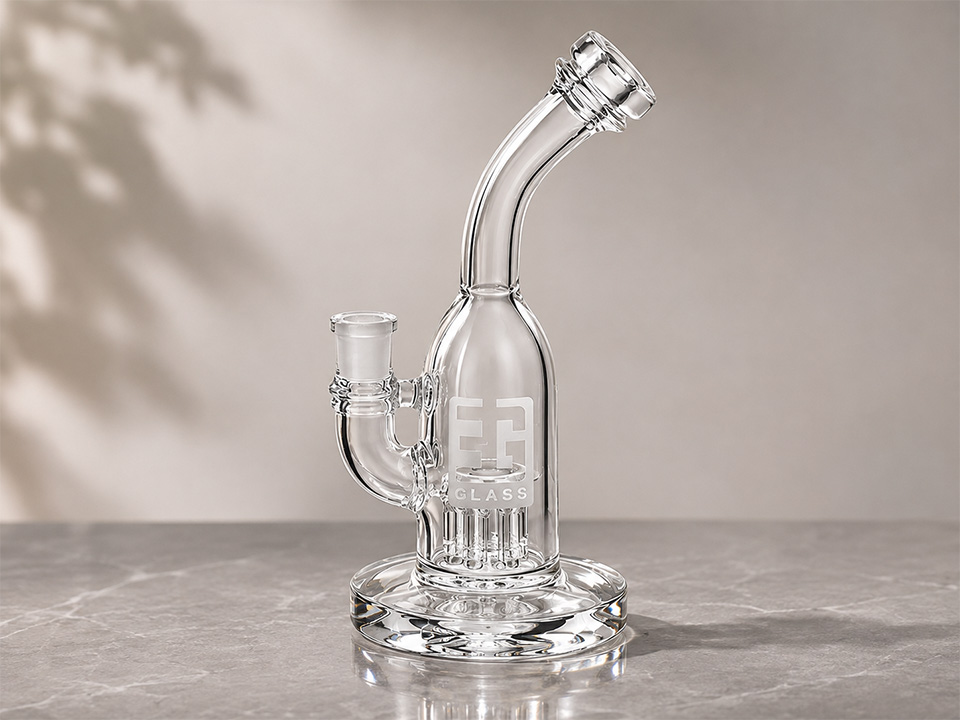
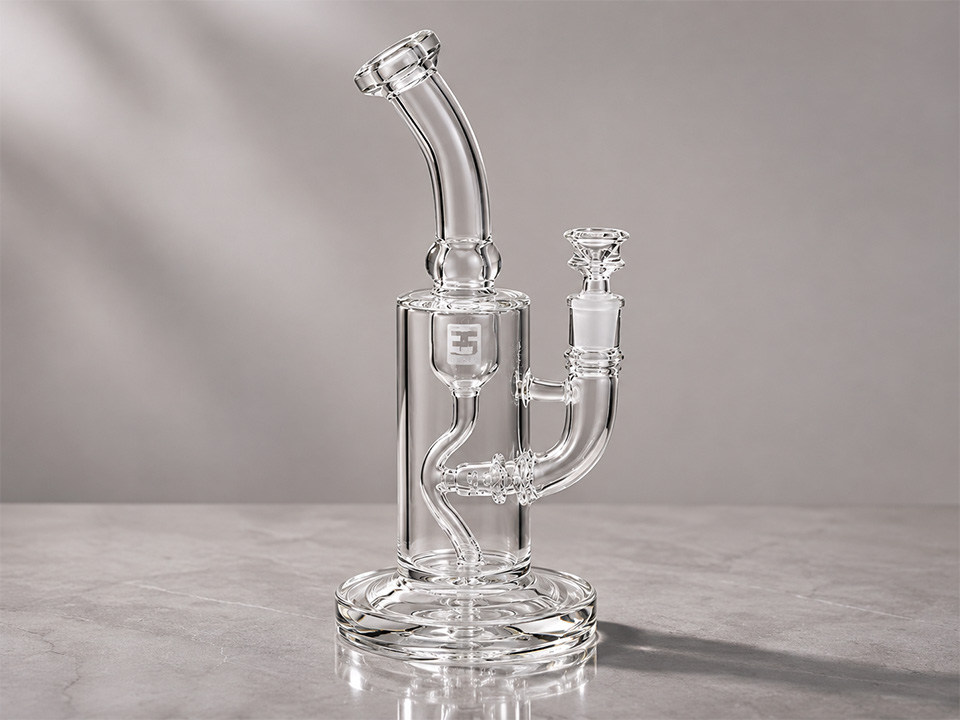
Look for chips, cracks, or stress marks before cleaning. Cleaning adds mechanical and thermal stress, so a flawed piece should be set aside. Remove bowls, downstems, slides, silicone parts, plastic clips, O-rings, and accessories. Clean the glass separately from anything made of silicone or acrylic.
2. Pre-rinse with warm water
Flush loose ash and surface residue with warm tap water. Borosilicate has a low coefficient of thermal expansion, listed as about 3 × 10⁻⁶ per kelvin at 20°C on Wikipedia’s borosilicate glass entry, which makes it more resistant to thermal shock than other common glasses. More resistant is not immune. Some guides recommend near-boiling water, but an SOP applied to varied products is safer when it specifies warm water and bans boiling water, heat guns, and cold-to-hot swings. Thin-walled, small, or intricately shaped pieces carry more risk, and the effect of decoration or wall thickness on thermal tolerance should be confirmed with the supplier.
3. Add IPA and coarse salt in a closed system
Place small parts such as bowls and downstems in a sealable bag with enough IPA to submerge the residue-coated surfaces and a spoonful or two of coarse salt. For larger chambers, add a measured volume of IPA and a handful of salt, then plug all openings. Use enough alcohol to contact all residue, and adjust the volume based on results. There is no universal ratio.
4. Seal and agitate
Shake firmly for one to two minutes, rotating the piece so the salt travels through every channel. Thick Ass Glass recommends at least two minutes. Hold the piece over a padded surface, and do not shake a piece with a loose or weakly seated plug.
5. Soak stubborn residue
For heavy buildup, let the solution sit for up to an hour, then agitate again. Once the alcohol is saturated with resin, a longer soak adds little, so drain it and refresh with new IPA instead.
6. Rinse until odor-free
Pour out the IPA and salt, then flush with warm water until there is no alcohol smell and no salt remains in joints or narrow channels. Salt dissolves in water, so a thorough warm rinse clears it. Swirl water through every opening and drain it out of each one.
7. Dry fully
Stand the piece upside down on a rack or clean towel and allow it to air-dry. Do not use ovens, heat guns, or torches to speed the process. Confirm that no liquid is trapped in joints, recesses, or one-piece chambers before the piece goes back to display or to a customer.
8. Inspect and record
Check the piece against the acceptance criteria below. Log the date, piece SKU or ID, IPA grade, number of cycles, and any issues found.
Acceptance Criteria and Troubleshooting
Define “clean” in observable terms so every operator reaches the same result:
- Glass is clear, with no amber or brown film, and no visible resin in joints, bowls, or mouthpieces.
- No residue film or haze when held against light.
- No alcohol, resin, or musty odor.
- No salt crystals in channels.
- Airflow passes freely when the operator blows or draws through the piece.
- Decoration, labels, and accessories appear unchanged.
| Observation | Likely cause | Corrective action |
|---|---|---|
| Brown film remains after rinsing | Residue not fully dissolved, or IPA saturated with resin | Repeat with fresh IPA and salt; extend agitation; avoid reusing dirty IPA |
| White haze or cloudy rings | Mineral scale from water, not resin | Soak in warm white vinegar, then rinse; IPA will not remove scale |
| Alcohol smell after drying | Incomplete rinsing or liquid trapped in a narrow passage | Rinse again, drain from every opening, extend drying time |
| Salt grains in channels | Insufficient flushing | Flush with warm water and agitate; check mouthpieces and joints |
| Stuck bowl or joint | Resin bonded at the joint | Soak the joint area with IPA and re-test; do not force it |
| Faded decal, label, or finish | Solvent incompatibility | Stop; record SKU and decoration type; add to the SOP’s exclusion list |
| New crack after cleaning | Thermal shock, impact, or a pre-existing flaw | Remove the piece from service; review water temperature and handling steps |
Reusing IPA is a judgment call. Alcohol that has already dissolved resin leaves a film when it dries, so use fresh alcohol for the final cycle on any piece.
Adjusting the SOP to Product Geometry
The same eight steps apply across product types, but shape changes what you must emphasize. Full-size bongs add more parts to take apart; Thick Ass Glass points to percolators, ice catchers, and the downstem base as places where buildup collects and soaking helps. The examples below, which are smaller formats, come from product listings that give height and weight for each piece. Those listings do not specify wall thickness or finish chemistry, so confirm any cleaning-relevant details with the supplier.
Compact hand pipes
Small pieces are easiest to clean because the bag method keeps IPA volume low. A 2.8-inch mini glass ring hand pipe or a 4-inch solid mushroom hand pipe can be sealed in a freezer bag with IPA and salt. The main risks are narrow mouthpiece channels trapping salt and residue in tight airpaths, so a pipe cleaner and a visual airflow check are worth adding to the steps. A slightly larger piece such as a 4.5-inch bonsai pot hand pipe follows the same method but needs more attention where the bowl meets the body.
Sculpted pieces with raised or irregular features
Raised features create corners where residue and salt grains can lodge. The 5-inch multi monster eyeballs pipe is described with raised eyeball accents, and the 5.7-inch wig wag cactus pot hand pipe and 6.5-inch trans prickly pear pot hand pipe are cactus-pot designs with sculpted forms. For pieces like these, extend the rinse, rotate the piece during agitation, and inspect the contours under good light.
Decorated pieces
Decoration methods vary by product. For a piece like the 4.5-inch ocean-themed borosilicate glass pipe, which the listing describes with clownfish and seaweed accents, do not assume every surface treatment tolerates solvent. Ask the supplier how the decoration is applied, then run a cycle on a sample before approving the SOP for a full order.
One-piece and jointed rigs
A one-piece rig cannot be disassembled, so drainage is the difficulty. The 3.3-inch opal whistle mini dab rig is a compact one-piece unit, so salt and water can stay trapped in its small internal space if rinsing is rushed. Opaque or heavily colored glass also hides residue, so rely on odor and airflow checks as well as sight. A rig with a standard joint, such as the 6-inch ES2228 transparent dab rig with a 14mm joint, adds a joint where resin can bond. Clean the joint area separately and never force a stuck part. Accessories that attach at the joint are cleaned on their own, so confirm what each product includes.
How Buyers Can Build Cleaning Requirements Into Orders
Cleaning is also a product-specification question, and it is rarely raised during sourcing. Before approving a product line, wholesale buyers can request:
- Written care instructions from the supplier, including whether IPA and salt are approved for each SKU.
- Decoration method details, such as whether accents are fused glass or surface applied, and whether they tolerate solvent.
- A sample cleaning test. Clean a representative sample three to five times and check for finish changes before committing to a larger order.
- Accessory material information for silicone, plastic, or metal parts that cannot go in IPA.
- Packaging that protects joints and mouthpieces, since a chipped joint changes how a piece should be cleaned.
Retailers can turn the SOP into a one-page care card to ship with product. Keep it brief: warm water only, 91–99% IPA with coarse salt, no flame until dry, and a note on which components stay out of alcohol.
What Should Buyers Verify Before Standardizing This SOP?
Before rolling the procedure out to staff or customers, confirm that the supplier has approved IPA and salt for every SKU, that you know which accessories must be removed first, that the cleaning area has ventilation, gloves, eye protection, and an SDS on file, and that “clean” is defined by clarity, odor, airflow, and residue-free joints. Keep a log that links failures to specific SKUs so the SOP improves over time.
Where your range mixes hand pipes and rigs, pilot the SOP on one compact pipe and one jointed rig first. The differences in drainage, joint cleaning, and inspection show up quickly.
Frequently Asked Questions
What percentage of isopropyl alcohol is best for cleaning glass bongs and rigs?
Use 91% or 99% IPA for resin-soaked glass. The 91% grade gives a good balance of dissolving power and contact time, while 99% evaporates faster and suits heavy buildup. Use 70% only for wiping exteriors, since its higher water content makes it weaker against resin.
Is it safe to clean borosilicate glass with isopropyl alcohol?
Borosilicate generally tolerates IPA well. The risks come from thermal shock, silicone or acrylic parts, and decoration. Use warm water instead of near-boiling water, remove non-glass components, and test any painted or applied decoration on a sample first.
Why use salt with isopropyl alcohol?
Coarse salt acts as an abrasive. It dissolves slowly in alcohol, so it keeps scrubbing residue loose while you shake the piece. It rinses out with warm water, but it can stay in narrow channels, so rinse thoroughly and check mouthpieces and joints.
How do you remove the alcohol smell after cleaning?
Rinse with warm water until the smell is gone, draining from every opening. Then dry the piece upside down. A lingering smell usually means liquid is trapped in a joint, recess, or narrow passage, so rinse and dry again.
Can you reuse isopropyl alcohol when cleaning glass?
You can reuse it for a first-pass clean on heavily soiled pieces, but not for the final pass. Used IPA holds dissolved resin and leaves a film as it evaporates. Finish with fresh alcohol, and dispose of used solvent according to local rules.
Does isopropyl alcohol remove cloudy white stains from glass?
Usually not. White haze or rings are commonly mineral deposits from water, not resin. A warm white vinegar soak followed by a thorough rinse is the usual approach for these deposits, and it can be done after the alcohol clean.
Can you use a torch or lighter right after cleaning with IPA?
Not until the piece is rinsed and completely dry. IPA has a flash point of 53°F and its vapor is heavier than air, so residual alcohol in joints and chambers is a fire risk. Wait until no alcohol odor remains.