Free shipping in the U.S. for orders over $50

How to Shortlist Bong Manufacturers for Volume Orders
A buyer gets dazzled by a neat quote sheet, a chirpy rep on WhatsApp, and a “factory” that somehow says yes to every finish, every decal, every carton tweak, every shipping fantasy, and then—right when the PO gets real—the same supplier starts slipping on joint fit, packing density, invoice wording, and lead times nobody bothered to nail down.
Then the pain starts.
I frankly believe most teams don’t lose money on glass because of price. They lose it because they mistake responsiveness for capacity, and they mistake a good sample for a good system. Those are not the same thing. Not even close.
And the market’s big enough now that bad operators can hide in plain sight. Reuters noted in 2024 that U.S. cannabis sales were projected to hit $40 billion by year-end, with recreational cannabis legal in 24 states and medical cannabis legal in 40. Bigger demand. More buyers. More sloppy shortlists.
Table of Contents
Most buyers start with the wrong filter
Price lies first.
Not always, sure, but often enough that I now treat the cheapest opening quote like a fire alarm rather than a gift, because in this trade the first lowball number usually means one of three things: the seller is a trading shell with thin control over production, the spec is being softened quietly, or the ugly costs are waiting off-page in freight damage, rejects, or repacking.
What are you actually buying?
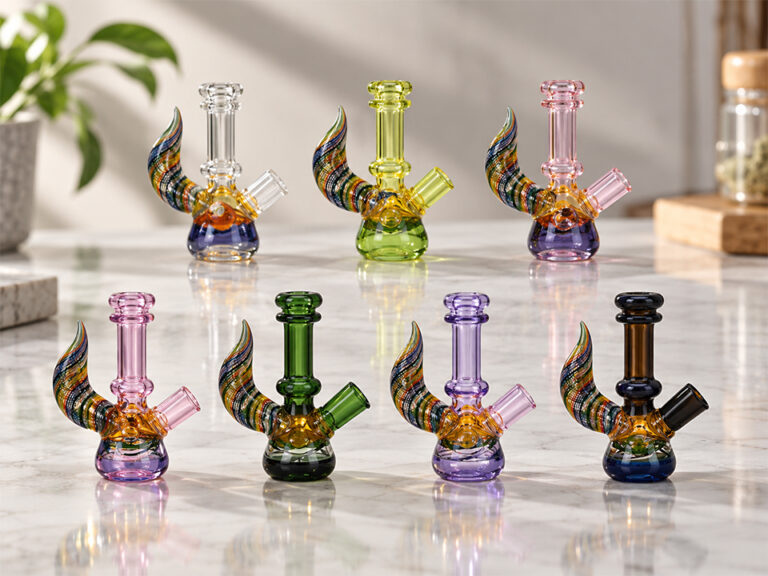
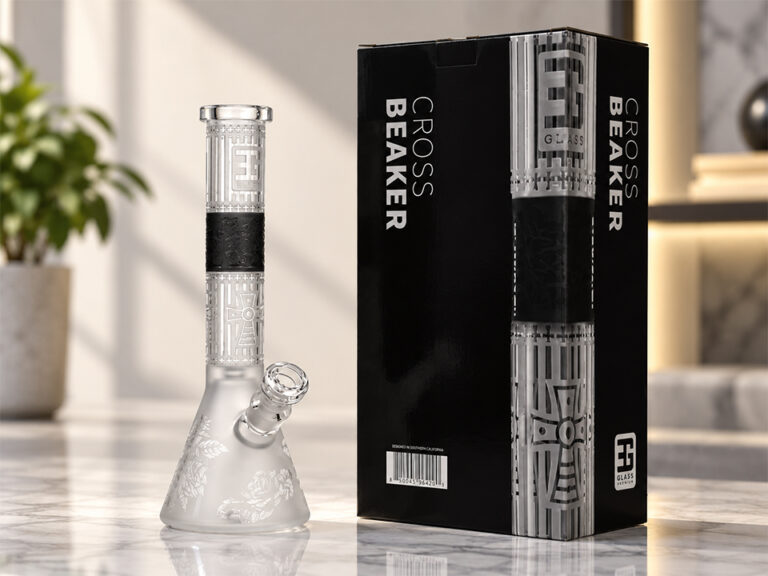
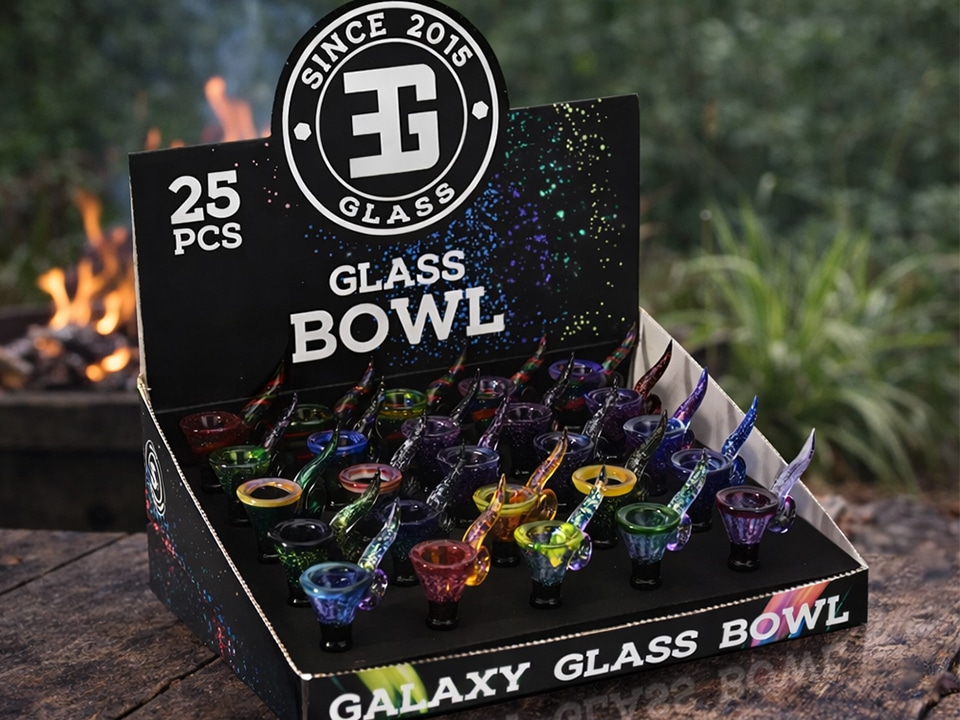
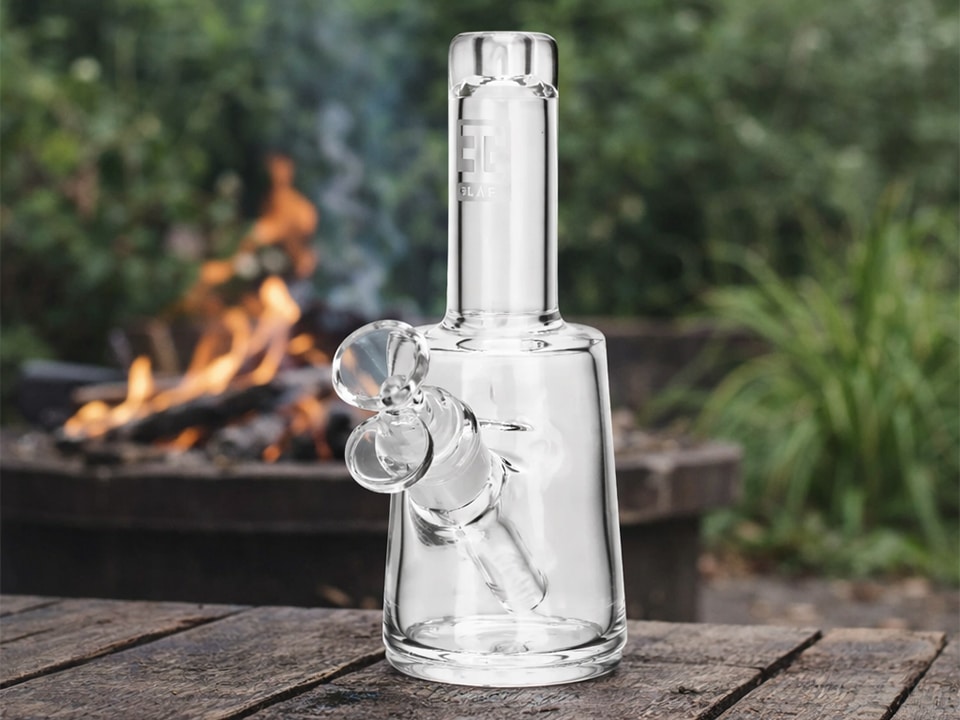
Not a unit cost. You’re buying repeatability under pressure—when the run gets bigger, when colorways shift, when attachments have to mate cleanly, when a mixed carton leaves the warehouse and doesn’t come back as a box of glittering regret. That’s why I care whether a supplier can keep a catalog coherent across 11-inch beaker bong SKUs, solid horn ash catcher bowl sets, and borosilicate mushroom-handle bowl and slide pieces without suddenly acting confused the minute you ask about reorders.
That confusion matters.
From my experience, the best bong manufacturers for wholesale sound a little boring. They talk about reject rates, box count, fit-up, rework, and where the line chokes during peak weeks. The weak ones? They talk in mood words. “Premium.” “Top quality.” “No worry.” I’ve learned not to trust that song.
Compliance comes before the sample box
But, really, let’s get to the part buyers love to postpone.
If your end market touches the United States, you don’t get to play dumb with product character or invoice language, because 21 U.S.C. § 863 flatly addresses the sale, transport, import, and export of drug paraphernalia, which means the old dodge—“it’s just glass”—isn’t some clever insider loophole, it’s mostly wishful thinking dressed up as strategy.
So what do I ask first?
I ask where they won’t ship. I ask how they describe the goods. I ask whether they’ve had holds, relabel requests, or customs pushback. I ask whether they understand the difference between selling into a permissive market and selling through a payment, freight, or retail chain that gets skittish long before the law does. If the answer is “No issue, we can send anywhere,” I’m already halfway out the door.
Here’s the ugly truth.
Regulatory mood swings can wreck a beautiful sourcing plan. Reuters reported in February 2024 that Thailand was moving toward banning recreational cannabis use by year-end after the category had already exploded commercially, which is exactly the kind of policy whiplash that burns buyers who assume demand only moves in one direction.
How to tell a glass bong manufacturer from a trading shell
Factories leave fingerprints.
A real glass bong manufacturer usually talks like somebody who has been yelled at by production before—about annealing delays, weld issues, carton breakage, subcontracted decal work, and why one shape absolutely should not share the same MOQ as another—while a ghost factory, or what buyers call one when they’ve been burned, tends to give you shiny assets and fuzzy answers.
I test that fast.
I ask for a time-stamped floor video. I ask which SKUs are in-house and which are farmed out. I ask for three recent reject photos (not hero samples—the ugly ones). I ask who owns the mold. I ask what changed in the last six months: furnace time, labor, carton supplier, decal house, export route. That’s when the room gets quiet.
And quiet tells you plenty.
If they can explain why a classic Swiss perc dab rig model needs a different packing logic than a bent-neck Swiss perc rig variant, good. If they pretend both can run through the same box plan because “glass is glass,” no thanks. I’ve heard that line before. It usually ends with photos nobody wants to receive.
The catalog test nobody talks about
Yet, for me, the catalog is still useful.
Not because I’m admiring the photography. I’m looking for manufacturing logic hiding in plain sight. If a supplier’s range feels connected—bowls that obviously belong to the same accessory ecosystem, ash catchers that fit a sane reorder model, core piece families that don’t look like random grabs from three different workshops—then I start to think the backend might actually be under control.
That’s why the details matter.
A supplier whose assortment naturally runs from borosilicate bowl-and-slide lines into ash catchers, beakers, and rig families is telling me something beyond “we have many SKUs.” They’re telling me whether they understand attach rates, joint standardization, mixed-carton planning, and the boring-but-profitable mechanics behind bulk bong orders.
And yes—there’s a trap here too.
When a catalog leans hard into pop-culture art, mascot-style graphics, or brand-adjacent visuals, I start asking licensing questions immediately. Maybe it’s clean. Maybe it isn’t. But I’m not attaching a private label glass bongs program to somebody else’s artwork problem. Not happening.
My shortlist scorecard for bulk bong orders
I use a scorecard.
Because memory gets flattered by polished reps, and because after the fourth supplier call everybody starts sounding “pretty good,” which is exactly how bad decisions sneak in through the side door.
| Filter | Weight | What I want in writing | Pass signal | Kill signal |
|---|---|---|---|---|
| Compliance and market fit | 25 | Restricted-market policy, invoice language, ship-from country, customs-document readiness | Supplier names markets it avoids and explains why | “We can declare anything you want” |
| Factory reality | 20 | Time-stamped production proof, in-house vs outsourced split, sample-to-bulk workflow | Answers stay consistent across sales and production | Only showroom photos and vague staffing claims |
| QC and borosilicate consistency | 20 | Defect policy, replacement trigger, reject examples, fit consistency across accessories | Written rework or replacement terms | No defect photos, no written allowance |
| MOQ economics | 15 | MOQ by shape, color, print, accessory bundle, packaging type | Transparent cost ladder by variable | One magical MOQ for every SKU |
| Packaging and transit survival | 10 | Inner protection method, master-carton plan, breakage process | Packing SOP exists and is specific | “Bubble wrap is enough” |
| Catalog depth and compatibility | 10 | Beaker, bowl, ash catcher, and rig logic | Clear family structure for reorders | Random assortment with no fit logic |
But the paperwork side is where buyers get lazy.
Reuters’ June 2024 practical-law guidance put it bluntly: the importer generally holds title to the goods and remains responsible for customs compliance, and transactions over $2,500 require a customs bond or cash deposit. So no, the factory doesn’t “handle everything” just because the rep typed that into a chat. That line is fantasy.
That changes the shortlist, doesn’t it?
Questions that make weak OEM bong manufacturers flinch
Ask sharper stuff.
Who owns the mold if the relationship dies? What’s the actual replacement trigger—piece count, percentage, or whatever sounds convenient next month? Which SKUs are really made in-house? Which ones are handed off down the road? Can they hold joint fit on a reorder 90 days later, or was the sample run just a one-off beauty queen?
Then go meaner.
Show me the last packing failure. Show me the last production delay. Tell me what broke and why. Tell me which carton spec changed. Tell me whether mixed-SKU pallets push up breakage. Tell me who signs off after the golden sample. Buyers don’t ask these questions enough. They should.
And don’t ignore adjacent-category enforcement.
Reuters reported in June 2024 that the FDA had already issued more than 1,100 warning letters to manufacturers, importers, distributors, and retailers tied to unauthorized e-cigarette sales before a new federal task force even got moving. Different lane, same lesson: once regulators decide a category has gotten too cute, every weak document starts glowing.
What a serious shortlist actually looks like
Fewer names win.
I’m serious. Three suppliers is usually enough: one factory-led operator with proof, one OEM bong manufacturer with real category depth, and one challenger with better economics who stays on the board only if the answers stay clean once you move from samples to paperwork. Anything beyond that and you’re not doing diligence anymore. You’re just collecting dopamine.
I also don’t trust a single hero sample.
Give me a basket instead—one core bong piece, one accessory, one awkward geometry, one packing-heavy SKU. That tells me much more than one flawless photo-ready sample ever will. A supplier that can keep a basket stable is worth talking to. A supplier that can only make one piece look pretty is a content studio, not a manufacturing partner.
FAQs
How do I choose a bong manufacturer for wholesale?
Choosing a bong manufacturer for wholesale means verifying that the supplier can legally produce, document, pack, and repeat the exact SKU family you need at your target MOQ, defect tolerance, and lead time, rather than merely showing a large catalog or sending an attractive opening quote. Then I’d pressure-test the shortlist with proof: production evidence, reject handling, packaging logic, and reorder consistency. If they wilt under those questions, they weren’t shortlist material in the first place.
What is a normal MOQ for bulk bong orders?
A normal MOQ for bulk bong orders is the minimum run size a supplier needs to make a SKU financially workable, and in practice it shifts with geometry, color work, accessory bundling, packaging method, and how much of the process is done in-house versus subcontracted. Don’t accept one flat MOQ as gospel. Real shops price complexity differently. Middlemen often blur it because it sounds easier on the first call.
Are custom glass bongs and private label glass bongs the same thing?
Custom glass bongs and private label glass bongs are related but not identical, because custom work changes the object itself through geometry, engineering, artwork, or component choices, while private label usually puts your brand, packaging, and retail identity on an existing production-ready base. That difference hits timeline, risk, and cash flow. Private label is usually faster. True custom gets expensive fast—especially when the supplier’s process is shaky.
What should I ask an OEM bong manufacturer before paying a deposit?
Before paying a deposit, ask an OEM bong manufacturer for written confirmation on mold ownership, production location, subcontracted steps, defect allowance, replacement rules, packaging method, lead-time variance, invoice wording, and the exact person who approves production changes after sample sign-off. Then compare the paper to the sample run. If the sample says one thing and the contract says another, trust the mismatch. It’s trying to warn you.
Can a trading company still be worth shortlisting?
A trading company can still be worth shortlisting if it adds real value through QC control, mixed-factory coordination, packaging discipline, and honest compliance handling, because a capable trader can sometimes manage messy assortments better than a factory that’s terrible at export execution. But I only shortlist traders who admit they’re traders. Hidden structure is the problem. Not structure itself.
If you’re shortlisting bong manufacturers right now, don’t start with “best price.” Start with proof, paper, and pain points. Run the same basket test across all three finalists, force them to answer the annoying questions, and cut the first rep who gets slippery when the talk shifts from samples to accountability. That’s the move. Usually.