Envío gratuito en EE.UU. para pedidos superiores a $50

18.8mm vs 18mm Glass Joints: Regional Sizing Explained
A glass joint labeled 18mm and one labeled 18.8mm are, in almost every case, the same size. The mismatch is a labeling habit rather than a second standard: laboratory glassware specifies the wide-end diameter as 18.8 mm, and different trades round that figure in different directions. The confusion still costs money. A retailer who lists a rig as “18mm” while the supplier’s spec sheet says 19mm, or a buyer who pairs a banger from one catalog with a piece from another, ends up with returns and support tickets. This guide explains where each label comes from, why a tapered joint gives different readings at different depths, how to verify a joint with calipers, and which details to put in an RFQ so the listing matches the glass in the box.
What Do 18mm, 18.8mm and 19mm Mean on a Glass Joint?
Short answer: 18mm, 18.8mm and 19mm are three labels for the same standard joint. 18.8 mm is the measured diameter at the wide end of the ground surface. The other two are rounded versions of that number.
Ground-glass joints are conical, so the size designation names the diameter at the wide end. DWK Life Sciences’ technical guide to jointed glassware explains that in a designation such as 24/29, the first number is the wide-end diameter in millimetres and the second is the length of the ground joint. The same guide lists a 19/26 joint with an actual wide-end diameter of 18.8 mm. A joint with a 14.5 mm wide end and 23 mm length (the 14/23 size) is listed too, which is why the common “14mm” label is also a rounded figure.
Chemistry catalogs round 18.8 up to 19. According to Barney’s Farm’s bong joint size guide, the cannabis trade rounds the same number down to 18. That guide is a retailer’s explanation rather than a standards document, so treat it as a description of trade habit, not a specification.
How Do Regional and Industry Labels Compare?
The table below separates what each label usually refers to from what a buyer should still confirm. Rows for 19/22, 19/38 and 19/26 come from laboratory standards. The 18mm and 19mm rows describe retail and catalog usage.
| Label you may see | Where it typically appears | What it refers to | What to confirm with the supplier |
|---|---|---|---|
| 18.8mm | Technical specs, some detailed retailer guides | Wide-end diameter of the standard joint | Gender (male or female) and joint angle |
| 18 mm | Smoking-accessory listings and shop counters | The same joint, rounded down | That the glass is made to the 18.8 mm size |
| 19mm | Chemistry catalogs, some retailers | The same joint, rounded up | Same as above |
| 19/22, 19/38 | US laboratory glassware (ASTM E676) | 18.8 mm wide end, 22 mm or 38 mm ground length | Ground length, if matching lab-style parts |
| 19/26 | European laboratory glassware (ISO 383) | 18.8 mm wide end, 26 mm ground length | Ground length, if matching lab-style parts |
| 14mm or 14.5mm | Accessory listings and spec sheets | A different, smaller standard (14.5 mm wide end) | Never assume it interchanges with 18.8 mm |
Beyond the split between American (ASTM) and European (ISO) laboratory designations, none of the sources reviewed documented a consistent country-by-country pattern in how accessory sellers round the number. Region is a clue about which label a seller prefers. It is not a measurement.
Why Does a 1:10 Taper Make an 18.8 mm Joint Read 18.0 mm?
Standard joints are finished to a 1:10 taper, meaning the diameter changes by 1 mm for every 10 mm of length. Fox Scientific’s taper-ground joint dimensions, which follow ASTM E676, list a 19/22 joint with an 18.8 mm large end and a 16.6 mm small end. DWK’s chart shows the same pattern: the 19/26 joint narrows from 18.8 mm to 16.2 mm.
That has a practical consequence. Inside a female joint, the diameter shrinks as you go deeper, so a caliper reading taken about 8 mm below the opening would show roughly 18.0 mm (18.8 minus 0.8). That figure is arithmetic from the 1:10 taper, not a published tolerance. It explains why two people measuring the same joint can report “18” and “18.8”.
Ground length is the other variable. A 19/22, a 19/26 and a 19/38 all share the 18.8 mm wide end but differ in how deep a part seats and how much sealing surface it has. Accessory listings rarely state ground length, and hand-ground production glass may not follow laboratory tolerances. If a pairing matters, test a sample rather than assuming.
How Do You Measure a Glass Joint Correctly?
Use digital calipers. A coin or ruler cannot separate 18.0 from 18.8, and that is exactly the gap that causes disputes.
- Identify the gender. A male joint is the part that inserts, such as a downstem or banger stem. A female joint is the socket that receives it.
- Measure the right surface. For a male joint, measure the outside diameter at the widest point of the frosted ground area. For a female joint, measure the inside diameter at the opening where the ground surface begins.
- Take two readings. Rotate the piece 90 degrees and measure again to catch out-of-round glass.
- Classify the result. Common sizes sit far apart: 10 mm, 14.5 mm and 18.8 mm. A wide-end reading near 18.8 mm is the 18mm/19mm class. A reading near 14.5 mm is the 14mm class.
- Record the angle. Note whether the joint is straight (90 degrees) or angled (such as 45 degrees), because angle is part of fit.
For supplier communication, attach a photo of the caliper reading. It resolves most sizing disputes faster than a description.
Will an 18mm Piece Fit an 18.8mm Joint?
Short answer: Yes, if both parts follow the same standard. The labels describe one size. A mismatch is more likely to come from grind quality, ground length or gender than from the 18 versus 18.8 label.
Signs of a poor match include wobble, a part that seats noticeably higher or lower than expected, or an air leak at the joint. Do not force a part that will not seat. Frosted glass can chip at the rim when pushed against a mismatched taper.
A 14mm part will not fit an 18.8 mm joint, and the reverse is also true. A reducer or expander adapter can bridge the two, but it adds a joint, a few millimetres of height and an additional point where the glass can be knocked or snapped. For a retailer, it is usually cleaner to sell adapters as a separate, clearly labeled item than to rely on customers choosing them correctly.
One common assumption deserves qualification: a bigger joint is not automatically better. An 18.8 mm joint accepts larger bowls and stems and is common on taller pieces, but retail guides describe 14mm as the most common size, so accessory choice is usually widest there. Standardizing a retail range on one size reduces wrong-size orders. The right choice depends on the piece, the accessories you plan to stock and how much accessory variety you need.
Which Joint Sizes Do Common Piece Types Use?
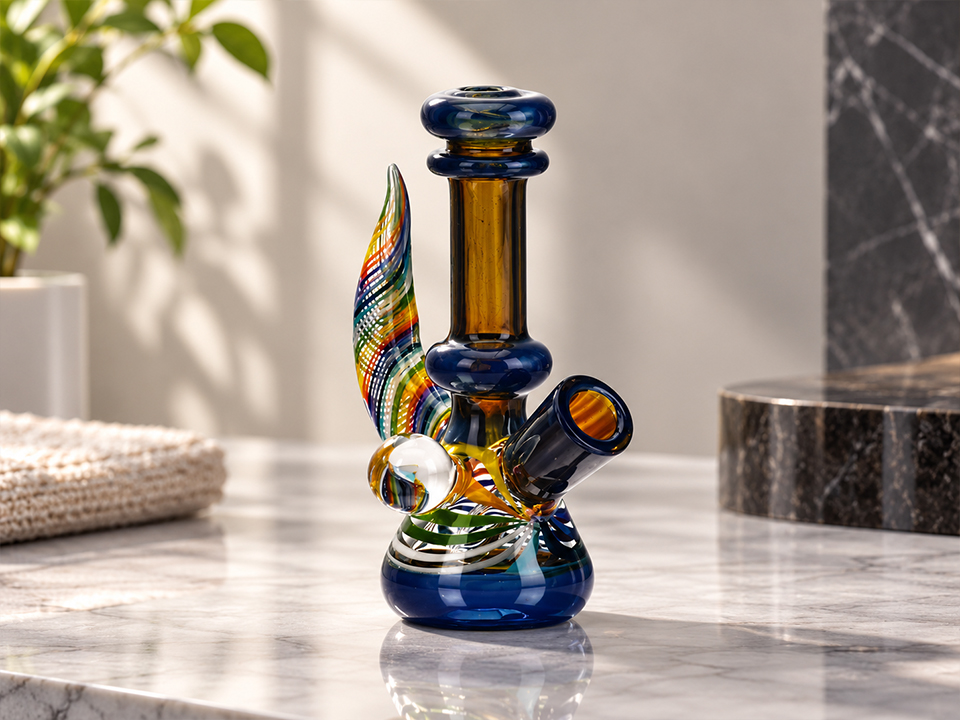
Joint size is a model-level specification, not a category-level one. The EG Glass pieces below were checked on their product pages in October 2026. Every piece that has a joint lists 14mm, so the 18 versus 18.8 labeling issue does not arise for these models. The same measuring and RFQ logic still applies if you source 18.8 mm glass elsewhere. Confirm the size on each product page before ordering, since listings can change.
Straight tube bongs and ash catchers
En honey bee bong de tubo recto is listed at 14.5 inches tall with a 14mm joint. Two 11.5-inch straight tubes, the dual bullet water tube bong y el EG-35 wig wag bullet tube, also list 14mm. Height does not predict joint size. Retail guides often associate taller pieces with 18.8 mm joints, so check the specification rather than inferring it from height.
Accessories carry their own specifications. The Recogedor de cenizas EGA10 con cuerno brillante lists a 14mm joint at 90 degrees, which shows why angle belongs in the spec next to diameter.
Aparejos Dab
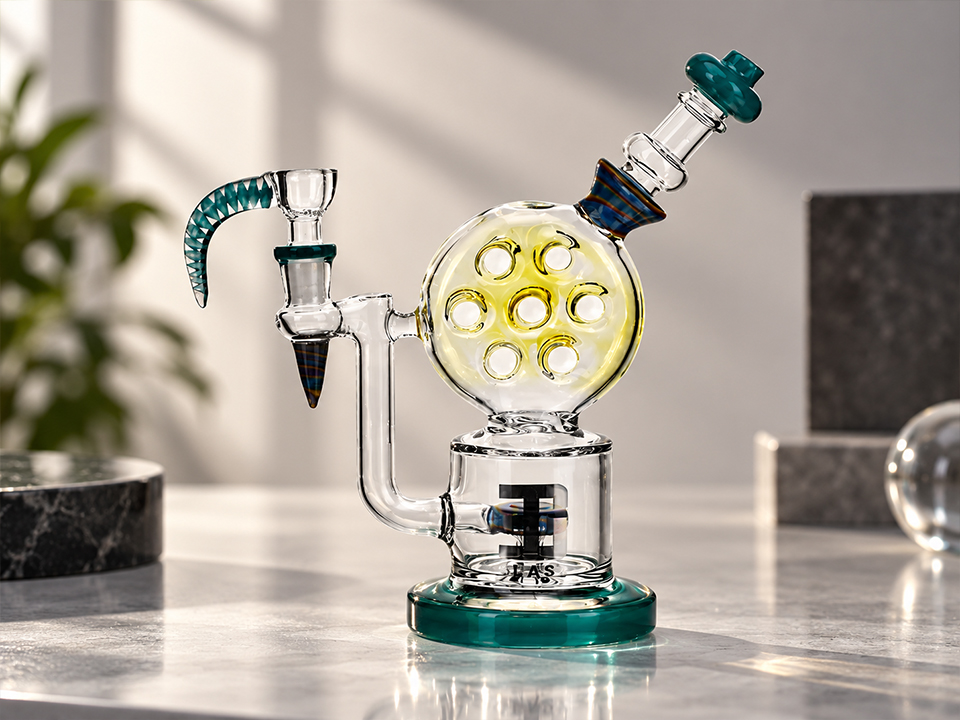
Rigs are where joint specs matter most, because the banger or nail must match the rig’s joint size and gender. The aparejo de color sólido gota de cactus y el cactus wag ball rig are both listed at 7 inches with 14mm joints. Larger options with the same listed joint size include the Plataforma de arrecife EG-60 at 9.8 inches, the Dab rig de borosilicato ES24834, and the 10.5-inch cactus solid colors dab rig series.
Hand pipes: no joint to size
Hand pipes have no ground joint, so neither 18mm nor 18.8mm applies. On the Bonsai and Rainbow pages the specification table lists a free bag in the joint-size row. The Pipa de mano «BSH13» con maceta de cactus transparenteEl BSH12 cactus nido de abeja olla de mano de tuberíasEl maceta de cerezo pipa de manoEl BSH06 rainbow series mushroom hand pipe y el EGH26 yellow duck hand pipe fall into this group. If your catalog mixes jointed and joint-free items, use a separate “no joint” value in the spec field. A blank field generates wrong-size questions.
What Should You Verify Before Ordering or Listing Glass?
Most sizing problems are specification problems. Put the following in every RFQ, purchase order or product listing, and ask the supplier to confirm each point in writing.
| Spec field | Por qué es importante | Ejemplo de redacción |
|---|---|---|
| Wide-end diameter in mm | Separates 14.5 from 18.8 and removes rounding ambiguity | “18.8 mm (sold as 18mm/19mm)” |
| Gender | Male and female parts do not mate with the same gender | “Female joint” |
| Ángulo de articulación | Straight and angled joints are not interchangeable | “90 degrees” |
| Ground length, if relevant | Affects seating depth and seal when matching lab-style parts | “19/26 style” or “not specified” |
| Included accessories | Prevents a banger or bowl being sized differently from the piece | “Includes 18.8 mm male bowl” |
| Measurement evidence | Settles disputes on arrival | Caliper photo of joint and accessory |
| Sample fit test | Confirms real-world seal before a bulk order | One piece tested with your usual accessories |
| Packaging for joints | Joint rims are exposed edges that can chip in transit | Ask how rims and joints are protected |
| Target-market rules | Rules for sale and labeling vary by jurisdiction | Confirm with local counsel or a customs broker |
Ask the supplier which tolerance they inspect against. Do not assume that a standard label implies a specific tolerance, because the sources reviewed here describe laboratory standards, not smoking-glass production inspection.
If you are sourcing for retail, send the model numbers you are considering and the joint specification you need, and request a pre-order sample. A single tested sample costs far less than a batch of pieces that do not mate with your best-selling accessories.
Preguntas frecuentes
Is an 18mm joint the same as an 18.8mm joint?
In almost all cases, yes. 18.8 mm is the measured wide-end diameter of the standard joint, and 18mm is the common trade rounding. Chemistry catalogs round the same size up to 19mm. Confirm with calipers if the piece is from an unknown source.
Can a 14mm bowl fit an 18mm joint?
No. A 14mm joint has a 14.5 mm wide end, about 4.3 mm smaller than an 18.8 mm joint. A reducer or expander adapter can connect them, but it adds height and another fragile connection point.
How do I measure a glass joint?
Use digital calipers. For a male joint, measure the outside diameter at the widest point of the ground area. For a female joint, measure the inside diameter at the opening. Readings near 14.5 mm or 18.8 mm identify the two common sizes.
What does 19/26 or 19/22 mean on a joint?
The first number is the wide-end diameter, rounded to whole millimetres (18.8 mm becomes 19). The second is the ground length. A 19/26 follows the ISO standard and a 19/22 follows the ASTM standard. Both have the same 18.8 mm wide end.
Do hand pipes have an 18mm or 14mm joint?
No. Hand pipes have no ground joint, so joint size does not apply. Product specifications typically list size by height and weight instead, and the Bonsai and Rainbow hand pipes reviewed here list a free bag where joint size would appear.
Does an 18.8mm joint perform better than a 14mm joint?
Not automatically. An 18.8 mm joint takes larger accessories and is common on taller pieces, but performance depends on the whole design and the accessory fitted. Choose the size that matches the piece and the accessories you plan to stock.