Free shipping in the U.S. for orders over $50

Category Management for Beakers, Rigs, and Hand Pipes
I’ve seen this too many times: an owner buys what looks cool, uploads products in the order they arrive, mixes beakers with straight tubes, lets rigs fight with novelty pieces, then wonders why traffic lands but revenue stalls; that is not merchandising, that is inventory drift wearing a Shopify theme. And the market has gotten less forgiving, not more. Reuters noted in January 2024 that mature cannabis markets were already getting squeezed by illicit competition and supply gluts that pushed wholesale and retail prices down, while a 2024 UCLA-Cornell-Yale paper on Washington’s legal cannabis market found that more nearby competitors lowered retailer markups and pushed stores toward assortment differentiation. Translation: if your category architecture is lazy, margin leaks first.
Table of Contents
Most smoke shop category management fails at the first fork
The hard truth is simple: shoppers do not think in warehouse terms. They do not wake up wanting to browse “glass.” They want a stable daily driver, a compact concentrate piece, a fast add-on under $50, or a giftable object with some personality. That is why smoke shop category management has to begin with buying mission, not material alone, even when the material is a selling point like borosilicate glass built from silica (SiO2) and boron oxide (B2O3).
I don’t buy the old habit of treating beakers, rigs, and hand pipes as one big cousin-family. That structure helps the merchant count stock. It does not help the shopper decide. Beakers answer one job: stable, water-filtered daily use. Rigs answer another: concentrate-first performance, smaller chambers, tighter temperature expectations, usually more design emphasis around airflow and joint fit. Hand pipes sit in a different behavioral lane altogether: low-friction, portable, inexpensive, faster to replace, more impulse-driven. Once you admit that, your glass pipe product taxonomy starts getting cleaner.
Beakers, rigs, and hand pipes should not share the same logic
Three words. Different missions.
A beaker bong category should lead with height, base stability, glass thickness, joint size, and ease of cleaning, because the shopper is quietly asking, “Will this live on the table and survive Tuesday?” A dab rig category should lead with chamber size, joint standard, portability, and percolation style, because the shopper is asking, “Will this hit clean and feel precise?” And a hand pipe category structure should lead with silhouette, length, weight, bowl depth, and price, because that buyer is usually optimizing convenience, not ritual.
The data backs the instinct. The 2024 UCLA-Cornell-Yale study found that when competition increases, retailers respond by differentiating assortments rather than just racing to the floor on price. I read that as a warning to merchants who still stuff every glass piece into broad catch-all collections: if the market is already training serious retailers to separate assortments more sharply, a flat menu is not “simple.” It is outdated.
The category map I would actually ship
I would build the store around four commercial buckets, then let filters do the real work.
| Category | Shopper intent | Filters that matter first | Price logic | Merchandising note |
|---|---|---|---|---|
| Beakers | Stable daily-use water piece | Height, base type, glass thickness, joint size, color | Good / Better / Best by durability and finish | Keep straight tubes adjacent, not mixed in |
| Dab Rigs | Concentrate-first performance | Height, joint size, portability, percolation, art style | Separate functional rigs from collectible rigs | Small rigs and statement rigs need different landing pages |
| Hand Pipes | Portable, fast, lower-ticket purchase | Shape, length, bowl depth, weight, color, price | Strong entry-price ladder | Best for bundles, not endless grids |
| Bowls & Slides | Replacement or add-on | 14mm/18mm, handle style, bowl depth, color | Accessory ladder under main water pieces | Treat as attachment driver, not a side drawer |
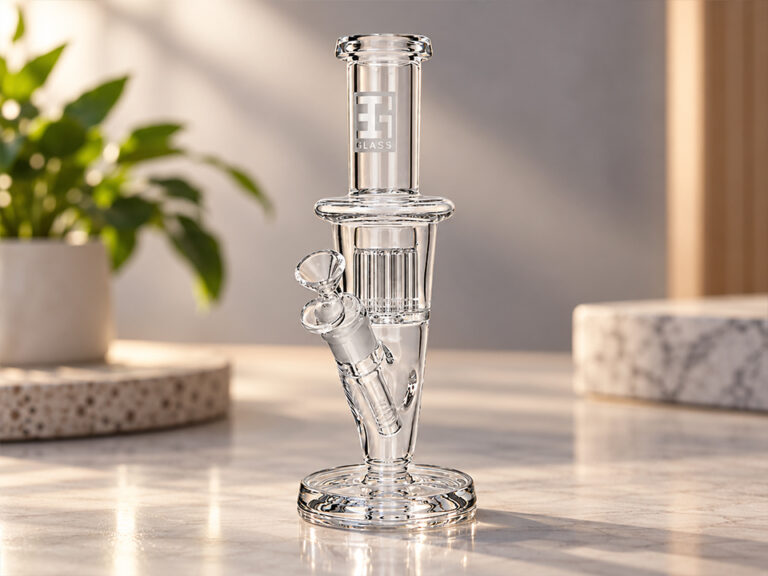
This is where ecommerce catalog management for smoking accessories gets serious. I would not bury a 7.5-inch fumed beaker bong in borosilicate glass inside a generic “glass” archive when the product already tells me the commercial story: 7.5 inches, 300g, classic beaker base, $57.99, and clear beaker-specific tags. That belongs in a beaker bong category built around stability and daily use, not inside a random mixed collection. (Buy Egglass)
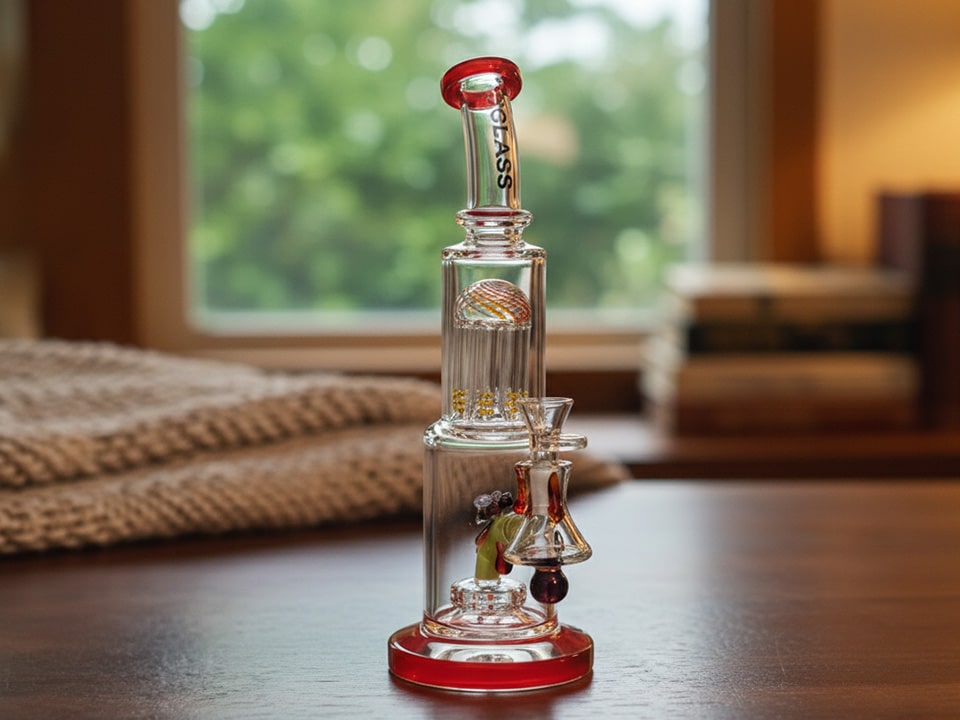
Same goes for rigs. A 9.8-inch cactus curve dab rig at $86.99 with a 14mm joint and 742g weight is not competing with a compact travel-style piece in any honest shopper’s head, so forcing it into the same undifferentiated product grid as a 5.3-inch mini octopus dab rig at $78.99 is bad dab rig category management. One is a statement object. The other is a compact performance piece. Different thumbnails. Different copy. Different conversion triggers.
And accessories? They should print margin, not hide in the basement. A 14mm temple-handle bowl and slide at $40.99 should surface on water-pipe PDPs, cart modules, and compatibility widgets, because bowls and slides are not a side hobby; they are attachment revenue. The same logic applies to adjacent comparison pieces like a 12-inch clear straight tube, which at $50.99, 12 inches, and 928g belongs beside beakers in comparison modules while remaining outside the beaker category itself. Keep adjacency high. Keep taxonomy clean.

The compliance problem most merchants pretend is not metadata
This part matters.
Under the 2024 edition of 21 U.S.C. §863, federal law says “descriptive materials,” “national and local advertising,” and “the manner in which the item is displayed for sale” may be considered when determining whether an item is drug paraphernalia, and the statute explicitly lists glass pipes and water pipes among the covered examples. That means naming, copy, filters, and on-site presentation are not cosmetic decisions. They are part of the record. New York’s March 11, 2024 guidance adds another layer by barring branding that uses terms such as “drug,” “medicine,” “apothecary,” “doctor,” or “pharmacy,” and by prohibiting branding that appeals to people under 21. So yes, category labels are SEO tools. But they are also compliance artifacts. Ignore that at your own risk.
I’ve watched merchants chase search volume with sloppy language and then act shocked when their taxonomy turns legally awkward. Bad move. The smarter play is to keep hand pipe category structure descriptive, dimension-led, and compatibility-led. Use “14mm,” “borosilicate,” “5.3-inch,” “beaker base,” “straight tube,” “mini rig,” and finish/color metadata. Avoid pseudo-medical fluff, youth-coded naming, or vague “party” merchandising language that looks cute in a brainstorm and stupid in an audit.
If you sell online, your taxonomy has to police your promotions too
This gets ignored because it is annoying.
A 2024 audit of 195 cannabis retail websites across Denver, Seattle, Portland, Las Vegas, and Los Angeles found that about 20% had no age verification to enter, roughly 20% of sites offering online sales had no age verification for purchases, more than 90% used discounts, samples, or promotions, and more than 60% displayed no health warning content. I’m not saying every glass seller lives under the same rulebook. I am saying the digital merchandising habits around age-gating, promotional clutter, and weak warning architecture are already messy across adjacent regulated retail. If your ecommerce catalog management for smoking accessories is designed only for clicks, it will drift toward the same mess. ([PMC][6])
So I would make a blunt operating rule: every category page gets one dominant buying mission, four to six filters max above the fold, compatibility fields that actually resolve uncertainty, and promo modules that do not drown product identity. You do not need more cleverness. You need fewer collisions.
What the best category structure for beaker bongs actually looks like
Here is my preferred stack.
Top layer: Beaker Bongs, Dab Oil Rigs, Hand Pipes, Bowls & Slides.
Second layer for beakers: under 8 inches, 8–12 inches, over 12 inches; then filters for borosilicate thickness, 14mm versus 18mm fit, color, and feature set. Second layer for rigs: mini rigs, daily rigs, art rigs; then filters for joint size, portability, chamber style, and visual theme. Second layer for hand pipes: spoon, sherlock, chillum-style, novelty/art; then filters for length, bowl size, and weight. And bowls/slides live as a utility category with compatibility first, decoration second.
Why am I this strict? Because “how to organize dab rig and hand pipe categories” is not an abstract SEO question. It is a conversion question. When the taxonomy matches the shopper’s private checklist, bounce drops, comparison gets easier, and internal search starts returning products that make sense.

FAQs
What is category management in a smoke shop?
Category management for a smoke shop is the deliberate process of grouping, naming, pricing, filtering, and cross-selling products so shoppers can move from intent to purchase quickly, while the retailer protects margin, reduces compliance errors, and holds each class of item accountable to its own conversion and attachment metrics.
In practice, that means beakers, rigs, hand pipes, and accessories should not be merchandised as one giant glass pile. Each needs its own logic, filters, landing pages, and upsell path.
How do you organize dab rig and hand pipe categories?
The right way to organize dab rig and hand pipe categories is to separate them by use case first, then by fit and form factor, so concentrate-focused rigs are filtered by size, joint standard, and performance features while hand pipes are filtered by portability, bowl depth, shape, and entry price.
I would never let a mini rig, an art rig, and a portable hand pipe compete inside one flat “smoking accessories” archive. That structure wastes shopper attention and muddies search intent.
What is the best category structure for beaker bongs?
The best category structure for beaker bongs starts with function and fit—daily-use water filtration pieces organized by height, joint size, glass thickness, and style—rather than by random color drops or novelty names, because shoppers usually compare stability, ease of cleaning, and value before they compare artwork.
A beaker bong category should also sit beside, not inside, straight tubes for comparison purposes. That preserves category clarity while still catching shoppers who are deciding between chamber types.
Why does compliance affect glass pipe product taxonomy?
Compliance-sensitive glass pipe product taxonomy is a naming system that avoids vague, youth-coded, or medically suggestive language, keeps descriptive metadata precise, and aligns product pages, menu labels, and merchandising modules with the rules regulators can use when evaluating how an item is described, advertised, and displayed for sale.
That is why I prefer exact fields like 14mm, borosilicate, 12-inch, beaker base, and mini rig over splashy copy that tries too hard. Cleaner metadata usually means cleaner risk posture.
The blunt takeaway is this: category management is not a cosmetic SEO task for beakers, rigs, and hand pipes. It is the commercial skeleton of the store. Build it around buying mission, compatibility, and price architecture, and the catalog starts selling. Build it around owner taste and upload order, and the whole thing turns into expensive clutter.