Free shipping in the U.S. for orders over $50

Ash Catcher Care Guides That Reduce Joint Stress and Cracks
It looks solid, sits there all smug on the table, and then one lazy rinse, one sideways lift, one stupidly cold wash right after a hot pull, and the joint spiderwebs like it had a grudge the whole time. I’ve seen that movie too many times. Who hasn’t?
And no, I don’t buy the “bad luck” excuse anymore. Here’s the ugly truth: a lot of cracked catchers die because the user turned the joint into a lever point without realizing it. Heavy chamber, too much water, resin glued into the ground glass, then somebody grabs the setup by the catcher instead of the can. Snap. Or worse—hairline first, full failure later.
What annoys me most? The care advice out there is weirdly sterile. It talks like glass lives in a lab and users move in slow motion. Real people don’t. They torch, rinse, knock, twist, and rush.
And yes, breakage risk isn’t theory. The June 20, 2024 CPSC recall for JoyJolt Declan single-wall glass coffee mugs said model JG10242, sold as 16 oz sets of six, involved about 580,000 units and 103 incident reports, with 56 injuries; the agency said the mugs could break or crack when filled with hot liquids.
Table of Contents
Most cracks start at the joint, not the chamber
I’ll die on this hill. Most ash catcher damage starts where force concentrates, not where people stare.
A catcher hanging off a joint isn’t just “an accessory.” It’s a side load. A torque arm. A little glass crowbar. Add water and stale resin and now the female joint is eating stress every time you rotate, seat, pull, or tap the setup against the sink. It works. Usually.
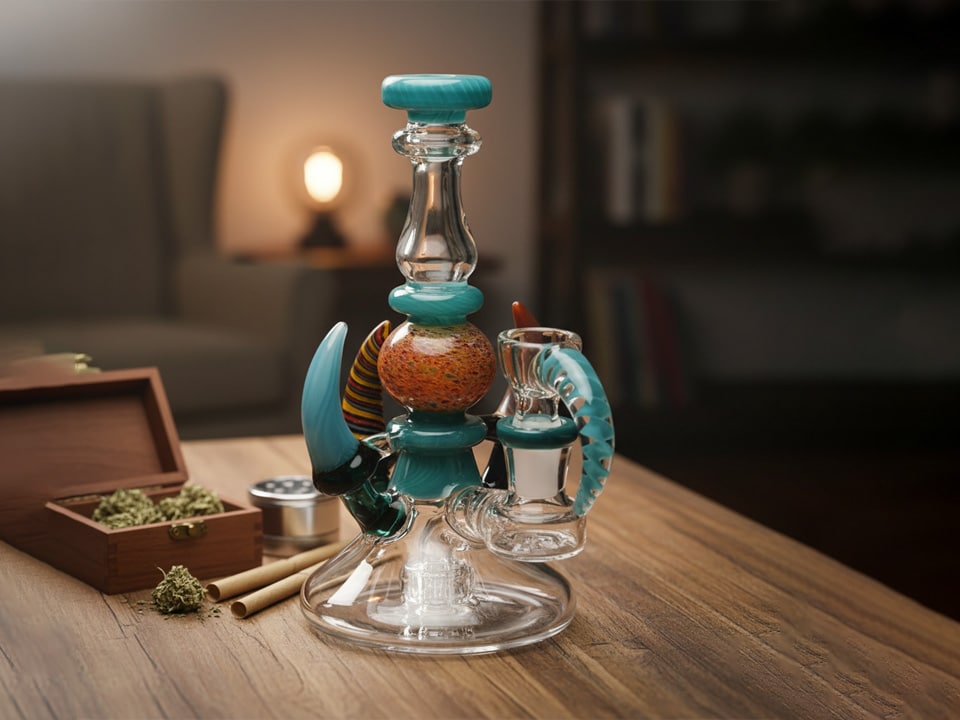
But the base matters too. If someone wants a daily piece with enough stability to stop the wobble circus, I’d much rather see a modest catcher paired with a sturdier beaker body like this 14-inch diamond borosilicate beaker bong or this 14-inch maze beaker bong than some oversized, show-off catcher stuck on a setup that already feels nose-heavy. From my experience, the problem isn’t usually the first session. It’s the two hundredth.
Why ash catcher failures happen even with borosilicate
Borosilicate helps. It doesn’t forgive.
That distinction gets lost because “boro” has become a sales word. People hear it and think immunity. Not even close. The Purdue thesis at hammer.purdue.edu describes borosilicate glass as having low thermal expansion and being well-suited for high thermal resistance, with silica and B2O3 as primary components. Great. Useful. Still not a hall pass for dumb handling.
So what actually beats these pieces up? Same repeat offenders, every time: thermal shock, side-loading, seized joints, bad angle matching, and adapter stacking that turns a clean fit into a janky little wobble tower. I frankly believe adapter towers have broken more glass than most people will ever admit.
And there’s a bigger consumer-safety backdrop here that people in this niche love to ignore. In FY 2024, CPSC staff reported 333 cooperative voluntary recalls; 166 went through the Fast-Track program, and 98.08 percent of Fast-Track recalls were initiated within 20 days of a firm’s report. Different industries, same lesson—products fail, and fast response only happens after something has already gone sideways.
The ash catcher maintenance routine I actually trust
Mine’s boring.
That’s why it works. I don’t do macho cleaning. I let the catcher cool down first, then I use lukewarm water—not icy sink water right after a hot session, which is just thermal shock with extra confidence. Then I go after the resin before it turns the ground joint into a glue trap.
For solvent, I stick with isopropyl alcohol because it’s predictable and effective. NIST lists isopropyl alcohol—2-propanol—as C3H8O with a molecular weight of 60.0950. Fancy chemistry aside, it cuts buildup without forcing me into the kind of hard scraping that chips the joint lip or wrecks a perc slit.
Yet the cleaning fluid is only half the story. The real win is what happens after: dry the joint, check the taper, look for haze, chips, white stress marks, or that gritty feel that tells you resin is still hanging on. If the joint needs force, it isn’t “fine.” It’s already warning you.
And if you’re running compact glass, leverage matters even more. A smaller setup like this bent-neck tree perc oil rig can feel nimble because the mass stays closer to center—but bolt on the wrong catcher and you’ve basically rebuilt the weak point by hand.
14mm vs 18mm ash catcher: the size guide people actually need
People overcomplicate this.
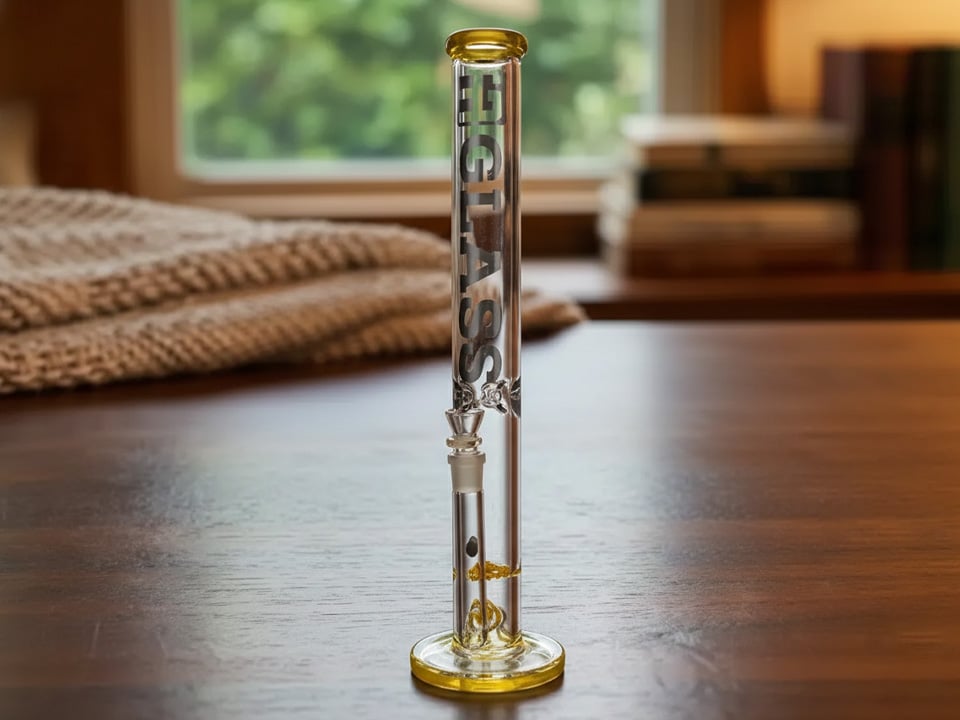
I don’t think the 14mm vs 18mm ash catcher debate is mainly about bragging rights or drag numbers; it’s mostly about balance, fit, and how much mass you’re asking the host joint to tolerate when the piece gets moved, rinsed, bumped, or set down a little harder than intended. That’s the actual street-level math.
| Setup choice | What it does well | Where stress shows up | My blunt take |
|---|---|---|---|
| 14mm ash catcher | Lighter, easier to balance, better for compact daily use | Can bind if dirty and forced | Best for most users who clean regularly and do not want excess leverage |
| 18mm ash catcher | Higher airflow, often better for larger pieces | More mass, more water, more swing if oversized | Good only when the base piece is sturdy enough and the angle is right |
| 14mm with adapter stack | Fixes compatibility on paper | Adds wobble and extra leverage at the joint | Usually a bad long-term solution |
| Oversized multi-perc catcher | Looks impressive | Pulls hard on the joint and invites overfilling | Pretty, but often stupid for daily durability |
But thickness helps only when the whole setup makes sense. If somebody wants a sturdier base, I’d look at this 7mm Skull Flower borosilicate beaker bong or this 7mm Skull Flower borosilicate beaker before I’d recommend some oversized catcher that turns every lift into a mini stress test.
The best ash catcher for bong protection is usually the boring one
Small wins matter.
The best ash catcher for bong protection is usually the one nobody brags about: correct angle, correct joint size, modest water volume, low extra mass, easy-to-clean path, no goofy chamber length, no need for adapters, no “look at this triple-stack recycler monster” nonsense. That stuff sells. It also breaks.
Here’s my bias—I’d rather run a plain catcher that keeps the can cleaner and the pull reasonable than a fancy glass chandelier that drags like a wet sock and puts all its weight on the joint. Style doesn’t help when the female joint starts ticking.
What the industry gets wrong about “care”
They underteach handling. On purpose, maybe.
Sellers are happy to tell you thickness, height, perc count, splash guard, colorway, and some vague line about “premium borosilicate.” But actual ownership habits? Barely discussed. Don’t lift by the catcher. Don’t force a sticky taper. Don’t slam hot glass under cold water. Don’t store it with the joint still damp and crusting. That’s the stuff that saves glass.
And again, the wider safety data says the same thing in harsher language than marketing ever will. The JoyJolt recall notice didn’t use stoner jargon; it just said the glass could break and crack with hot liquids, and seven reported incidents required medical attention, including surgery and stitches. That’s not dramatic copy. That’s what happens when stress finally cashes out.
FAQ
How do you clean an ash catcher without cracking it? An ash catcher is cleaned safely by letting the glass cool near room temperature, flushing it with lukewarm water, using isopropyl alcohol to dissolve residue, and avoiding twisting, banging, or temperature shock at the joint, where most long-term stress damage tends to build up first. Then be patient. Don’t go full sink-gremlin and shake it like you’re mad at it.
What is the best ash catcher for bong protection? The best ash catcher for bong protection is a properly sized, correctly angled, low-to-moderate-weight attachment that traps debris before it reaches the main chamber while adding as little leverage, drag, and joint strain as possible during ordinary daily use and cleaning. Simple usually wins. That’s not sexy, but it’s true.
Does a 14mm or 18mm ash catcher reduce joint stress better? A 14mm ash catcher usually reduces joint stress better on smaller or mid-size setups because it adds less hanging mass and water weight, while an 18mm ash catcher makes more sense only when the host piece is sturdy enough to support the added load cleanly. Most people don’t need “more.” They need better fit.
How do you prevent ash catcher cracks over time? Preventing ash catcher cracks means controlling thermal shock, cleaning before resin locks the joint, keeping water levels moderate, avoiding adapter stacks that introduce wobble, and never lifting or rotating the entire setup by the catcher instead of the main body. That’s the whole playbook. Not glamorous. Very effective.
So, yes—check your setup tonight. Not tomorrow. Look at the taper, the angle, the waterline, the grime ring, and the way you actually pick the thing up when nobody’s watching. That five-minute audit will do more for your ash catcher maintenance than another month of hype-copy ever will.