Free shipping in the U.S. for orders over $50

What Buyers Should Know About Colored Glass Consistency
But I frankly believe the colored-glass business has trained buyers to obsess over saturation instead of repeatability, which is backwards, because the real story usually sits in the boring stuff nobody wants to talk about — batch control, cullet cleanliness, reduction timing, wall-thickness drift, and whether the shop can actually pull the same look twice without the whole piece wandering off-model. Seen that before?
I have.
From my experience, the minute a seller starts romanticizing obvious color drift as “artisan uniqueness,” my guard goes up, because sometimes that’s true — handmade work does breathe a little — but sometimes it’s just cover for loose process control, sloppy heat management, or a color recipe that isn’t locking in the way it should. That’s the ugly truth.
And buyers miss it.
The chemistry isn’t subtle, either: the Corning Museum of Glass notes that metallic oxides color glass, and the final look depends not only on which oxide is used, but also on the glass composition and even the oxygen conditions inside the furnace, which means the same general design can land differently when the shop’s melt or flame discipline drifts.
Table of Contents
Colored glass consistency is a manufacturing tell
Yet this is where people get lazy.
They hear “borosilicate,” they hear “handmade,” they hear “limited run,” and suddenly every mismatch gets a free pass, even though colored glass consistency is one of the cleanest tells a buyer has, because when hue, opacity, contrast, and pattern logic stay inside a narrow lane across multiple runs, that usually means the shop knows its recipe, knows its heat, and knows its pull points. That’s not hype. That’s shop-floor reality.
I’ll put it more bluntly: if two pieces are supposed to be the same SKU and one reads cobalt-blue while the other leans muddy blue-green under normal indoor light, you don’t have charming variance — you’ve got drift. Period.
And no, borosilicate alone doesn’t rescue that.
SCHOTT’s technical material for borosilicate 3.3 describes a coefficient of mean linear thermal expansion around 3.3 × 10⁻⁶ K⁻¹, plus high chemical and thermal resistance, which is exactly why buyers like it for hard-use pieces; but thermal performance and stable color output are related only indirectly, and I think too many sellers blur that line on purpose. Why make it easy for the buyer?

Why batches drift, and why serious buyers ask annoying questions
Here’s the ugly truth.
Batch-to-batch color consistency can go sideways for reasons that sound tiny on paper but show up loudly in the hand: slight recipe movement in the color rod, base-glass shifts, cullet contamination, different oxygen balance in the furnace, hotter or colder working windows, line-work drag, uneven encasement, or thickness changes that make the exact same color look deeper, dirtier, or flatter. Shop people know this. Buyers should too.
And upstream? Messy.
According to the U.S. Geological Survey’s 2024 boron summary, glass and ceramics accounted for an estimated 65% of domestic borates consumption in 2023; its 2024 cobalt summary says most U.S. cobalt supply came from imports and secondary scrap; and the selenium summary says glass manufacturing represented about 20% of global selenium consumption in 2024. Does that automatically mean your supplier is in trouble? No. Does it mean color recipes live in a vacuum? Also no.
That matters more than most catalog copy admits.
When raw-material sourcing shifts, when a shop substitutes one input lot for another, when a flame schedule gets nudged to keep output moving, the buyer often sees the result first in color behavior — not in a technical memo, not in a lab sheet, but in the piece itself. That’s why old hands keep asking annoying questions. We’ve learned.

What buyers should inspect before placing an order
But don’t start with the hero shot.
I never judge a colored-glass seller from one glam photo, because one glam photo is easy money — hot lights, extra contrast, angle trickery, a little post-processing, done — whereas repeatability is harder and way more revealing, so I ask for the same design under daylight, warm indoor light around 3000K, and side-by-side with an older run if they’ve got one. If they hesitate, I notice.
That’s where complicated colorwork starts ratting people out.
Compare a relatively clean Bonsai Series borosilicate hand pipe with the denser visual workload on a wig wag cactus pot hand pipe or the extra read-shift you can get on an opal whistle mini borosilicate rig. Same category, sure. Same evaluation difficulty? Not even close. The more sections, transitions, opal pops, and line stacks you add, the more obvious weak glass color matching becomes.
| Checkpoint | What disciplined production looks like | What sloppy production looks like | Buyer risk |
|---|---|---|---|
| Hue match | Same color family across runs, only minor handmade tolerance | One batch reads teal, another reads blue-green | You receive pieces that do not match listing photos |
| Opacity / transparency | Predictable depth through the body | Cloudy centers or patchy transparency | “Rich color” looks dull in person |
| Pattern placement | Repeated line logic and clean transitions | Wandering lines, collapsed sections, uneven spacing | Decorative work looks accidental |
| Weld and joint zones | No sudden darkening or washed-out seams | Color shifts around joins and worked areas | Structural and cosmetic confidence both drop |
| Lighting proof | Seller shows daylight and indoor photos | Seller shows only high-saturation studio shots | You misread the true finish |
| Batch proof | Supplier can show prior and current runs together | Supplier changes subject when asked about runs | Batch-to-batch color consistency is probably weak |
Handmade tolerance is real. Sloppiness is real too.
I need to be fair here.
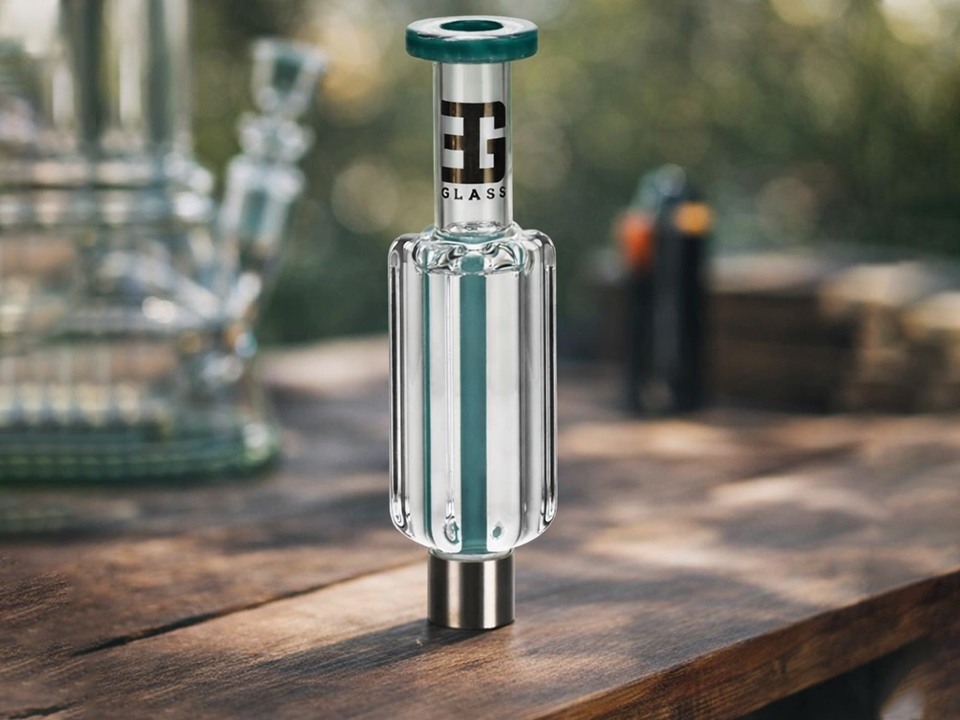
Handmade borosilicate is not injection-molded plastic, and anyone demanding pixel-perfect sameness from every worked piece probably hasn’t spent much time around torch shops, because tiny changes in line pull, gather size, wrap tension, and heat memory do show up — especially in weirder work. That’s normal.
Still, there’s a line.
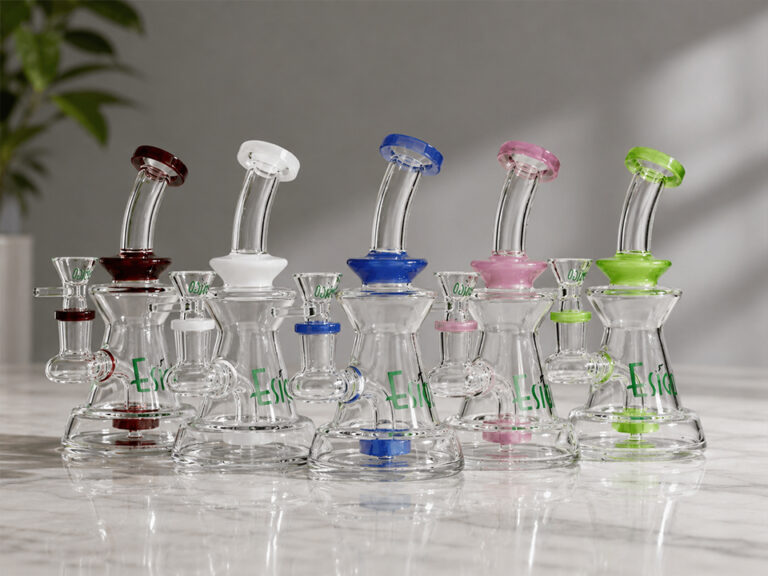
If a piece keeps its design identity, its dominant hue family, and its contrast logic, I’ll call that honest handmade variance; if the whole visual read changes from run to run, I won’t. An Ocean USA color borosilicate pipe can breathe a little. A multi monster eyeballs hand pipe can get a bit rowdy. But the piece should still feel like the same SKU when you put three of them on the table together. Otherwise, what are we even doing?
I’ve seen buyers excuse way too much.
Maybe because “handmade” sounds romantic. Maybe because the color is loud enough that the flaws get buried under spectacle. Maybe because nobody wants to look picky. But if the mouthpiece reads one tone, the body another, and the joins wash out under normal room light, that isn’t character — that’s weak control, and you’re paying retail for it.
How to check colored glass consistency without lab gear
You don’t need a spectro.
You need better habits, and maybe a little less trust, because a decent field check catches a shocking amount: look in daylight first, warm LED second, phone flash last; inspect the body head-on and through the sidewall; compare thicker zones against thin ones; look at weld areas, lips, feet, maria stacks, and any encased sections; then ask yourself whether the color shift follows thickness logically or just shows up wherever the shop lost the thread. That works. Usually.
And yes, pattern complexity changes the game.
Something like this rich colors mini glass ring borosilicate pipe can look dead-on in a single isolated photo and still behave very differently across a run, which is why I’d rather see four pieces together than one beauty shot alone. One piece proves style. Multiple pieces prove control.
That distinction matters.
FAQ
What is colored glass consistency?
Colored glass consistency is the degree to which a glass product keeps the same hue, saturation, opacity, transparency, and visual pattern logic across pieces, batches, and lighting conditions, while still remaining within the normal tolerance of the material and the production method used. In plain English, it’s whether a run of pieces still looks intentionally matched when real buyers hold them in real light.
What causes color variation in glass?
Color variation in glass is the visible shift in hue, density, brightness, or transparency caused by differences in metallic oxides, base-glass composition, oxygen conditions, wall thickness, heat history, and handling during shaping or finishing. Corning’s explanation is pretty direct on this point: oxide choice, glass composition, and furnace oxygen all affect the final result, so drift is not imaginary — it’s physical.
How should buyers judge glass color matching on handmade pieces?
Glass color matching on handmade pieces means judging whether multiple items preserve the same dominant color family, contrast structure, and overall design identity, even when tiny placement or saturation differences appear because the work is torch-made and hand-finished. From my experience, buyers should judge sameness at normal viewing distance first; if the whole vibe changes from piece to piece, the run missed the mark.
Does borosilicate glass guarantee uniform color distribution in glass?
Borosilicate glass does not guarantee uniform color distribution in glass; it identifies a low-expansion, thermally and chemically resistant glass family, while color uniformity still depends on recipe control, melt behavior, thickness, and execution during forming. That’s the part people skip. SCHOTT’s data explain why borosilicate handles heat well, not why every colored run will magically match.
If you’re buying one piece, be picky. If you’re buying for stock, be ruthless. Ask for cross-batch photos, ask what changed between runs, ask how the color was built, and make the seller show their homework instead of hiding behind pretty lighting and artsy language.