Free shipping in the U.S. for orders over $50

Use Planograms to Sell More Glass and Supporting Accessories
But that’s not even the worst part, honestly, because wasted space at least sits there quietly, while a bad bay keeps lying to you all day long—telling you the assortment is fine, the traffic is weak, the price is off, the season is soft—when the real problem is that the shelf reads like a junk drawer with lighting. That’s the real rot.
Table of Contents
A planogram isn’t “visuals.” It’s shelf math.
I’ve seen this too many times. Owner walks the floor, points at a cluttered section, says, “We need it to pop more,” and suddenly the team is fluffing facings, shuffling pegs, and polishing a dead set instead of fixing the actual problem: bad adjacencies, lazy blocking, and zero price-story discipline. It looks busy. Not good.
Here’s the ugly truth: a planogram isn’t a pretty diagram for head office. It’s an operating document. If the floor team can’t read it, maintain it, and replenish against it without turning the whole section into a yard sale by Saturday afternoon, the planogram isn’t done yet.
And this isn’t just retail folklore. MIT work published in 2023 described a pilot of 10 test display units and measured planogram effects with Synthetic Control Design in a Target-related small-format retail context, while a separate MIT record tied the work to broader planogram optimization thinking inside the same ecosystem. That tells me the serious operators are still grinding on shelf logic, not just assortment theory. MIT planogram pilot study and MIT planogram portfolio record.
Sell the mission. Not the object.
From my experience, glass display merchandising falls apart when buyers get hypnotized by individual pieces instead of building around shopping missions. Entry price. Trade-up. Premium. Replacement. Care. Add-on. Giftable. Once you think in those buckets, the shelf starts making sense. Before that? It’s just product soup.
And I frankly believe most retailers carry too many near-dupes because they confuse variety with conviction. They’ll have four SKUs that do basically the same job, at basically the same price, in basically the same silhouette, and then act shocked when the customer stalls out. That’s not “choice.” That’s friction with cleaner packaging.
The shelf has to answer silent questions before a staffer ever opens their mouth. What goes with this? What’s the step-up? What do I replace later? What’s the margin-rich add-on I shouldn’t bury like an afterthought? If the bay can’t answer those, you don’t have a retail planogram. You’ve got inventory standing around.

What the shelf has to do in three seconds
I’m not exaggerating.
The shopper should clock the price ladder, the feature ladder, and the accessory ladder almost immediately—even if they’re half-distracted, even if the store is loud, even if they didn’t walk in planning to buy. That’s why hand-zone real estate matters so much more than merchants like to admit.
| Zone | What goes there | Why it sells |
|---|---|---|
| Eye level | Best-margin core glass SKUs | Highest visibility should go to the most defensible sellers |
| Hand level | Fast add-ons and replacement accessories | This is where attachment-rate growth usually happens |
| Lower shelf | Bulkier or lower-turn items | Necessary, but not where you hide your winners |
| Side hooks / clip strips | Small supporting accessories | Keeps add-ons in the decision path |
| Header / sign strip | 3-part buying guide | Reduces hesitation and staff dependency |
Looks basic. Isn’t.
Because the minute you force a bay to earn its keep, the sacred cows start limping. The slow mover with four facings because “it looks premium.” The oddball SKU hogging eye level because the buyer loves it personally. The tiny add-on with filthy-good margin getting shoved low because nobody bothered to think through the attach path. I’ve seen all of it.
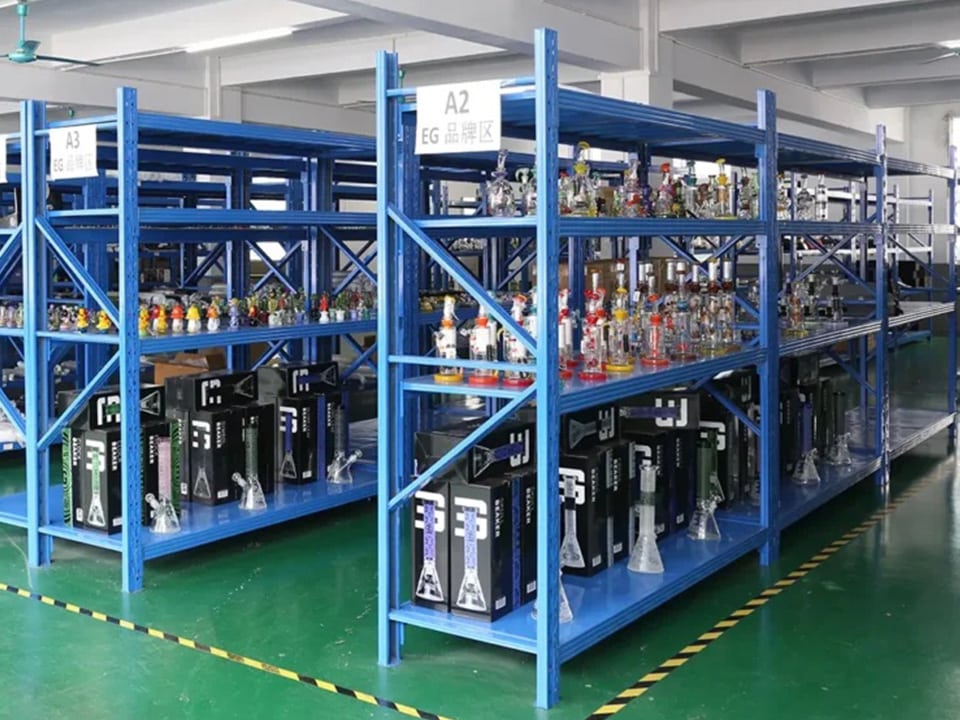
The numbers don’t care what you like
That’s the part people hate.
Retailers love talking aesthetics because aesthetics are safe. Numbers are rude. Numbers tell you the hero SKU isn’t a hero. Numbers tell you the fancy piece eats 22 inches and returns less gross profit than a tighter three-SKU block with a clean accessory attach. Numbers tell you your “full” set is actually bloated and your replenishment rhythm is a mess.
Reuters, citing the National Retail Federation, reported in March 2024 that U.S. retail sales were expected to rise 2.5% to 3.5% for the year, landing between $5.23 trillion and $5.28 trillion. In a market that big, shelf productivity isn’t some side hobby for VM teams—it’s margin defense, plain and simple. Reuters retail forecast.
Here’s the scorecard I’d use before I listened to one word about whether the bay “feels premium.”
| KPI | Weak execution signal | Strong execution signal |
|---|---|---|
| Units per facing | Flat or declining after reset | Rises within 2-4 weeks |
| Attachment rate | Add-ons bought separately or rarely | Support items move with hero SKUs |
| Breakage rate | Frequent handling damage | Reduced handling through smarter placement |
| Out-of-stocks | Best sellers vanish first | Replenishment matched to shelf velocity |
| Margin mix | Space consumed by low-yield items | Prime space held by profit-dense items |
That table is boring. Good.
Boring usually pays. Flashy usually gets overbought, over-faced, and then quietly marked down while everyone pretends the customer “wasn’t ready for it.” No. The customer was fine. The set was wrong.

Cross-merch is where the money leaks—or sticks
Yet stores still botch this part constantly.
They’ll put the core item in one zone, the support item somewhere else, the replacement component two feet away, and then wonder why the attach rate looks anemic. Of course it does. You broke the purchase chain. You made the shopper do the work. Most shoppers won’t.
A solid cross-merchandising planogram doesn’t shout. It nudges. It makes the bundle feel obvious without turning the shelf into a carnival. That means tighter blocking, fewer lookalikes, cleaner good-better-best logic, and no accessory graveyard dangling on some sad pegboard off to the side where only staff know to look.
Less clutter. More signal.
Compliance can blow up the whole strategy
And this is where a lot of people get weirdly casual.
Federal guidance still says “pipes” and “bongs” are examples of drug paraphernalia, and the same government page explains that federal law prohibits selling, transporting, importing, or exporting drug paraphernalia under 21 U.S.C. § 863. I wouldn’t mistake broad online visibility for low legal exposure. That’s shaky logic dressed up as confidence.
So yes, build a better visual merchandising planogram. Absolutely. But do it inside a lawful assortment strategy—not as some clever workaround for one. That’s where retailers get sloppy, and sloppy gets expensive fast.
What I’d actually do on the floor
Start with the deadwood. Kill near-duplicates. Cut ego facings. Tighten the price architecture so the shelf tells one clean story instead of seven half-stories. Then pull the support items into the decision path—close enough that the attach feels natural, not forced. After that, watch units per facing and margin per inch like a hawk for 2 to 4 weeks.
That’s the work.
Not glamorous. Not cute. But it works a lot better than pretending the customer needs more choice when what they really need is less confusion.
FAQs
What is a planogram in retail?
A planogram in retail is a shelf-placement blueprint that tells a store exactly where products, accessories, facings, and signage should go so the display sells more efficiently, replenishes faster, and reflects margin logic instead of random staff decisions. It’s the operating map behind a productive bay. After that, execution is everything.
How does a planogram help sell more supporting accessories?
A planogram helps sell more supporting accessories by placing complementary items directly in the shopper’s line of sight and within easy reach, usually beside or just below the main item, so the purchase logic feels complete before the shopper starts second-guessing the basket. From my experience, adjacency beats clever copy most days. It just does.
What is the best planogram for retail accessories?
The best planogram for retail accessories is one that organizes items by shopper mission, price ladder, and attachment logic while giving prime real estate to the combinations that produce the strongest turn and margin per inch of shelf space. I’d say it more bluntly: the best planogram makes the add-on feel obvious, not salesy.
How often should a retail planogram be updated?
A retail planogram should be updated whenever seasonality, stock reliability, shopper behavior, or sales velocity shifts enough to make the current shelf map economically wrong, which usually means monthly review and quarterly reset in active categories with real movement. Most stores wait too long. Then the shelf starts lying.
What metrics prove a visual merchandising planogram is working?
The metrics that prove a visual merchandising planogram is working are units per facing, attachment rate, out-of-stock frequency, replenishment speed, breakage reduction, and margin per inch of shelf space because those figures show whether the display is driving profitable behavior rather than just looking organized. Pretty shelves are easy. Productive shelves take discipline.
Want the next pass? I can make it even rougher and more trade-floor sounding—same structure, same links, same tables, just less polished.