Free shipping in the U.S. for orders over $50

Retailer Guide: How Customers Should Use a Beaker Bong
Three words first. They oversell everything.
I’ve stood in enough glass shops to know the routine: somebody points at a beaker bong, the clerk starts free-styling about “smoothness” and “filtration,” and ten seconds later the customer is hearing a fairy tale instead of a usable explanation about chamber volume, joint fit, water line, cleanup frequency, and why thick glass still breaks when people grab the neck like it’s a beer bottle. That script is tired. Who still buys it?
And the customer base isn’t clueless anymore. The 2024 University of Michigan release on 2023 data showed cannabis use among adults 19 to 30 at roughly 42% past-year, 29% past-month, and 10% daily, while adults 35 to 50 came in at 29%, 19%, and 8%. That’s not fringe behavior. That’s a mature market with repeat buyers who can smell lazy sales talk a mile away.
Here’s the ugly truth: most retailers don’t need better adjectives. They need a better script.
Table of Contents
What is a beaker bong, really?
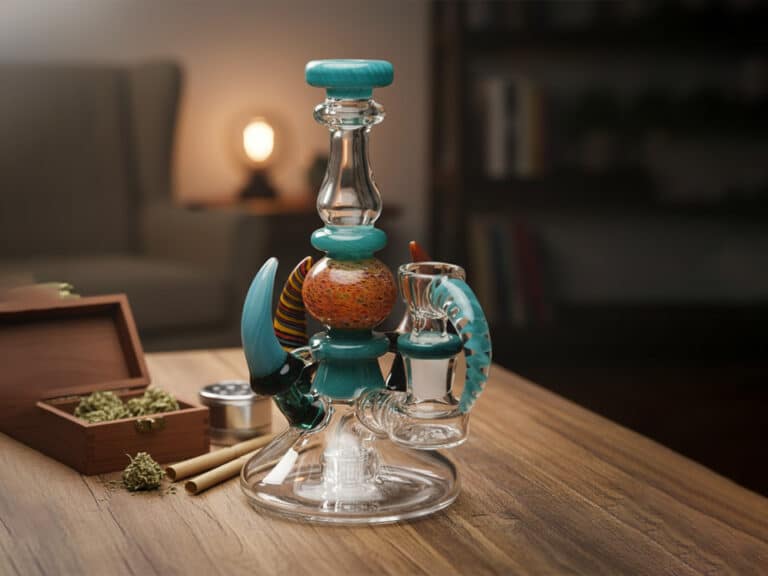
Let’s kill the fluff. A beaker bong is a beaker-shaped glass bong, or beaker water pipe, with a broad-bottom chamber that holds more water and usually sits more securely than a straight tube.
That’s it—well, mostly. From my experience, the real advantage isn’t some mystical smoke transformation; it’s stability, a roomier base, and a shape that gives new users a little more margin for error when they set it down too hard, angle it awkwardly, or leave it on a crowded coffee table next to a phone charger, ash, and whatever else people pretend isn’t a mess. It works. Usually.
But I frankly believe the industry abuses the “beginner-friendly” label. A beaker bong for beginners can be the right call, yes, though only when the customer understands one annoying fact: the wider base helps on the table, not in mid-air. You still don’t swing the thing around by the neck. You don’t palm a wet joint like a wrench. And you definitely don’t treat borosilicate like it’s invincible because some packaging copy said “thick glass.”
How customers should use a beaker bong without making the classic mistakes
This is where retailers either sound sharp or sound fake.
A customer should use a beaker bong like glassware with airflow requirements—not like a party prop—meaning the water line has to cover the diffusion slits but not drown them, the base has to stay on a flat surface, the draw has to be tested before anything gets packed too tightly, and the piece has to be rinsed before yesterday’s swamp water starts wrecking taste, smell, and common sense. Simple rule. Rarely followed.
And no, I wouldn’t let staff imply that water makes smoke “safe.” The CDC says secondhand cannabis smoke contains many of the same toxic and cancer-causing chemicals found in tobacco smoke, sometimes in higher amounts, and it also carries THC. That should end the fake-clean marketing right there.
Then there’s the part shops dance around: sharing. A 2024 case-control study on PubMed found an adjusted odds ratio of 4.22 for tuberculosis risk associated with smoking and sharing a bong of cannabis, with a population-attributable fraction of 12.16. I’m not saying turn the sales floor into a lecture hall. I’m saying stop pretending a communal mouthpiece is harmless just because it’s common.
So the retailer version of “how to use a beaker bong” should sound boring, because boring is honest: keep fresh water in it, keep the mouthpiece clean, don’t overfill, don’t grip it stupidly, and don’t pass it around like barware. That’s the kind of advice adults actually remember.
Beaker bong vs straight tube: the difference customers actually notice
This debate gets dumb fast.
People love turning beaker bong vs straight tube into a culture war, but the customer usually cares about much less romantic stuff: how stable it feels on the desk, how much shelf space it eats, whether it looks bulky in a small apartment, and whether it’s going to feel awkward in the hand the first week they own it. That’s the real buying conversation. Not internet chest-beating.
My bias? I lean beaker for first-timers, shared spaces, and customers who are a little rough with their gear. I lean straight tube for buyers who hate visual bulk, want a cleaner silhouette, or just don’t want a big base sitting out like a neon sign. See—no drama.
| Factor | Beaker Bong | Straight Tube | What I’d tell a customer |
|---|---|---|---|
| Base stability | Stronger on flat surfaces | Easier to tip | Choose beaker if the buyer is new or clumsy |
| Chamber volume | Larger | Narrower | Beaker feels roomier; straight tube often feels more immediate |
| Storage footprint | Larger | Slimmer | Small apartments often favor straight tubes |
| Cleaning access | Usually manageable, but base can collect grime | Simpler silhouette | Either is easy if cleaned often, disgusting if neglected |
| Visual appeal | Classic, substantial profile | Minimal, clean lines | This is taste, not engineering |
| Beginner fit | Generally better | Depends on coordination | I’d start most first-timers on a beaker |
And that’s the whole thing. No magic winner. Just trade-offs.
Retailers need a tighter script, because regulators are not getting looser
Now the unpleasant part.
A lot of shop owners still talk as if compliance is just background static—something for lawyers, not sales staff—but Reuters reported in July 2024 that a federal judge would not halt New York City’s crackdown on unlicensed cannabis sellers; the city said it had closed 640 unlicensed smoke shops since early May, seized $20 million in illegal products, and imposed more than $51 million in civil fines. That isn’t a side note. That’s a warning flare.
And if anyone in the room starts talking like federal risk is ancient history, stop them. Reuters also reported on July 1, 2024 that a federal judge dismissed a challenge from Massachusetts cannabis businesses to U.S. marijuana prohibition, saying only the Supreme Court could overturn the 2005 ruling that upheld the law. So, no, the gray market fairy didn’t save anyone.
What does that mean on the floor? It means don’t freelance medical claims. Don’t say “healthy.” Don’t act cute with youth-coded merchandising. Don’t let your staff improvise like they’re podcast hosts. Sell the glass. Explain the function. Keep your hands clean—figuratively and literally.
Not every customer asking about a beaker bong should buy one
This part matters. Maybe more than the rest.
I’ve watched shops push full-size glass on customers who clearly wanted portability, low maintenance, and less visual commitment, which is how you end up with buyer’s remorse, bad reviews, and a piece that lives dusty in a cabinet after twelve days. Dumb sale. Avoidable, too.
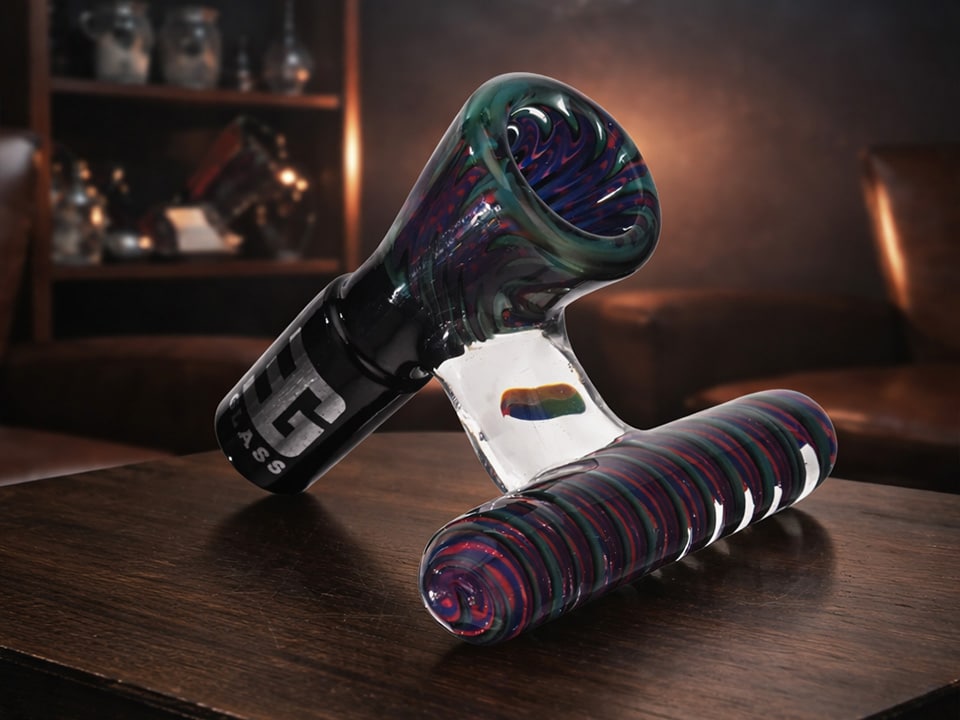
If the customer wants a smaller footprint and less tabletop drama, I’d point them toward the transparent cactus pot hand pipe or the cactus honeycomb pot hand pipe. Those are easier recommendations when discretion and storage matter more than chamber size.
And if the buyer is shopping more on aesthetics—gift energy, display energy, that whole boutique-glass angle—the cherry tree pot hand pipe makes a lot more sense than forcing a beaker format into a role it doesn’t naturally fill.
Then you hit the dabs crowd. Different lane. Don’t fake it. If the conversation is obviously moving toward concentrates, the custom EG-21 cactus wig wag ball rig is the honest pivot, not some strained attempt to keep talking about a classic beaker silhouette because that’s what happens to be in the display case.
That’s the pro move, by the way. Matching behavior to hardware.
The sales-floor version of “how to use a beaker bong”
Here’s what I’d actually tell a customer.
A beaker bong works best when the water lightly covers the diffuser, the base stays planted, the airflow isn’t choked by sloppy setup, and the piece gets cleaned before resin starts gunking up the path and making every pull taste like an old hoodie left in a car overnight. That sentence alone would improve half the industry.
Then I’d add the line some retailers still seem allergic to: cooler smoke doesn’t equal lower risk, and shared mouthpieces are a hygiene gamble. Not sexy. Very usable.
And yes, I’d say it plainly. People remember plain language.

FAQs
What is a beaker bong?
A beaker bong is a wide-bottomed glass water pipe designed to hold more water and offer more stability than a straight tube, which usually makes it easier for beginners to place, grip, and maintain while still using the same basic chamber, downstem, and bowl setup found in other glass formats. After that, it’s mostly about fit. I’ve seen customers obsess over shape when what they really needed was better handling habits.
How should a beginner use a beaker bong?
A beginner should use a beaker bong by keeping a modest water level over the diffuser openings, checking airflow before regular use, setting the base on a level surface, and cleaning the mouthpiece, bowl, and downstem often enough that residue never turns the piece into a dirty airflow trap. That’s the whole starter kit, honestly. Not tricks. Not ritual. Just decent setup and less chaos.
Is a beaker bong better than a straight tube?
A beaker bong is better than a straight tube only when the customer values extra base stability, a roomier lower chamber, and a more forgiving tabletop profile, while a straight tube usually suits buyers who want a slimmer shape, a smaller storage footprint, and a more direct-feeling draw. So—better for whom? That’s the real question. I’d never answer this with a blanket yes.
Is sharing a beaker bong a bad idea?
Sharing a beaker bong is a bad idea from a hygiene standpoint because the mouthpiece and moisture exposure can create a cleaner path for germs to move between users, especially when the piece is poorly maintained, used in groups, or passed repeatedly in enclosed spaces with little attention to sanitation. Shops know this. They just don’t always say it out loud. They should.
How often should customers clean a glass bong?
Customers should clean a glass bong after every session if they want the best hygiene, airflow, taste, and odor control, because stale water and resin buildup change performance quickly and can make even expensive borosilicate feel cheap, harsh, and unpleasant within a surprisingly short time. Daily rinsing is smart. Weekly deep cleaning is the bare minimum. Anything less gets nasty fast.
If you want this page to convert without sounding like it was assembled by a sleepy content mill, keep the sales pitch tighter, the claims cleaner, and the recommendations more honest. And when a full-size piece isn’t the right fit, send people where they actually belong: a compact cactus hand pipe, a bonsai-style cherry tree pipe, a custom mushroom hand pipe, or a dedicated cactus ball rig.