Free shipping in the U.S. for orders over $50

How Many Glass SKUs Does a Smoke Shop Really Need?
Most shops overbuy.
I’ve seen this movie too many times: a buyer gets excited, starts stacking the case with every beaker, bell, recycler, and flashy colorway a rep waves in front of them, and six weeks later the shelf looks “full” while cash is trapped in dead glass, dust rings, and duplicate pieces no customer can tell apart without a staff lecture. It happens. Constantly.
But let’s not romanticize it. I frankly believe most smoke shop owners don’t have a traffic problem when it comes to glass. They have a trimming problem. They don’t cut the junk. They don’t kill copycat SKUs. They keep feeding the case because an empty peg makes them nervous.
That’s expensive.
So here’s my number—my real one, not the trade-show version. A typical independent shop usually needs 35 to 70 glass SKUs. That’s it. Small footprint? Start around 40. Strong foot traffic, disciplined reorders, staff who can actually talk function instead of mumbling “it’s dope”? Fine. Push toward 60 or 70. Beyond that, I start seeing bloat, not range.
And yes, I’m talking about a working smoke shop inventory mix, not a collector’s stash wall. The goal isn’t to look “stacked.” The goal is to build a smoke shop glass inventory that turns, holds margin, and doesn’t rot in the showcase while rent keeps biting. Big difference.
Table of Contents
The number nobody in wholesale wants to admit
Here’s the ugly truth: glass isn’t one category. It’s three different hustles smashed into one display case, and when owners treat all of it the same, the buy gets sloppy fast because they stop separating bread-and-butter movers from ego pieces and start ordering like they’re decorating a lounge, not running a store.
Bad habit.
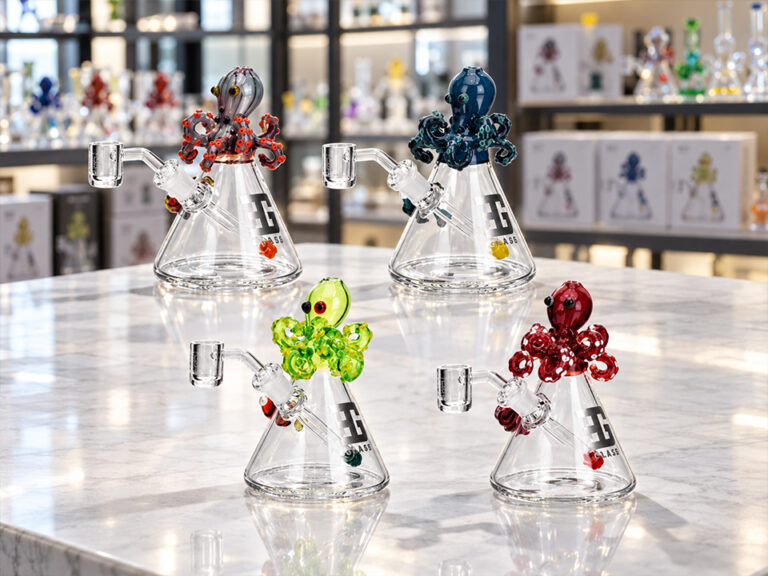
You’ve got traffic builders—cheap hand pipes, basic tubes, simple water pieces, little impulse units that ring without a ten-minute explanation. Then margin makers—solid mid-tier beakers, functional percs, compact rigs with just enough feature-story to justify the step-up. Then the glamor glass: the flex pieces, the “wow” rigs, the oddball recyclers, the stuff that’s more showroom than cash register.
Do you need all three? Sure. In balance.
From my experience, the smarter split looks something like this: 10 to 15 hand-pipe SKUs, 12 to 20 everyday water-pipe SKUs, 8 to 15 dab-rig SKUs, then maybe 3 to 8 higher-ticket or showpiece pieces. Not because it sounds tidy. Because it works.
The smoke shop inventory list that actually earns its keep
I don’t build a smoke shop inventory list by asking what looks cool under LEDs. I build it by asking what gets reordered in under 30 days, what closes without a staff monologue, and what gives me a clean price ladder from budget to step-up without clogging the rack with same-shape clones pretending to be different.
That’s the whole game.
And once you look at wholesale glass pipes that way, a lot of buying mistakes become embarrassingly obvious. If two pieces do the same job, hit the same price point, and appeal to the same buyer, one of them is stealing rent from the other. I’ve watched stores carry six near-identical beakers and act surprised when none of them pop. Why would they?
Here’s the framework I’d actually use:
| Glass segment | Suggested SKU count | Why it stays | What the shopper is buying |
|---|---|---|---|
| Hand pipes | 10–15 | Fastest price-sensitive turns | Convenience, replacement, impulse |
| Beaker bongs | 6–10 | Bread-and-butter water pipe demand | Familiarity, stability, easy cleaning |
| Straight tubes | 4–6 | Cleaner look for minimalist buyers | Simplicity, airflow, display appeal |
| Compact dab rigs | 8–12 | Strong concentrate repeat business | Function in a smaller footprint |
| Recycler / Klein rigs | 3–5 | Premium trade-up without going too niche | Smoother hits, perceived expertise |
| Statement / art glass | 2–4 | Traffic magnet, social proof | Identity, gifting, shelf drama |
| Bowls, downstems, cleaning add-ons | 6–12 | Quiet repeat sales | Utility and margin padding |
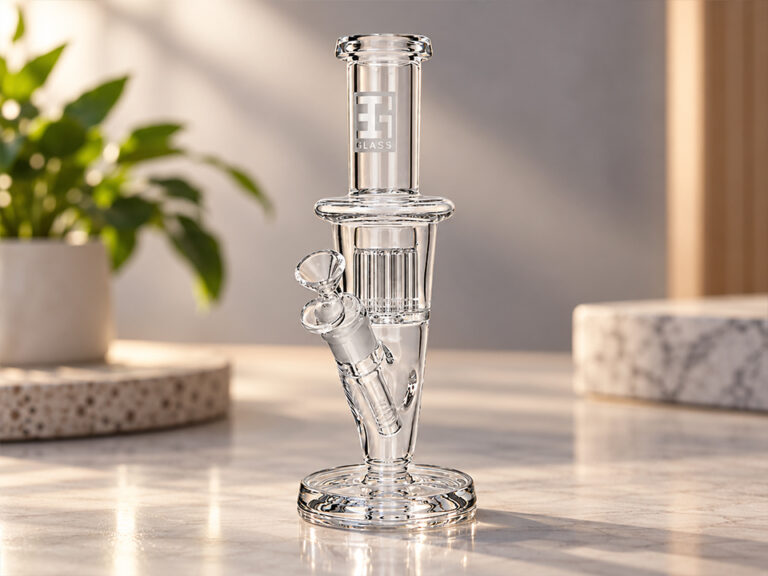
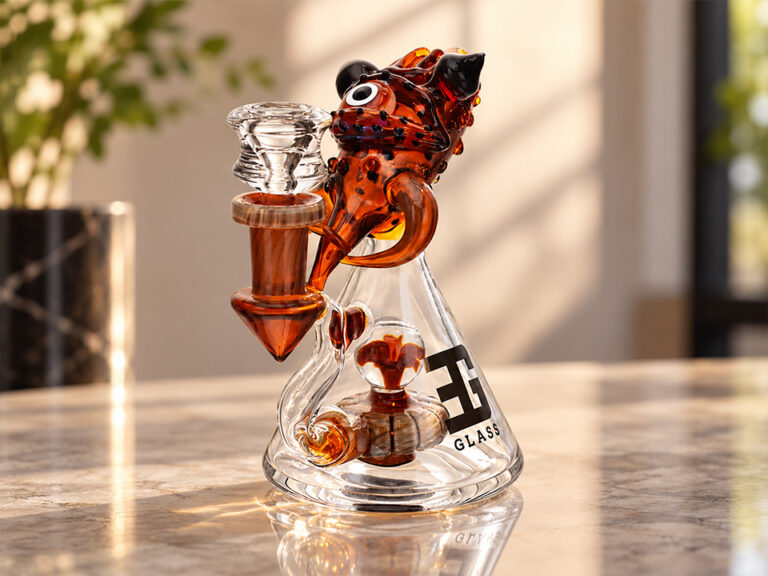
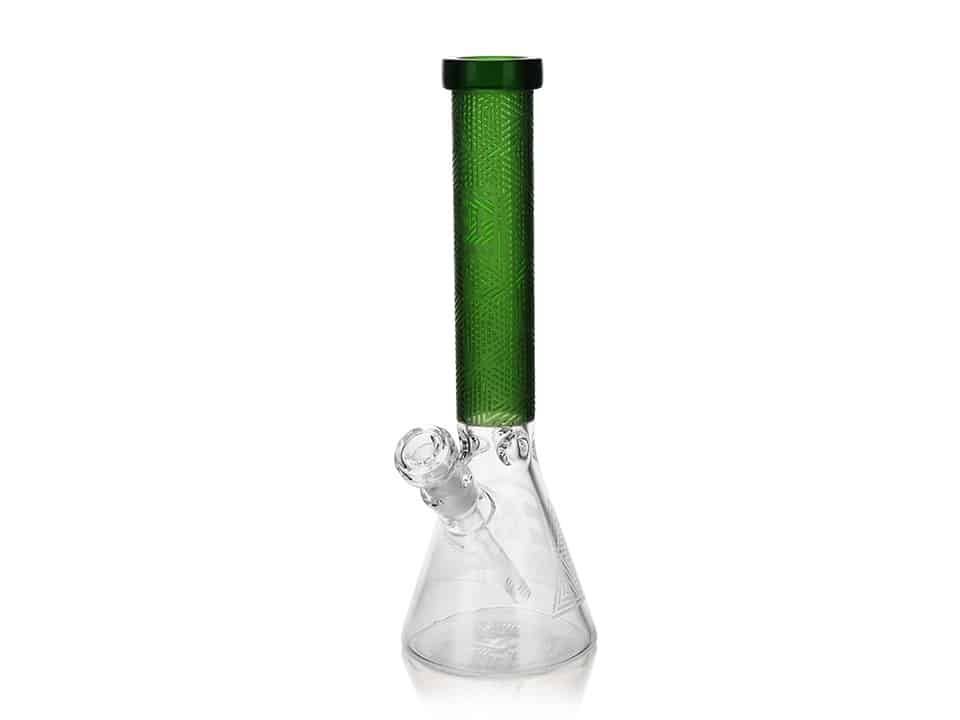
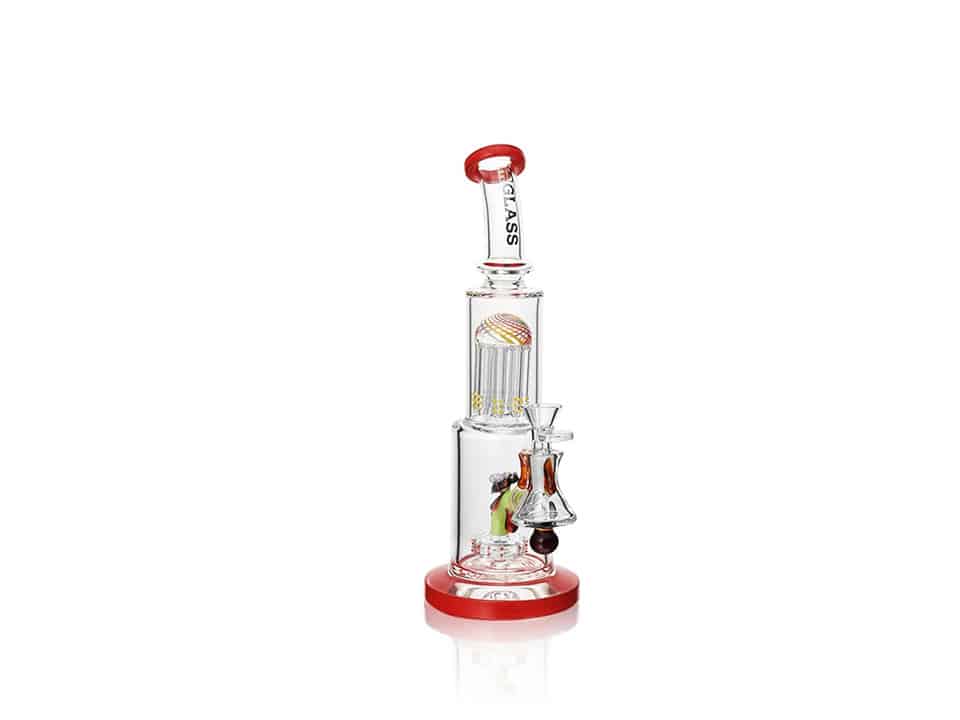
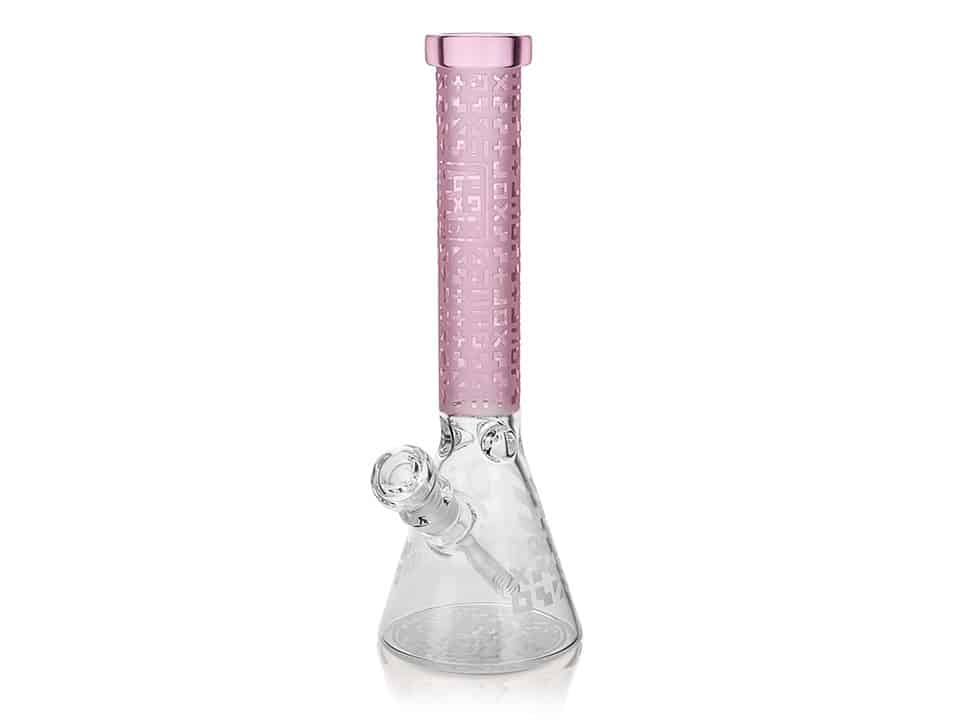
And no, I wouldn’t spread that evenly. I’d anchor the water-pipe lane with something familiar and dead-simple to sell, like this 12-inch clear beaker bong, then let the dab side do the heavier upsell work. For that lane, I’d want a clean feature story: a 9-inch straight-neck double UFO perc dab rig for the functional buyer, the compact EG-96 UFO dab rig in 6.7-inch borosilicate glass for the value buyer, and a visual flex piece like the Horned Heirloom recycler glass water pipe for the customer who wants to feel like they know something other people don’t. Add a tighter function-forward step-up like the ES2257 bent-neck Klein oil rig or the ES24829 9.5-inch borosilicate dab rig, and now you’ve got a ladder instead of a pile.
Where smoke shops burn cash without noticing
Yet this is where the wheels usually come off.
The average overbought shop isn’t “too aggressive.” It’s too repetitive. Same can shape. Same chamber feel. Same price band. Same customer. Different decal. That’s not assortment. That’s shelf spam. I know buyers hate hearing that, especially after they’ve written the PO, but someone has to say it.
And here’s another thing people dodge: owners buy for themselves way too often. They buy for their own taste, their loudest regular, their buddy who loves wonky recyclers, or the one guy on Instagram who swears every serious smoker needs a weird little science-project rig. Meanwhile, the regular customer just wants something sturdy, clear in value, and easy to understand in about seven seconds.
That customer pays your bills.
My rule is brutal, but it keeps stores sane: every SKU needs a job. Entry price. Core seller. Premium trade-up. Showpiece. If it doesn’t have one, cut it. Don’t sentimentalize glass.
Compliance changed the math, whether shops like it or not
This part matters more than most operators want to admit, because once enforcement tightened in 2024 the cost of carrying messy, poorly documented, gray-area inventory stopped being theoretical and started looking like a real operational risk tied to seizures, warning letters, fines, and shutdown headaches that smaller shops simply aren’t built to absorb.
That’s not drama. That’s math.
According to Reuters’ June 10, 2024 report on the DOJ-FDA task force, the FDA had already issued more than 1,100 warning letters tied to unauthorized tobacco products, and Reuters also noted that only 23 tobacco-flavored e-cigarette products had been authorized for sale at that point. I’m not saying glass equals vape. I’m saying this is the compliance climate you’re buying inventory into now. Sloppy operators get smoked first.
And New York? That got even uglier. Reuters reported on July 18, 2024 that New York City, through “Operation Padlock to Protect,” had closed 640 unlicensed smoke shops since early May, with city estimates of $20 million in seized illegal product and more than $51 million in civil fines. If you still think SKU discipline is just a merchandising conversation, you’re behind. It’s now a risk-control conversation too.
Then there’s the legal whiplash. In a January 3, 2024 Reuters report, the 5th U.S. Circuit Court of Appeals ordered FDA to reconsider denials involving two flavored vape products, saying the agency had been “arbitrary and capricious” in refusing to consider the companies’ marketing plans. That’s the part shop owners miss: the rules move, the courts move, and the merchants who survive tend to be the ones carrying cleaner, more defensible inventory instead of chaos-on-pegboard.
Fewer duplicates, better ladders, stronger turns
I’ll say it plainly: less glass often sells better.
Not because customers want fewer choices in some abstract psychology-book way, but because a cleaner set lets each SKU breathe—your entry piece looks like a real deal, your mid-tier looks like a step-up, and your premium piece finally feels premium instead of just being one more weird silhouette buried in a cluttered case with a handwritten tag.
That’s what most buyers miss.
When I look at wholesale glass water pipes or hand pipes for smoke shops, I’m not asking for “more options.” I’m asking for cleaner spacing. Better jumps in price. Better jumps in function. Better jumps in feel. Different height, different chamber behavior, different buyer type. Not five cousins of the same tube.
That’s a real shelf.
And honestly, that’s probably the cleanest answer to the H1 question. If you’re asking how many SKUs should a smoke shop carry?, start lean enough that every piece can explain itself fast. Then let reorders—not ego, not supplier hype, not “but the color is sick”—tell you what earns permanent space.
FAQs
How many SKUs should a smoke shop carry?
A smoke shop should usually carry 35 to 70 glass SKUs, because that range gives enough depth for budget shoppers, repeat buyers, and premium trade-up customers without trapping too much cash in slow-moving, overlapping, or confusing products that crowd the display and weaken sell-through. If the store is small, stay closer to 40. If traffic is real and reorders are tight, push higher.
What should be on a smoke shop inventory list first?
A smoke shop inventory list should start with fast-turn glass and utility items, including hand pipes, reliable beaker bongs, compact dab rigs, bowls, and cleaning accessories, because those products serve the widest group of customers, create repeat demand, and give staff natural add-on opportunities at the register. Start with proven movers. Then layer in the fancy stuff—slowly.
What are the best glass products for smoke shops?
The best glass products for smoke shops are pieces that balance familiarity, durability, price clarity, and visible function, which usually means simple hand pipes, 10- to 14-inch beakers, compact rigs, and a small number of recycler or Klein-style upgrades that act as premium upsells without taking over the whole case. I’d rather have obvious winners than clever experiments.
When should a smoke shop reorder glass inventory?
A smoke shop should reorder glass inventory when core SKUs show consistent 30-day sell-through or when on-hand stock drops close to two weeks of expected demand, because glass performs best when core sellers stay available and weak sellers are retired before they become dead cash in the showcase. If a piece sits 45 to 60 days and it isn’t a display magnet, I’d question why it’s still there.
If you want the blunt version, here it is: trim the duplicates, keep the winners, and make every SKU justify its peg. That’s how a smoke shop inventory stops looking busy and starts acting profitable.