Free shipping in the U.S. for orders over $50

Compatibility Standards for Bowls, Slides, and Ash Catchers
And that’s the whole mess, honestly, because what gets sold as some deep compatibility puzzle is usually a dead-simple hardware mismatch hiding behind glossy product photos, lazy spec copy, and a weird industry habit of assuming the buyer already knows what “14 male 90” means at a glance.
Then the return happens.
I’ve seen it too many times. Somebody orders a bowl because the color is nice, grabs an ash catcher because the perc looked cool, and only after the box lands do they realize their “matching” setup has three separate problems—wrong joint diameter, wrong gender, wrong angle. That isn’t bad luck. That’s a bad listing.
And I frankly believe the industry has been getting away with this for years.
The ugly truth? Most compatibility headaches come down to three boring specs: size, gender, angle. Not vibes. Not “universal fit.” Not whatever a smoke-shop description writer cooked up at 1:13 a.m. to make the product sound flexible. If those three specs line up, the piece usually works. If they don’t, it usually doesn’t.
Table of Contents
The standard is older than the smoke-shop copy
Here’s the part newer buyers never get told: the fit logic behind bowls, slides, and ash catchers didn’t appear out of nowhere in headshop culture; it borrows from much older interchangeable ground-glass systems, where standardized tapers and dimensions were used to make components fit predictably instead of by luck.
That matters more than people think.
The old National Bureau of Standards guidance describes interchangeable ground-glass joints with a 1:10 taper and lists standardized joint designations such as 10/30, 14/35, and 19/38—the lab-world ancestors of the retail shorthand people now read as 10mm, 14mm, and 18mm, including the old-school 14.5mm and 18.8mm naming you still see floating around on product pages.
So when someone says, “Why does one site say 14mm and another say 14.5?”—that’s why.
It’s not mysterious. It’s legacy shorthand, mixed with retail simplification, mixed with sloppy merchandising. A lot of smoke-shop language is just borrowed lab geometry wearing street clothes.
Size first. Always.
If I only had five seconds to stop someone from wasting money, I’d say this: check the diameter before you check anything else.
Because a bowl can be beautiful and still useless.
In practical buying terms, the sizes people run into most are 10mm, 14mm, and 18mm. That middle slot—14mm—keeps winning because it’s the least annoying compromise: enough airflow, plenty of replacement parts, and far more accessories than the tiny stuff or the jumbo stuff. That’s not romance. That’s market gravity.
And the market is big enough now that bad specs multiply fast.
Reuters noted that the U.S. cannabis market was projected to reach about $40 billion in 2024, which sounds great until you remember what scale does to accessory pages: more sellers, more SKUs, more copy-paste descriptions, more “fits most pieces” nonsense getting pushed into search results.
That’s why I don’t trust adjectives. I trust measurements.
14mm vs 18mm joint size: the argument people overcomplicate
I’m going to say it straight: 14mm is the safer bet for most buyers.
Not always. Usually.
A 14mm setup gives you solid airflow without making the whole rig feel top-heavy or overbuilt, and it’s the size I’d pick for most day-to-day use unless someone already knows they prefer a broader, less restricted pull on a larger piece. Eighteen millimeters has its place—especially on bigger glass—but it also magnifies every weak point in a cheap setup. More opening. More mass. More leverage. More room for bad manufacturing to show itself.
Bigger isn’t automatically better. It’s just less forgiving.
From my experience, shoppers chasing “more airflow” often end up buying a bigger joint when what they actually needed was a better-designed bowl, a cleaner perc path, or an ash catcher that didn’t choke the draw in the first place. I’ve watched people solve the wrong problem in expensive ways.
Male vs female bong joints: this is where people burn money
This part should be easy.
It isn’t.
A male joint goes into a female joint. A female joint receives a male joint. Same diameter, opposite gender. That’s the rule. No exceptions worth arguing about. If your bowl inserts, it’s male. If it receives the insert, it’s female.
Yet people still miss it—constantly.
Why? Because too many product pages bury the gender spec, or show the piece at an angle that makes the joint look like something it isn’t, or just use “14mm joint” as if that tells the whole story. It doesn’t. “14mm” without gender is half a sentence.
And adapters don’t magically fix bad decisions.
Sure, you can stack adapters. You can also stack problems. Every extra conversion point adds height, wobble, weak spots, and one more place for the whole thing to feel janky in-hand. I don’t love adapter towers. They look like regret.
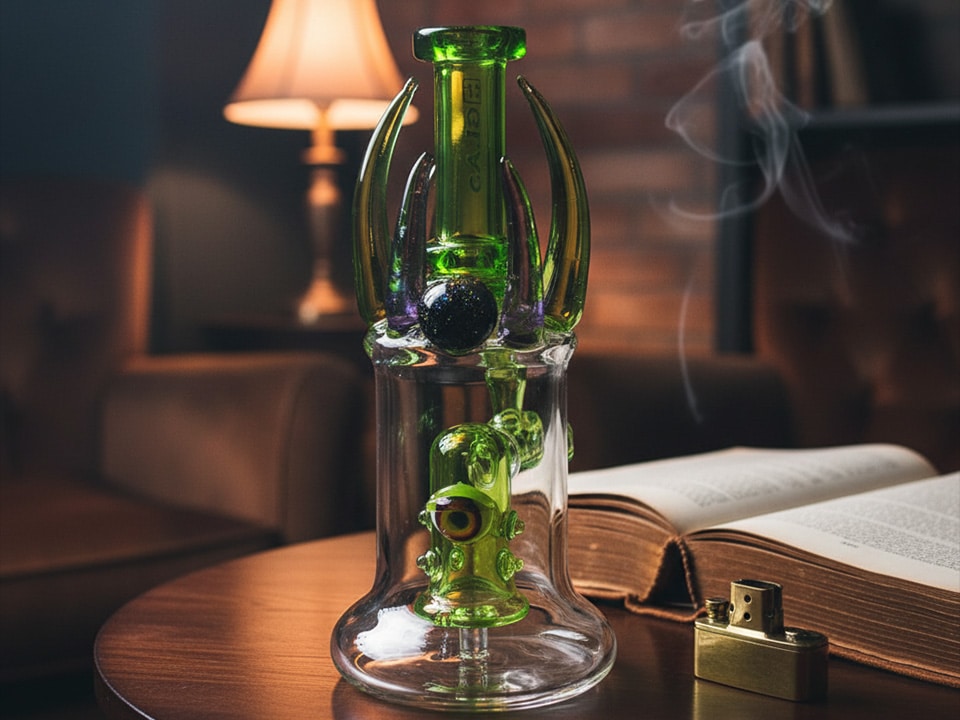
Ash catcher size guide: angle is not decoration
This is the spec people forget, and it’s the spec that punishes them fastest.
A 45 degree vs 90 degree ash catcher is not a style note. It’s a geometry note. If the host joint comes off the piece at an angle, you usually need a 45-degree ash catcher. If the joint is upright, you usually need a 90-degree unit. Get that wrong and the catcher may still attach—but it’ll sit weird, throw the balance off, mess with the waterline, or put dumb stress on the joint.
And glass is not generous.
NIST’s glass-fractography work makes the broader point pretty plainly: brittle materials fail because of flaws and loading conditions, and fracture analysis can identify the cause of failure in service. In other words, glass doesn’t care that the fit was “close enough” if the weight distribution is bad and the leverage is worse.
That’s why I get irritated when ash catchers are marketed like cute add-ons. They’re not cute when they snap a joint.
Here’s the blunt version of the fit math:
| Component Type | What You Must Match | Common Options | What Goes Wrong When You Miss |
|---|---|---|---|
| Bowl / Slide | Diameter + gender | 10mm, 14mm, 18mm / male or female | Loose fit, impossible insert, air leaks |
| Ash Catcher | Diameter + gender + angle | 14mm or 18mm / male-female pairing / 45° or 90° | Bad balance, crooked seating, spill risk |
| Adapter | Existing joint to target accessory | Size and gender conversion | Extra height, fragility, awkward draw |
| Downstem-linked setup | Water piece geometry | Fixed by host piece | Misread angle leads to wrong ash catcher |
Dry table. Useful table.
And yes—almost every compatibility disaster I see falls somewhere inside it.
How to measure bong joint size without pretending your eyeballs are calibrated
Use a ruler.
Use calipers if you’ve got them. Better tool. Less nonsense.
But even a basic measurement beats guessing off a product photo, which is what way too many people do. Measure the inner diameter of a female joint. Measure the outer diameter of a male joint. Compare it to the nearest nominal size. Then check gender. Then check angle. In that order.
That order matters.
Because people love to jump to brand, perc, color, or “best ash catcher for 14mm bong” before they’ve even confirmed the host piece is actually 14mm. That’s backwards shopping. And backwards shopping is expensive.
My method is boring on purpose:
- Pull the bowl or slide out.
- Measure the actual joint opening—not the lip, not the decorative flare.
- Identify whether the receiving joint is male or female.
- For ash catchers, look at the joint orientation and stop pretending angle is optional.
- If you already own one accessory that fits, compare physically before buying another.
That last move saves people all the time.
Why some listings still sound vague and half-coded
But here’s a wrinkle most casual buyers never see.
A lot of accessory copy in this category isn’t merely bad—it’s evasive. U.S. Customs and Border Protection says items of drug paraphernalia are prohibited from importation or exportation under Section 863, which helps explain why some sellers lean on euphemisms, fuzzy descriptions, or product language that dances around direct specificity even when specificity is exactly what the buyer needs.
That doesn’t excuse bad listings. Not even a little.
It just explains part of the mess. If the category talks sideways, buyers have to read harder. And most don’t. They assume “joint size” means the whole compatibility story, when in reality it’s only one-third of it.
What I’d actually buy if I wanted fewer compatibility headaches
I like boring specs. I know that sounds harsh. I mean it as a compliment.
A setup with clear measurements, honest photos, and standard-fit hardware will beat a “premium artisan” mismatch every single time. Fancy function can’t rescue wrong geometry. It just makes the mistake more expensive.
That’s also why integrated pieces can be a relief.
If someone wants to avoid the whole bowl-slide-ash-catcher compatibility rabbit hole, a compact piece like this transparent cactus pot hand pipe or this cactus honeycomb pot hand pipe sidesteps the joint puzzle entirely. No male/female mismatch. No angle debate. No adapter nonsense.
And if the buyer wants something more decorative without getting dragged into bowl slide sizes, the bonsai cherry tree hand pipe makes more sense than buying modular pieces blind and hoping they cooperate.
For concentrate users, though, I’d be stricter. A borosilicate dab oil rig is the kind of piece where joint accuracy matters more, not less, because repeated heating, cleaning, swapping, and handling tend to expose every bad fit over time.
And if you just want a smaller novelty-forward piece with less hardware drama, the rainbow mushroom hand pipe is the sort of thing that keeps the experience simpler.
That’s my bias. Simpler glass, fewer compatibility lies.
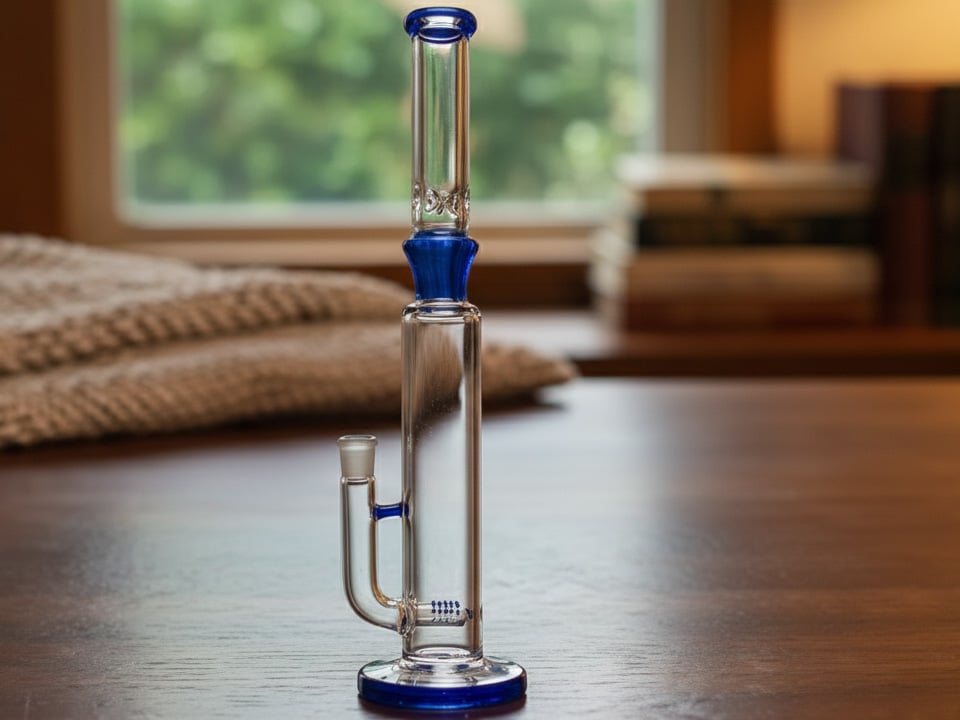
The hard truth nobody likes printing on product pages
“Universal fit” usually means “we hope you don’t notice until after checkout.”
That phrase does damage.
Because buyers read it and relax, when what they should do is get suspicious. Universal for what size? What gender? What angle? What tolerance? Which host style? If none of that is stated, the listing isn’t generous. It’s incomplete.
And this category still matters at scale. NIH-backed research released in 2024 looked at nearly 435,000 American adults and found that daily cannabis use—mostly through smoking—was associated with a 25% higher likelihood of heart attack and a 42% higher likelihood of stroke, with around 75% of respondents reporting smoking as their main method.
So no, combustion hardware isn’t some tiny collector subculture detail.
It sits inside a large, still-very-real consumer behavior pattern. Which means clear sizing data isn’t a nerdy bonus. It’s basic product honesty.
FAQs
What are bong joint sizes?
Bong joint sizes are the standardized connection diameters used where a bowl, slide, banger, or ash catcher meets a piece, and in retail glass they are usually described as 10mm, 14mm, or 18mm, with proper fit also depending on opposite joint gender and, for ash catchers, the correct angle.
That’s the clean answer. The mess starts when sellers only publish one of those specs and leave the rest for you to guess.
How do I measure bong joint size?
To measure bong joint size, remove the accessory and measure the inner diameter of a female joint or the outer diameter of a male joint, then match that reading to the nearest nominal size—typically 10mm, 14mm, or 18mm—before verifying the gender and ash catcher angle.
Calipers beat eyeballing. Every time.
What is the difference between male and female bong joints?
Male and female bong joints describe the direction of fit: a male joint inserts into another piece, while a female joint receives the inserted component, which means compatibility requires the same diameter but opposite gender at the connection point.
This is the mistake that quietly empties wallets. Same-size, same-gender parts do not “basically fit.” They just don’t fit.
Do I need a 45 degree or 90 degree ash catcher?
A 45 degree or 90 degree ash catcher should match the host piece’s joint orientation, with angled joints generally needing 45-degree catchers and upright joints generally needing 90-degree catchers so the accessory sits correctly, balances safely, and maintains a workable waterline.
People treat this like styling. It’s not styling. It’s structural common sense.
Is 14mm or 18mm better?
Neither 14mm nor 18mm is automatically better; 14mm is usually the more versatile everyday size because it balances airflow and accessory availability, while 18mm tends to suit larger pieces and more open draws if the host glass and connection quality can handle the added bulk.
If you don’t know which one you prefer yet, I’d start with 14mm. Less drama. Fewer dead ends.
What is the best ash catcher for a 14mm bong?
The best ash catcher for a 14mm bong is the one that matches the 14mm joint diameter, uses the opposite joint gender required by the host piece, matches the correct 45-degree or 90-degree angle, and doesn’t add awkward leverage that makes the setup unstable.
That answer isn’t sexy. It is, however, the answer that keeps you from buying the wrong part.
If you’re done gambling on vague specs, buy glass the way you’d buy hardware: verify the joint, verify the angle, and stop rewarding product pages that hide the only details that matter. Start simple, stay honest, and if you want to avoid the whole compatibility circus, stick with cleaner integrated options before you move into modular setups.