Free shipping in the U.S. for orders over $50

Best Price Bands for a High-Performing Glass Assortment
I have watched too many glass buyers fill a wall with mid-priced borosilicate, convince themselves it looks “premium,” then act surprised when turns slow down, entry traffic dries up, and the only reliable sale is the replacement part they treated like an afterthought. Why does that keep happening?
Because most shops do not build a glass assortment. They build a pile. And in 2024, that mistake got more expensive, not less: Reuters reported California wholesale cannabis prices fell from more than $2,000 per pound during the pandemic to roughly $1,200, while state sales slid from nearly $6 billion in 2021 to $5.3 billion in 2023; Maine’s official figures showed adult-use retail sales rising from $158.9 million in 2022 to $243.9 million in 2024 even as average price per gram dropped from $9.23 to $7.24; and New Jersey said its combined medical and adult-use market topped $1 billion in 2024, up nearly 25% from 2023. Customers are still buying. They are just buying with sharper price discipline.
Table of Contents
Why most glass assortment pricing fails in the middle
The middle bloats.
When owners skip a real opening-price tier and overstuff the $50 to $75 zone, they create the worst of both worlds: pieces are not cheap enough to be easy add-ons, not rare enough to feel special, and not differentiated enough to justify the shelf space they steal from proven traffic drivers. Who wins in that setup?
Not the buyer. Not the retailer. Usually just the dust.
My hard truth is simple: the best price bands for glass assortment are not the bands with the prettiest margins on paper; they are the bands that give every SKU a job. One band should pull people in. One band should close consistently. One band should upgrade the right customer without swallowing your open-to-buy.
The best price bands for a high-performing glass assortment
I would run four.
Not because four is elegant, but because a serious glass assortment has to account for replacement behavior, first-time conversion, confident upgrades, and aspirational pieces separately, otherwise your glass assortment price tiers turn into one messy middle with no ladder. Isn’t that the real problem?
| Price Band | Role in the Assortment | Best Formats | Recommended Share of Facings | What I Expect It to Do |
|---|---|---|---|---|
| $19-$29 | Traffic and replacement band | Bowls, slides, simple accessories | 20%-25% | Bring in repeat buyers and low-friction add-ons |
| $39-$59 | Core conversion band | Straight tubes, simple beakers, everyday workhorses | 35%-45% | Drive the bulk of unit sales |
| $60-$79 | Upgrade band | Mini rigs, fumed pieces, heavier borosilicate | 20%-30% | Lift AOV without scaring off serious shoppers |
| $80-$119 | Halo band | Feature pieces, thicker builds, collector-leaning glass | 5%-10% | Create aspiration, not inventory drag |
That structure is the best retail price band setup for glass assortment because it mirrors how people actually buy. First they solve a need. Then they justify a slightly better version. Then, only sometimes, they indulge.
How to price a glass assortment without wrecking margin
Price psychology matters.
Your own site quietly gives away one of the smartest clues: free U.S. shipping kicks in above $50, which means the line between $49 and $51 is not just two dollars, it is a conversion threshold that changes how buyers frame value. That is why I like the core band sitting tightly around $49 to $59; once shipping disappears, resistance drops and the item feels smarter, not simply pricier.
This is where glass assortment pricing gets real. A $50.99 straight tube does not compete against a $46.99 piece in the shopper’s head; it competes against paying shipping, buying twice, or settling for thinner glass. That is also why I do not want too many SKUs trapped at $60 to $69 unless they have an obvious story attached to them: thicker wall, unusual silhouette, fumed finish, special joint setup, cleaner engineering, better hand feel.
And yes, borosilicate still matters. I do not say that because it sounds premium. I say it because customers who buy functional glass notice durability fast, especially when they are comparing everyday-use pieces, 14MM bowls, and heavier 18MM/14MM setups side by side.
Where your current assortment sample sits right now
The pattern is obvious.
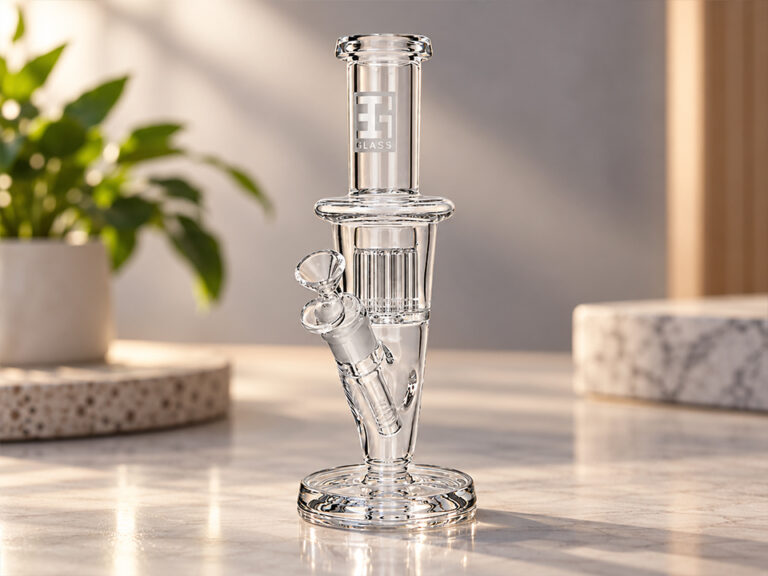
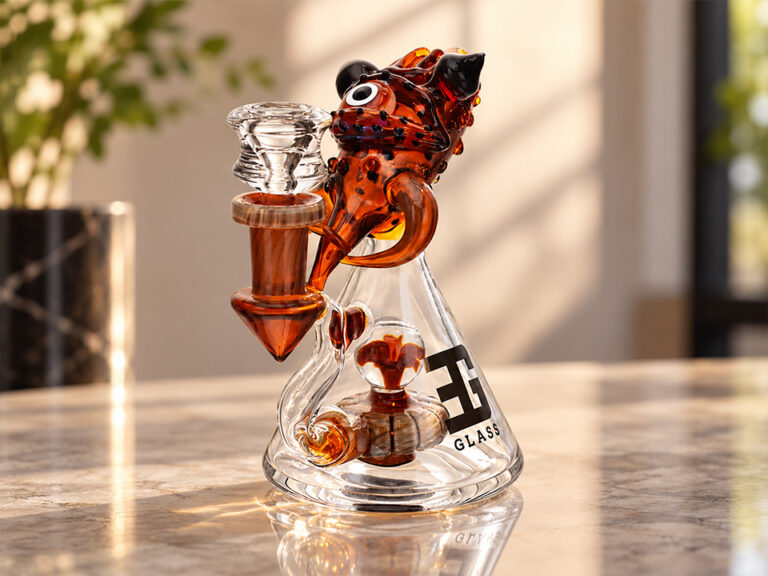
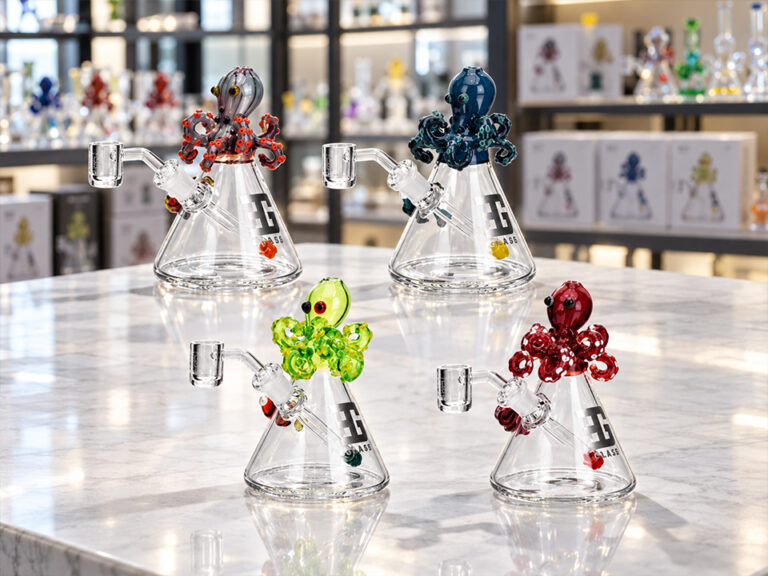
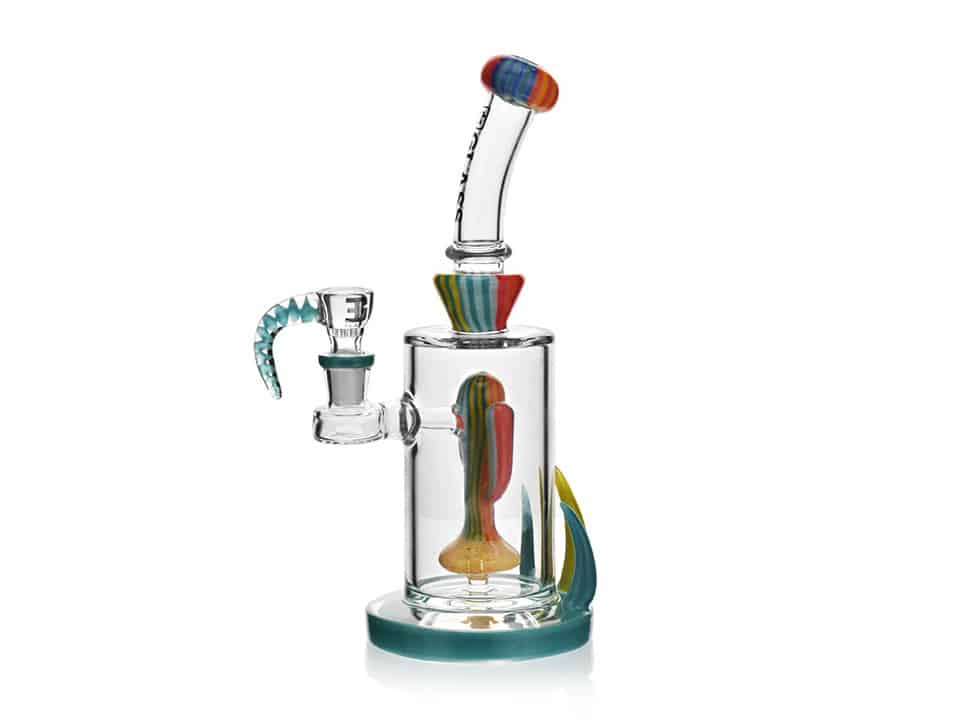
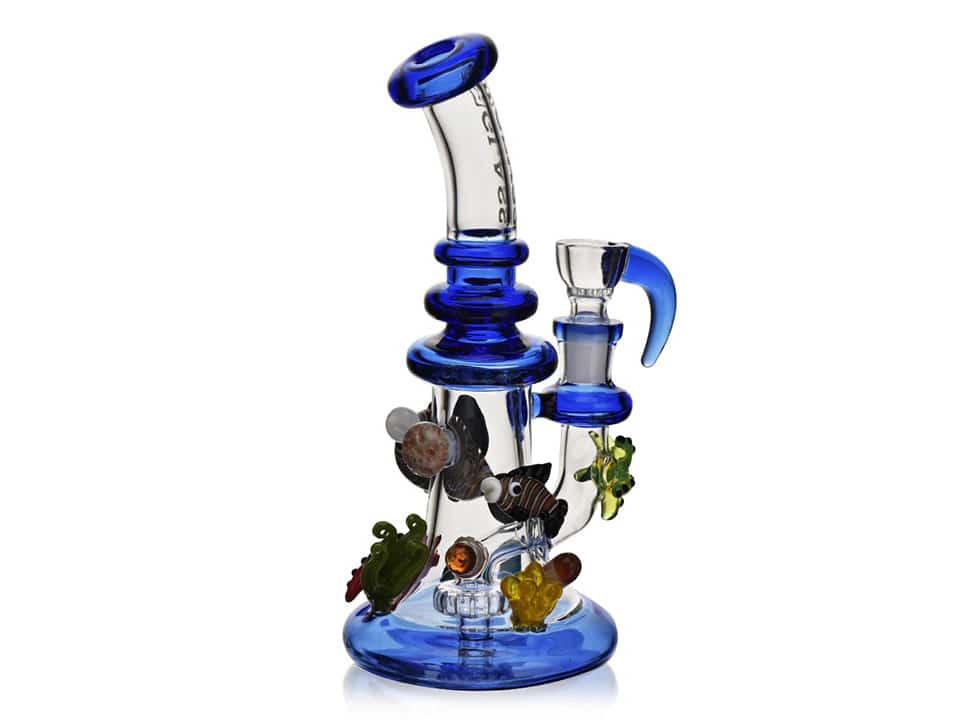
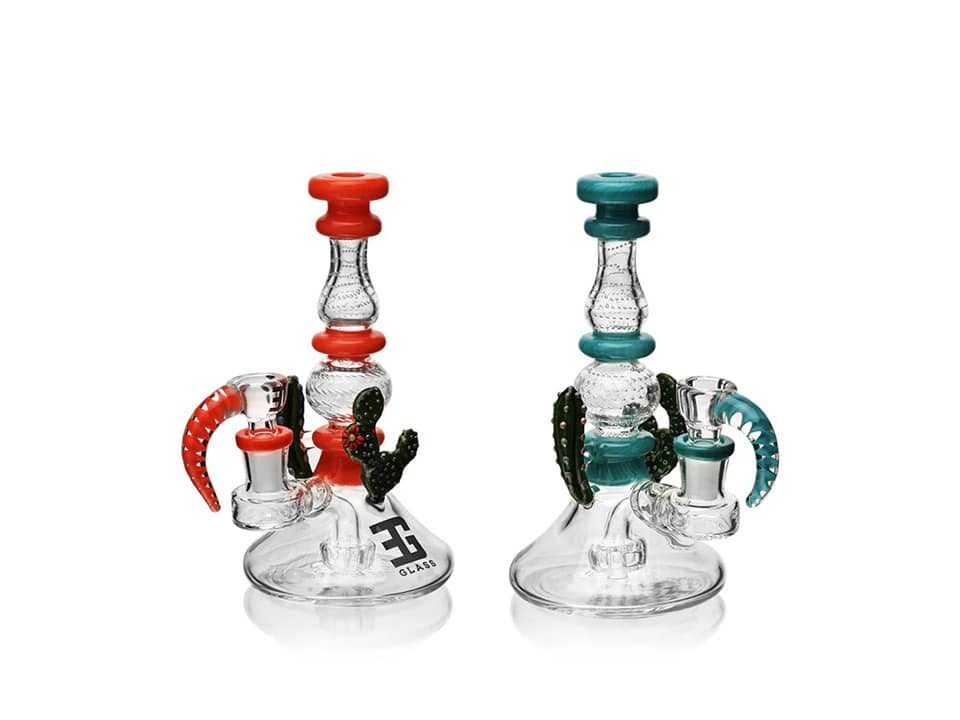
The supplied sample set clusters in the upper-core to low-premium zone: the Temple Handle 14MM borosilicate bowl sits at $40.99, the 12-inch thick clear straight tube at $50.99, the EG-76 fumed beaker bong at $57.99, and the EG-84 4.1-inch mini dab rig at $65.99. Those are not bad prices. But together they reveal an assortment that leans mid-band and leaves money on the table at the bottom.
That matters because each of those pieces is trying to do a different job. The bowl is an accessory sale, the straight tube is a core workhorse, the fumed beaker is an upgrade candidate, and the mini rig is an expressive, design-led purchase. If they all orbit too close together on price, the customer loses the ladder. And when the ladder disappears, trade-up behavior gets sloppy.
My take? The Temple Handle 14MM borosilicate bowl reads more like a premium accessory than a true entry accessory at $40.99. The 12-inch thick clear straight tube at $50.99 is positioned well, especially because it clears the free-shipping threshold while still feeling attainable. The EG-76 fumed beaker bong belongs in the money band, but only if you keep the facings tight and avoid surrounding it with too many lookalike pieces. The EG-84 mini dab rig earns its $65.99 better because the shape is distinctive, the size is compact, and the design gives shoppers an actual reason to upgrade.
The high-performing glass assortment strategy I would use
Keep it brutal.
I would widen the assortment downward first, not upward, because most shops need more clean-entry inventory before they need more “artsy” glass pretending to be premium. Isn’t that the move nobody wants to admit?
Here is the operating model I would use:
- Put 20% to 25% of facings into genuine opening-price accessories and simple glass.
- Put 35% to 45% into the $39 to $59 conversion band.
- Cap the $60 to $79 upgrade band at roughly 30% unless you already know your audience buys feature-heavy borosilicate consistently.
- Keep halo glass thin, visible, and intentional.
That is how to price a glass assortment without training your customer to browse forever and buy nothing. It is also the simplest form of glass product mix optimization: every tier should either create traffic, convert traffic, or monetize preference. If it does none of those three, cut it.
FAQs about glass assortment price tiers
What are the best price bands for a glass assortment?
The best price bands for a glass assortment are defined as a four-tier structure that separates replacement accessories, core functional pieces, upgrade products, and halo items so each SKU serves a distinct commercial role rather than competing blindly with nearby prices. In practice, I like $19-$29, $39-$59, $60-$79, and $80-$119. That mix gives you traffic, turns, AOV lift, and visual aspiration without letting the middle choke the wall.
How many SKUs should sit in each glass price tier?
The right SKU split for glass assortment price tiers is a percentage-based allocation in which the largest share sits in the core conversion band, a smaller but meaningful share sits in entry price points, and premium inventory is intentionally limited to avoid cash getting trapped in slow movers. I would overweight the $39-$59 band, protect the $19-$29 band, and keep premium facings honest. Shops usually fail because they reverse that order.
Should bowls and slides be priced separately from bongs and rigs?
Yes, bowls and slides should be priced as a separate micro-assortment because their buying pattern is replacement-led, lower-risk, and more impulse-driven than the purchase logic behind bongs and rigs, which are usually judged on performance, durability, size, and visual identity. That is why a 14MM bowl cannot be treated like a shrunken bong. The shopper is solving a different problem.
What makes a high-performing glass assortment?
A high-performing glass assortment is a price-structured, job-based product mix in which each item either drives entry traffic, converts functional demand, supports profitable upgrades, or creates aspiration, while duplication, dead middle pricing, and unearned premium claims are kept under control. I judge performance by turn, attachment, margin dollars, and how cleanly the shopper can move up the ladder. Pretty shelves mean nothing if the ladder is broken.
If you want this assortment to print harder, stop asking which single piece is “best” and start asking which price band is underbuilt. Then benchmark your shelf against the Temple Handle 14MM borosilicate bowl, the 12-inch thick clear straight tube, the EG-76 fumed beaker bong, and the EG-84 mini dab rig. Cut the SKUs with no job. Double down on the ones that actually earn their place.