Free shipping in the U.S. for orders over $50

How to Get Smoke Shop Distributors Beyond Product Selection
Most smoke shop distributors begin with one question: which products will sell? It is a sensible starting point, but it is only the first of several decisions that determine whether a glass line earns its shelf space. Two suppliers can offer near-identical hand pipes, rigs, and bongs, yet one ships pieces that match their listed joint sizes in protected cartons with clear claim terms, while the other creates returns, relabeling work, and slow replenishment. This article covers what to evaluate once the product shortlist is done: specification data, glass quality, packaging and breakage terms, compliance language, assortment planning, customization, and the details of a clean first order.
What Does “Beyond Product Selection” Mean for a Distributor?
It means judging the supplier’s systems as carefully as the supplier’s catalog. Product selection answers “what do my customers want?” Supplier evaluation answers “can this factory deliver that product the same way every time, get it to me intact, and fix problems quickly?” For glass, six areas decide most outcomes.
| Evaluation area | What to verify | Why it affects margin | Evidence to request |
|---|---|---|---|
| Specification accuracy | Joint size, joint angle, height, weight, color options per SKU | Mismatches cause returns and retailer complaints | Written spec sheet; a sample measured against it |
| Glass construction | Glass type, annealing process, wall-thickness approach | Influences cracking from heat cycling and handling | Written glass-type statement; description of inspection method |
| Packaging and freight | Per-unit protection, master-carton layout, packed weight | Determines breakage in transit and freight cost | Photos of a packed carton; a test shipment |
| Breakage and claim terms | Reporting window, evidence required, replacement versus credit | Decides who absorbs the loss | Written policy before the first order |
| Compliance and product language | Titles, descriptions, images, destination rules | Affects regulatory exposure and what retailers can display | Review by qualified counsel |
| Replenishment and assortment | Color split, repeat availability, new-design cadence | Drives stock-outs and dead stock | Reorder lead-time statement; your own sell-through data |
The sections below take these areas in order of how often they cause avoidable cost.
Why a Strong Catalog Does Not Guarantee a Strong Supply Relationship
Two assumptions deserve qualification: that the lowest unit price means the lowest cost, and that a bigger catalog means a better supplier.
Unit price is not cost per sellable unit. What matters is total landed cost divided by the pieces you can actually sell. Consider a hypothetical, illustrative comparison. Supplier A quotes $20 per unit; an order of 100 units plus $150 freight totals $2,150. If six pieces arrive broken and the supplier offers no credit, you sell 94 units at an effective $22.87 each. Supplier B quotes $21; the same order plus $150 freight totals $2,250, but broken pieces are replaced, so you sell 100 units at $22.50. Supplier B costs more per quote line and less per sellable unit. The result flips if breakage is rare or if you can claim freight damage elsewhere, so run the numbers with your own loss history.
Catalog breadth is useful only if you can absorb it. EG Glass states on its About page that it has more than 60 skilled glassblowers and creates over 100 new designs monthly. That kind of design pipeline helps a distributor keep an assortment fresh, but every added SKU also adds a spec to verify, a carton configuration to test, and stock that can stall. A distributor with limited warehouse turns usually benefits more from a controlled range with dependable repeat availability than from the widest possible selection.
Which Specifications Should a Distributor Lock Down Before Ordering?
Lock down every field a retailer or end user will use to judge fit and value: joint size, joint angle where relevant, height, weight, and the exact color options per SKU. Hand pipes have no joint, but rigs, bongs, and ash catchers do, and a joint mismatch is a preventable reason for a technically sound piece to come back.
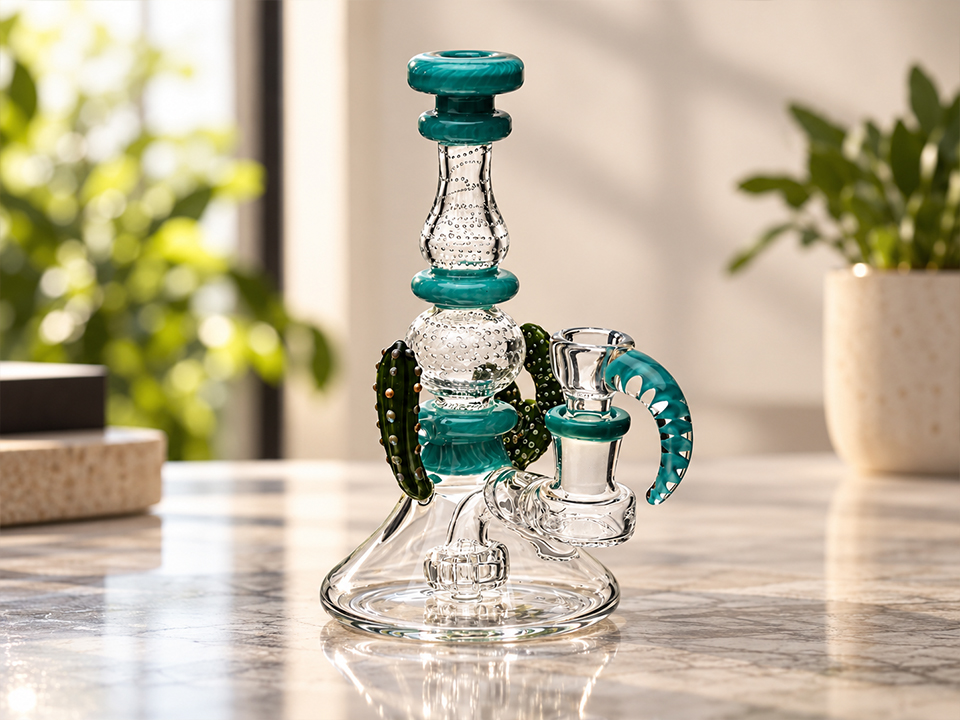
The product pages for the EG Glass range show how format changes what you need to confirm. The EG-21 cactus wig wag ball rig lists a 14 mm joint at 7 inches tall. The ES24834 borosilicate dab rig is listed at 9.8 inches and 450 g, while the EG-60 reef rig is listed at the same height but 650 g. Height alone does not describe a piece; weight tells you about glass volume, freight, and how much cushioning a carton needs. The EGA10 bright horn ash catcher is listed with a 14 mm, 90-degree joint, where angle matters as much as size when it is paired with another piece.
| Format | Example listing | Listed height | Listed weight | Listed joint | Sourcing implication |
|---|---|---|---|---|---|
| Novelty hand pipe | EGH26 duck pipe | 5 in | 92 g | Not listed | Lightweight; protruding shapes need individual protection |
| Hand pipe series | BSH12 cactus honeycomb | 4.7 in | 104 g | Not applicable | Several colors per SKU; specify the split |
| Ash catcher | EGA10 | 3.74 in | 106 g | 14 mm, 90 degree | Joint fit and angle must match the host piece |
| Ball rig | EG-21 | 7 in | 248 g | 14 mm | Two color options listed; confirm per-color availability |
| Dab rig | ES24834 | 9.8 in | 450 g | 14 mm | Mid-weight; confirm carton fit |
| Dab rig | EG-60 | 9.8 in | 650 g | 14 mm | Heavier glass volume; affects freight and carton strength |
| Straight tube | EG-35 / dual bullet tube | 11.5 in | 621 g | 14 mm | Tall and heavy; protect joints and mouthpiece |
Figures are taken from the individual product pages and describe unpacked pieces. They are listed specifications, not wholesale quotes, and packed weight will be higher.
The two 11.5-inch straight tube bongs, including the dual bullet water tube, show the same listed weight. Where designs share a base tube that is reasonable, but it is worth asking any supplier to confirm weights from measured units, because a weight error feeds directly into freight quotes and carton planning.
Is “Borosilicate” Enough to Judge Glass Quality?
No. The word describes a glass family, not the quality of a finished piece. Laboratory-grade borosilicate 3.3 is known for low thermal expansion; DURAN’s published properties give a coefficient of linear expansion of 3.3 × 10⁻⁶ K⁻¹ and describe resistance to temperature changes of ΔT = 100 K. Those figures belong to that manufacturer’s laboratory glassware. They do not transfer automatically to a decorative piece with thick sculptural sections, joins between heavy and thin glass, color work, or a joint ground in at an angle.
For a finished smoking accessory, real-world durability depends on several variables:
- Glass type and color compatibility. Ask whether the piece is made from 3.3-type borosilicate throughout, and whether color additives are compatible with the base glass.
- Annealing. Glass that cools unevenly can hold internal stress and fail later from modest heat or impact. Ask how the supplier anneals pieces and how it inspects for residual stress, for example with a polariscope.
- Geometry. Sudden changes in thickness, small joins, and protruding decoration concentrate stress. These are the areas to examine on a sample.
- Joint quality. Check that the ground joint seats properly with your existing stock, not just with the supplier’s own pieces.
Do not accept a glass-type claim as a guarantee. Treat it as the starting point for a sample inspection and a documented question to the supplier.
How Should Distributors Handle Packaging, Freight, and Breakage Claims?
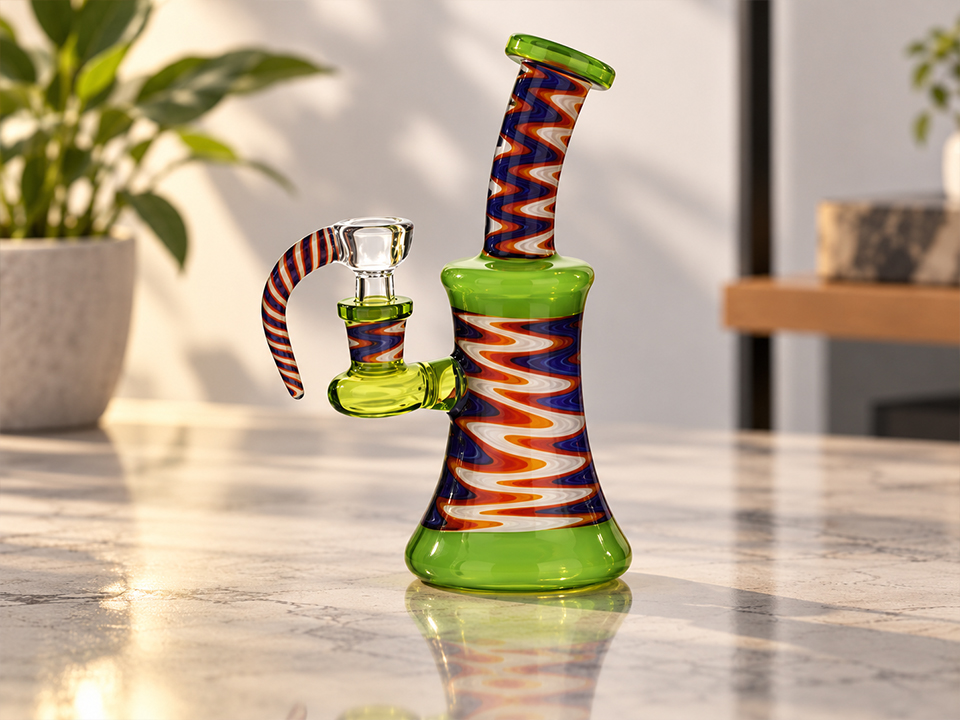
Treat breakage as a managed cost, not a surprise. Before the first order, get the supplier’s claim terms in writing: how long you have to report damage, what evidence is required, and whether the remedy is a replacement, a credit, or a refund. The EG Glass storefront refund policy, for instance, asks customers to report damaged or defective items within 48 hours of receipt and notes that photo or video evidence may be required. Distributor agreements can differ, so confirm which terms apply to wholesale orders.
On receipt, photograph cartons before opening, keep the packing material, and log each broken piece by SKU. A SKU-level breakage log does something a total loss figure cannot: it shows whether a specific design, such as a piece with delicate protruding elements, is a repeat problem. A cactus or mushroom novelty piece may carry more transit risk than a plain tube, but a log tells you whether that is true for your shipments rather than leaving you to assume.
Ask the supplier to show how a master carton is laid out, including how pieces are separated, what protects joints and mouthpieces, and how heavier items are placed. A carton that passes inspection when new can still fail after multiple handoffs, so a small test shipment to your actual receiving address is more informative than a photo.
What Compliance and Product-Language Checks Matter?
Distributors in this category should treat product language as part of sourcing, because the legal definitions of pipes and related items depend partly on how products are described and presented.
Under 21 U.S.C. 863, drug paraphernalia is defined by what an item is primarily intended or designed for, and the statute’s examples of items intended for use with marijuana and other listed substances include glass pipes, water pipes, and bongs. In deciding whether an item falls within that definition, the statute allows consideration of factors such as instructions, descriptive materials accompanying the item, advertising, and the manner of display. It also contains an exemption for items traditionally intended for use with tobacco products, including pipes. In practice, this means the titles, descriptions, images, and instructions that arrive with a supplier’s products can matter to a distributor.
Mail handling is a separate question. In a 2021 final rule on e-cigarettes, the U.S. Postal Service noted that drug paraphernalia is nonmailable under 21 U.S.C. 863 and Publication 52, part 453. Whether a particular shipment is treated that way depends on classification, so confirm current rules with every carrier you use.
State and local rules vary on licensing, age verification, and permitted products. This article is general information, not legal advice. Before listing a new line, have qualified counsel review the catalog language and the rules for each state you serve.
How Do You Build an Assortment That Turns Over?
Build around series and formats rather than around individual designs. A series shares glass construction, packaging, and a price band, which simplifies quality checks and reorders.
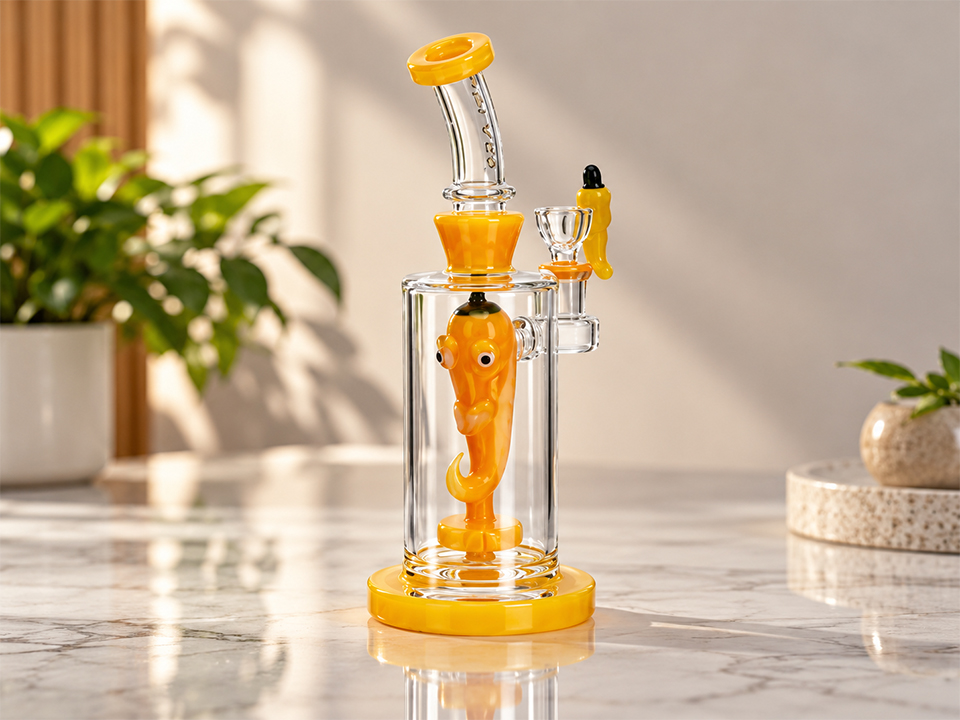
The Bonsai pot series is an example. The BSH12 cactus honeycomb pot hand pipe and the BSH13 transparent cactus pot hand pipe each list four color options, and the cherry tree pot hand pipe lists four as well. The BSH06 rainbow mushroom hand pipe lists five. A single SKU therefore becomes four or five stock-keeping units once color is counted, and a purchase order that says “20 pieces” without a color split leaves the supplier to decide. Specify the split, and review it against what actually sold. A single-piece design such as the yellow duck hand pipe behaves differently: it is a statement item, not a color-driven line.
A practical approach is to open with a pilot order that includes a small number of formats, then measure sell-through by format and color before adding depth. Heavier items such as rigs and tall tubes tie up more cash and freight per piece, so test them in smaller quantities first.
When Do Custom and Private-Label Orders Make Sense?
Custom work makes sense when you have enough volume to justify the added lead time and approval steps and a brand that gains from it. EG Glass states that it offers custom logos and packaging and has a separate higher-end brand, BEST DISTRO. For any customization, ask for details in writing rather than assuming them: artwork requirements, a pre-production sample, who approves it, how reorders are handled, and how custom packaging affects carton size and freight. Do not assume the MOQ or lead time for a custom item matches that of a standard one.
What Should You Verify Before Placing a First Wholesale Order?
Send the supplier a request that removes ambiguity, then compare the responses side by side. A useful request includes:
- SKU list with color split: exact model numbers and quantities per color.
- Joint size and angle: for every piece that has one, plus any compatibility needs with your existing stock.
- Packaging requirements: individual protection, master-carton layout, and any retail packaging or logo requirements.
- Destination and shipping method: including the state or country, since this affects carrier options and local rules.
- Claim terms: the reporting window, required evidence, and the remedy for breakage.
- Sample request: one unit of each format you intend to stock, inspected for joint fit, finish, and stress points.
- Timeline: production, reorder lead time, and delivery expectations.
- Language review: the product titles and descriptions you plan to use, reviewed by counsel.
Compare suppliers on landed cost per sellable unit, not on the unit quote alone. To begin, share the list with the EG Glass team at Info@buyegglass.com and request written answers on glass type, annealing, packaging, and claim handling for the formats you plan to carry.
Frequently Asked Questions
What should a smoke shop distributor look for in a glass supplier besides price?
Look for accurate spec data, documented glass type and annealing, protective packaging, written breakage terms, consistent repeat availability, and clean product language. Together these determine your cost per sellable unit and how much time you spend resolving problems.
How can distributors reduce breakage losses on wholesale glass orders?
Agree claim terms before ordering, review the carton layout, run a test shipment, and log breakage by SKU. The log shows which designs or cartons cause repeat losses so you can adjust the range or packaging.
Does borosilicate glass mean a piece will not crack?
No. Borosilicate describes a glass family with low thermal expansion, but finished pieces can still fail from impact, uneven annealing, or sudden changes in thickness. Ask for the glass type and inspection method, and check samples.
What should be on a glass product spec sheet?
Include model number, height, weight, color options, joint size and angle where relevant, glass type, packaging method, and carton quantity. Weight should come from measured units, because it affects freight and carton strength.
Should a distributor order samples before a bulk order?
Yes. Order one unit of each format you plan to stock, inspect joint fit, finish, and stress points, and ship it to your own receiving address to see how the packaging performs.
Is it legal to distribute glass pipes and bongs in the United States?
It depends. Federal law defines drug paraphernalia by intended use and includes an exemption for items traditionally intended for use with tobacco, and state and local rules vary. Consult qualified counsel before listing a new product line.